











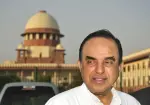



“If you think you can engage with China and profit from it, you’re mistaken. Beijing’s game is elite capture, and India must guard against it before it’s too late.” – Dr. Lobsang Sangay
In an explosive revelation, Dr Lobsang Sangay, the former President (Sikyong) of the Tibetan Government in Exile, has alleged that the Chinese Embassy in New Delhi has been actively trying to influence Indian politicians and even engineer a regime change.
“Elite co-option has been an ancient Chinese strategy,” he said in an exclusive NDTV interview. “They buy off leaders, intellectuals, business people, journalists, and nowadays even YouTubers. That’s how they infiltrated Tibet, Xinjiang, and Mongolia—and they are trying the same in India.”
He warned that India is not immune to Beijing’s political designs. “Just look at the Chinese Embassy’s National Day celebrations in Delhi. Check who attends. You’ll find photographs of politicians, business leaders, and others. Not all of them are bought, but the Chinese keep trying,” Dr Sangay noted.
He cited disturbing parallels from India’s neighbourhood, where Beijing allegedly supported pliable regimes. “In Nepal, one party is openly pro-China, another pro-India. In Sri Lanka, Bangladesh, and the Maldives, China has cultivated ruling elites. In Pakistan, all major political parties support China. This is elite capture at work,” he explained.
According to Dr Sangay, this strategy extends beyond South Asia. “I’ve seen ministers in Europe who praised China, only to later land jobs as directors in Chinese companies with salaries of $100,000 or more. In some cases, even $888,000 a year. That’s how China buys influence,” he said.
He warned Indian leaders across party lines to remain vigilant. “Everyone must be cautious – ruling party, opposition, business leaders, journalists. China doesn’t care who they buy as long as it helps their agenda.”
Dr Sangay further argued that Beijing’s influence operations are tied to its broader geopolitical goal of constraining India. “Why is China supporting Maldives, Bangladesh, Sri Lanka, and Nepal? Why are they blocking UN resolutions against terrorists who attack India? Because they want to hem India in and dominate South Asia,” he said.
Comparing China’s economic leverage to political manipulation, he highlighted India’s trade deficit. “India buys $113 billion worth of goods from China but sells only $14 billion. That’s a $99 billion deficit. It means fewer factories, less manufacturing, fewer jobs in India. Engagement with China is not just lopsided, it’s dangerous,” he warned.
Dr Sangay also took aim at Henry Kissinger’s once-popular theory that trade with China would lead to its democratisation. “The West invested in this illusion for 30 years. Instead of becoming democratic, China has become more adversarial. I hope India doesn’t repeat that mistake,” he said.
With tensions already high on the border, Dr Sangay’s words serve as a chilling reminder that China’s challenge to India is not just military but also political and economic. His caution was blunt: “If you think you can engage with China and profit from it, you’re mistaken. Beijing’s game is elite capture, and India must guard against it before it’s too late.” – NDTV, 23 September 2025

Filed under: china, india | Tagged: chinese imperialism, geopolitics, india-china relations, indian economics, xi jinping |







 BHARATA BHARATI
Tibetan Leader Lobsang Sangay Warns India Of China’s Big Arunachal ‘Game Plan’ – Aditya Raj Kaul – NDTV News – New Delhi – September 23, 2025
Lobsang Sangay, the former President (Sikyong) of the Tibetan Government in Exile, has warned that China’s expansionist ambitions are far from over, with Arunachal Pradesh at the center of its next big move and that India “simply cannot trust” it.
Mr Sangay’s warning comes at a time when Beijing continues to rename villages in Arunachal, build military infrastructure near the Line of Actual Control, and back Pakistan against India.
Tracing the history of India-China relations, Mr Sangay pointed out that every attempt by New Delhi to reset ties has ended in betrayal.
“Panchsheel was signed in 1954, and by 1962, war broke out. When Atal Bihari Vajpayee visited China as Foreign Minister in 1979, the Vietnam War was underway. Xi Jinping came to India in 2015, and within two years, Doklam happened. In 2019, India and China celebrated 70 years of ties – and then came Galwan in 2020,” the Tibetan leader told NDTV.
He likened India’s persistence in trusting China to a doomed relationship.
“After two breakups, couples give up. After 14 betrayals, India still keeps going back, saying, ‘reset, reset.’ Your heart is cut into pieces, but you still tie it with scotch tape,” he said.
Mr Sangay also warned of China’s military buildup along the Himalayan frontier.
“China is building high-speed railways, highways, and military airfields right across Arunachal Pradesh. They are preparing to invade. For Beijing, Tibet is the palm, and the five fingers are Ladakh, Nepal, Bhutan, Sikkim, and Arunachal. They already occupy Tibet and are coming for the five fingers because controlling the Himalayas means dominating South Asia and dominating India,” he cautioned.
“Mutual trust requires sincerity. But while India talks of peace, China is two steps ahead, building 300 villages along the border, encroaching inside LAC, and constructing helipads and military camps in Doklam. They keep saying ‘Hindi-Chini Bhai Bhai,’ but each time they stab India in the back,” he said.
Mr Sangay compared the slogan “Hindi-Chini Bhai Bhai” to consuming sugar: “Chini means sugar. It’s bad for health. It causes diabetes, dementia, and fatty liver. In every context, Hindi (India) should not touch Chini (China) at all.”
According to him, China’s endgame is clear – regional domination.
“To be number one in the world, China must first dominate Asia. And to do that, they must put India firmly in its place so it can never compete,” he said.
Mr Sangay’s warning comes at a time when Beijing continues to rename villages in Arunachal, build military infrastructure near the Line of Actual Control, and back Pakistan against India.
The Tibetan politician’s message was blunt: India must abandon illusions of friendship. “Each time India says ‘Hindi-Chini Bhai Bhai,’ it ends with betrayal. How many times do you want your heart broken?” he asked.
LikeLike