








 Until the unholy nexus between Khalistani extremism and mainstream Canadian politics is broken, neither Canada nor India can be better friends, let alone trusted partners. What is more, ordinary citizens of both countries stand to lose immensely as long as this stand-off continues. – Prof. Makarand R. Paranjape
So much has been written in the recent weeks, both in the Indian and the Canadian press, about the unprecedented deterioration of relations between the two countries. Without exception, all these write-ups have hoped either overtly or implicitly for an improvement of relations. But few have tried to show the way forward. What should be done? How to restore our mutually beneficial historic ties?
The two countries, both democracies of the parliamentary variety, with shared colonial pasts and continuing linguistic and cultural ties, ought to be close natural friends if not allies. Given our friendly relations in the not-too-distant past and, even more so, with the growing convergence in our economic and strategic interests, this is an imperative that both sides cannot afford to ignore.
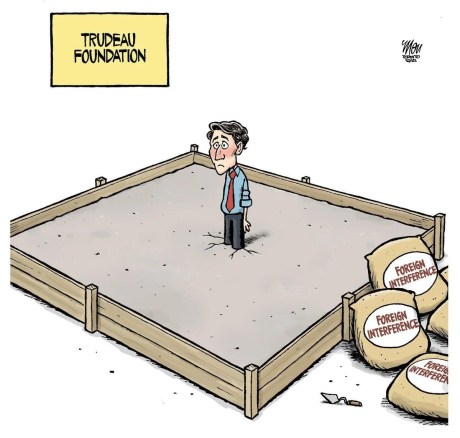
Will relations improve? Definitely. But the way forward will not be easy, especially for Canada. We will see why when we understand the basic cause of the stand-off between the two countries. Simply speaking it is this. The ruling Justin Trudeau government has allowed itself to be held hostage by a small group of Khalistani extremists and sympathisers. Why and how this came about is, however, neither simple nor uncomplicated. Like all bad things, this toxic relationship too was years in the making.
Among its contributory factors are the peculiarities of Canadian diaspora demographics. Canada is a vast country. Its land mass is close to 10,000,000 sq km, second only to Russia in size. But with less than 40 million, it ranks 37th in the world in population. What is more, a very large Indian diaspora of nearly 2 million people resides in Canada forming over 5 per cent of its population. Of these over 1/3 is Sikh. In fact, there are more Sikhs in Canada than in any other country other than India. Sikhs are also among the oldest subcontinental immigrants in Canada, settling in significant numbers over a hundred years ago.
As one of the most organised of Canada’s minorities, the Sikhs, especially through their network of gurdwaras, have been much more influential politically than any other minority community. In fact, during the last Trudeau administration, 17 Sikh MPs were elected to the Canadian parliament. No wonder, in 2016, Trudeau famously remarked, “I have more Sikhs in my cabinet than Modi does.” Of his four Sikh cabinet members was Defence Harjit Sajjan, whom then Chief Minister of Punjab, Capt. Amarinder Singh, had called a Khalistani sympathiser in 2017.
In the 2019 elections, Trudeau’s liberal party won 154 of the 338 seats in the Canadian House of Commons, 16 short of a clear majority. At present, Trudeau’s minority government enjoys the support of the 24 members of the New Democratic Party (NDP), led by Jagmeet Singh. Jagmeet Singh is a known proponent of the Khalistan Referendum in Canada, calling it a “fundamental human right of Canadian Sikhs protected by local and international laws.”
Trudeau had recently claimed in the Canadian parliament that he had “credible allegations” of an Indian hand in the killing of Hardeep Singh Nijjar. But long before this escalated into a major issue, Khalistani extremism in Canada and the laxity of the Canadian authorities in dealing with it had already set the stage for deteriorating relations between Canada and India. It was in 1985, over 38 years back, that Khalistani terrorists blew up AI 182, killing all the 329 persons on board, of which 22 were airline crew. The tragic irony is that of the 307 passengers killed, 268 were Canadian citizens, most of them Punjabis and Sikhs.
One would have imagined that after such a huge security failure on their part, Canadian authorities would have shown zero tolerance to Khalistani extremism. But quite the contrary, under cover of freedom of speech, mainstream Canadian politicians like Trudeau have allowed Khalistanis to flourish, both ideologically and politically. Worse, they have also done little to check the criminal elements among them, who have desecrated Hindu temples and openly threatened Indian diplomats in recent months.
Until this unholy nexus between Khalistani extremism and mainstream Canadian politics is broken or defeated, neither Canada nor India can be better friends, let alone trusted partners. What is more, ordinary citizens of both states stand to lose immensely as long as this stand-off continues. Worse, the very lives and safety of some of the opponents of these extremists are under threat in both countries.
Given this stark reality, what is the way forward? India has shown its hand by cracking down hard on Khalistani sympathisers whether in Canada or India. Even the Aam Aadmi Party government in Punjab, elected supposedly with Khalistani support from overseas, cooperated in the arrest of the wanna-be Bhindaranwale Amarpal Singh. Now the properties of overseas anti-India Khalistani activists and criminals have been confiscated by the National Investigative Agency.
Whether or not the government of India had anything to do with the elimination of Nijjar, what is amply clear is how the Khalistani cause is being aided and abetted by all kinds of anti-India forces, including our not-so-friendly neighbours. How would Trudeau respond to a Khalistani call for an independent Sikh state within the present borders of Canada, say in British Columbia? When his own party colleague and former premier of the said state suffered a murderous attack at the hands of Khalistanis, how long can Trudeau continue to look the other way?
The truth is that Canada has as much to lose as India when it soft-pedals or countenances extremism on its own soil. Can Canada give so much prominence to criminals, gangsters, and those who lied or cheated their way into Canada that it turns a friendly fellow Commonwealth country, once a close friend, into an enemy? India has sent a clear signal—terrorism and secessionism is unacceptable, whether it is camouflaged by freedom of speech or any other high-sounding principle. India will not allow its territorial unity or integrity to be compromised by belligerents operating on foreign soil.
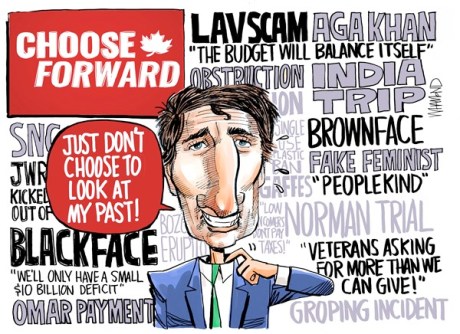
Trudeau’s popularity ratings are at a low ebb, hovering around 30 per cent. Gurmeet Singh’s party has also lost seats and the popular vote in the last general elections. Instead of trying to outdo Jagmeet Singh in his support to Khalistanis, Trudeau would do well to distance himself from them by bringing criminals to justice or extraditing them. That would be the first step to improving ties between Canada and India. For India to keep looking the other way or, worse, allowing extremist secessionism to flourish either within its borders or on the soil of so-called friendly countries is no longer an option. – News18, 25 September 2023
> Prof. Makarand R. Paranjape is an author, columnist, and teaches at Jawaharlal Nehru University.
Filed under: canada, india | Tagged: geopolitics, hinduphobia, india-canada relations, justin trudeau, khalistani separatists |





 BHARATA BHARATI
Pakistan’s ISI plotted Nijjar’s killing to strain India-Canada ties – Jitendra Bahadur Singh – India Today – New Delhi – Sept 27, 2023
Pakistan’s spy agency Inter-Services Intelligence (ISI) orchestrated the killing of terrorist Hardeep Singh Nijjar in Canada to strain the ties between India and Canada, sources have revealed.
Sources also said ISI had hired criminals to kill Nijjar and had been pressuring him to fully support gangsters who arrived in Canada in the past two years.
However, Nijjar’s inclination was towards the former Khalistani leaders.
Sources also believe that following Nijjar’s killing, the ISI is now looking out for his replacement and is preparing to gather pro-Khalistan terrorists in Canada.
A diplomatic row erupted after Canadian Prime Minister Justin Trudeau recently alleged “potential” involvement of Indian agents in the killing of Hardeep Singh Nijjar on his country’s soil on June 18 in British Columbia.
Later, New Delhi rejected Canada’s claim as “absurd” and “motivated”.
India also announced temporarily suspending issuance of visas to Canadian citizens and asked Ottawa to downsize its diplomatic presence in the country.
On Tuesday, India asked the United Nations member states not to allow “political convenience” to determine responses to terrorism, extremism and violence.
Addressing the 78th UN General Assembly session, External Affairs Minister S. Jaishankar also said respect for territorial integrity and non-interference in internal affairs cannot be “exercises in cherry picking” as he asserted that the days when a few nations set the agenda and expected others to fall in line are over.
LikeLike
Dramatic new video shows Nijjar shot by ‘Sikh’ gunmen. Witnesses say cops tussled over jurisdiction – Dishha Bagchi – The Print – 26 September, 2023
In what could be described as dramatic footage, the killing of Sikh extremist Hardeep Singh Nijjar appears to have been a “larger and more organised” operation than earlier reported, involving around six men and two cars, said a Washington Post report published Tuesday.
Nijjar’s car had also previously been bugged with a tracker, according to Moninder Singh—one of the founders of Sikh Liberation Front (SLF) established in 2017 and spokesman of the British Columbia Sikh Gurdwara Council—indicating that the shooting was targeted.
Chief of pro-separatist outfit Khalistan Tiger Force (KTF), 45-year-old Nijjar was shot outside Guru Nanak Sikh Gurdwara in Surrey on 18 June by two unidentified gunmen. His death has sparked a diplomatic row between India and Canada, resulting in tit-for-tat expulsions of diplomats, visa bans, reduction of staff at high commissions and more.
Now, footage from a security camera present on the scene has shown new details in the case, said The Washington Post article. A 90-second video clip from the gurdwara security camera shows a white sedan pursuing Nijjar’s grey truck after it exits its parking spot. As it approaches the exit, the sedan blocks the truck’s path. Two masked men in hooded sweatshirts appear from “under a covered waiting area” and approach the truck.
“Community members say investigators have told them that the assailants fired about 50 bullets. Thirty-four hit Nijjar,” the report said.
According to The Washington Post, Bhupinderjit Singh—a volunteer at the gurdwara, of which Nijjar was president—was the first to reach the scene to find that Nijjar was not breathing. He then attempted to pursue the assailants along with a fellow community member, Gurmeet Singh Toor.
Another gurdwara member, Malkit Singh, attempted to pursue the gunmen on foot in the neighbouring Cougar Creek Park. The only witness to get a more distinct look at the gunmen, Malkit Singh described them as wearing a “a Sikh get-up with hoodies pulled over small pughs (turbans) on their heads and masks over their bearded faces.” While one of the men, just over five feet tall and heavy set, was struggling to run fast, the other was about 4 inches taller and leaner, he added, the report said.
Exiting the park, the two unidentified men got into a silver 2008 Toyota Camry, where three men were waiting for them and escaped.
“One of the [running] men pointed his pistol at me right before getting into the car,” Malkit Singh said. “The smell of gunpowder in the air shocked me and reminded me how dangerous they were.”
The Surrey Royal Canadian Mounted Police (RCMP) Integrated Homicide Investigation Team noted that the police first received a report of the incident at 8.27 pm local time.
According to The Washington Post, witnesses observed a “shocking” delay of about 12-20 mins for police to arrive at the scene despite many police officers regularly patrolling the area. Witnesses observed that Surrey police and the RCMP had “an hour-long tussle” over jurisdiction and who would lead the investigation.
After roughly three months, no one has been charged in the case yet. Apart from the description of the assailants as “two heavier set males”, there has been no information regarding the identities of the suspects. On 21 July, the police asked for public help in identifying the gunmen while on 16 August, the Canadian authorities asked for assistance in recognising the silver 2008 Toyota Camry and driver. However, almost 40 businesses in the vicinity from where the assailants escaped have stated that they are yet to be contacted by the police.
LikeLike