















 “English is … the native language of shared popular culture – music, movies, even sport, with the recent ascendance of England’s Premier League. And English is undeniably the language of the technologies connecting us all together. Most languages don’t even bother to coin terms for things like “the Internet” or “text” or “hashtag.” It’s little wonder that an estimated 2 billion people will speak functional English by 2020, the vast majority of them having learned it as their second language.”- Andres Martinez
 A Russian, a Korean, and a Mexican walk into a bar. How do they communicate?
In English, if at all, even though it’s not anyone’s native language. Swap out a bar for the Asia-Pacific Economic Cooperation (APEC) summit in China this week, and the attending heads of state from those three countries still have to communicate in English: It’s the only official language of the APEC, even when the APEC gathers in Beijing.
Mark Zuckerberg recently scored points during his own visit to Beijing when he made some remarks in Mandarin. The news sparked talk about whether China’s economic rise means Mandarin could someday rival English as a global language. Don’t count on it. Fluency in Mandarin will always be helpful for foreigners doing business in China, much like mastery of Portuguese will give you a leg up in Brazil. But Mandarin poses no threat to English as the world’s bridge language, the second tongue people turn to when communicating and doing commerce across borders.
Thanks to the British empire, native English speakers are strategically sprinkled across the globe. English is also the native language of shared popular culture – music, movies, even sport, with the recent ascendance of England’s Premier League. And English is undeniably the language of the technologies connecting us all together. Most languages don’t even bother to coin terms for things like “the Internet” or “text” or “hashtag.”
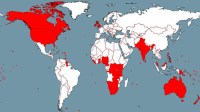 It’s little wonder that an estimated 2 billion people will speak functional English by 2020, the vast majority of them having learned it as their second language.
English is an inherently neutral language: There is no gender in English as there are in Romance languages. There are no class or generational distinctions baked into the language, as there are with so many languages that feature different you’s with different verb conjugations – the deferential you (boss, elder, stranger) versus the familiar you (friend, subordinate, child). Ours is a radically egalitarian and modern language, and it is simpler and more direct as a result.
English is also more politically neutral than we think. Even Islamist Jihadist propagandists would concede that English, is a convenience in spreading their word. And any relative decline over time of America’s global power and influence will actually help, rather than hurt, the cause of English worldwide, further decoupling people’s perception of the language from their perceptions of the United States and its influence.
The French – whose language was the last viable alternative in the race to become the world’s lingua franca – are understandably sore about the triumph of English. But even French companies have had to fall in line, accepting English as their organizational language. In what amounted to a telling parody of modern France, one grievance underlying a recent Air France strike was the airline union’s anger at the adoption of English as the default language for internal communications across its global operations.
The odds against a Chinese dialect ever gaining traction as an international language are formidable, for linguistic, economic, cultural, and political reasons. For starters, the language is just too hard for outsiders to attain fluency. Then there is the inconvenient fact that Mandarin doesn’t hold sway throughout all of China.
Indeed, resistance to any claim the Chinese language may have for global status may be strongest in the country’s own neighborhood, where nations are nervous about China’s intentions. The PEW Research Center’s Global Attitudes Project surveys show that people in nations like the Philippines, Vietnam, Korea, and Japan are far more comfortable with America than with China as regional superpower. And so it’s no accident that English is the only official language of ASEAN, the regional grouping of Southeast Asian nations.
 This cordon sanitaire containing China’s cultural (and if it comes to it, military) expansion is one of the lesser appreciated dynamics of today’s world, one that augurs well for the cause of the English language and American cultural influence. All the hype surrounding China’s rise to great power status can make us lose sight of the fact that what realtors might call the “China Adjacent Region” (let’s call it CAR) – the crescent encompassing Japan, Korea, Vietnam, Indonesia, the rest of Southeast Asia, and India – far surpasses China in population and economic power.
So don’t expect Chinese to take on English for global preeminence. That’s the good news for us as Americans. The bad news – at least for Americans thinking they don’t need to learn a second language– is that English’s very universality will make more and more of the world’s population multilingual. If all our kids speak is English, they’ll be at a disadvantage in a globalized labor force – because everyone else will speak it too. But at least we get to pick our second language. – Time, 14 November 2014
» Andres Martinez is editorial director of Zocalo Public Square, for which he writes the Trade Winds column. He teaches journalism at Arizona State University.

Filed under: india | Tagged: english, english global language, english in india, english language, india, link language, second language, world lingua franca |









 BHARATA BHARATI
Estonia,a tiny little country in Europe,it kept it own language as national language,all education is in own laguage, developed new words to use in higher studies.
Israel, a country where thousands of english speaking citizens live, made Hebrew as its national language. But here in India we have to go for English. What’s harm bringing and learning Sanskrit as our national language.
I wonder,is India one country ?
LikeLike
Promote Sanskrit as Third Language in Schools – The New Indian Express – Chennai – 18 November 2014
The decision of the human resource development ministry to do away with German as a third language in schools is commendable. Its interpretation of the three-language formula is correct, as the third language cannot be a foreign language. It has to be an Indian language. The memorandum of understanding former HRD minister Kapil Sibal had entered into with Germany in this regard was flawed. The new government is under no compulsion, constitutionally or morally, to follow a wrong policy. In fact, the three-language formula was introduced to enable students to earn proficiency in an Indian language, besides Hindi and English.
It is a different matter that if the decision was taken a few months earlier, the students who had opted for German as their third language in some schools could have been spared the trouble of choosing another language when the school year is about to end. Sibal is wholly to blame for the present impasse. It must also be remembered that it is not the responsibility of the state to teach a foreign language. If some students still want to learn German, they can do so, as there are private institutions which teach the language. It can be their fourth language. There are many other foreign languages like Spanish and Mandarin, the study of which will equip them to fetch jobs but that cannot be the government’s concern.
The three-language formula was aimed at strengthening national integration. One language that is quite popular among students is Sanskrit. This ancient language is one of the richest with a history dating back to millennia. It is also one of the most scientific languages, the mastery of which will help those proficient to understand the language of the computer better. Since it is the root language of many Indian tongues, proficiency in Sanskrit will enable the learner to learn many other languages. This is all the more reason that it should be promoted. The HRD ministry is, thankfully, moving in the right direction.
LikeLike
Rajnath Singh was grossly exaggerating when he said in Sept last year that 85% of Indians know Hindi. He has now lowered the figure to 75%—which is still excessively high!
According to the 2011 census, only 42% of Indians have Hindi as their mother tongue.
Of these 42%, the Hindi they know is a dialect like Avadhi or Bhojpuri. Also, many Hindi speakers are illiterate.
So we can say about 40% of the people of India know Hindi.
Pushing Hindi in Tamil Nadu is surely going to backfire on the Modi government!
Is anybody on Planet Dilli listening?
LikeLike
Pushing Hindi ill-advised – Deccan Chronicle – Chennai – Nov 17, 2014
Union home minister Rajnath Singh must take care not to allow Hindi chauvinism to further alienate large sections of India that don’t normally speak Hindi or its dialects. The promotion of Hindi as a national language isn’t a dead idea: there is a place in any society to promote local languages. But to insist on extensively using Hindi in official communications, particularly between New Delhi and states, would be to defy constitutional guarantees to all citizens. In a country of such diversity, any unreasoning pursuit of uniformity will be disastrous.
The imposition of Hindustani or Hindi is an old idea that lost relevance a long ago, and has little place in a shrinking world that is undergoing so much transformation. Even when it was first thought of in the Constituent Assembly, critics denounced chauvinists’ aims. T.T. Krishnamachari echoed the sentiment, saying back then: “This kind of intolerance makes us fear the strong Centre which we need, a strong Centre which is necessary, will also mean enslavement of people who do not speak the language of the Centre.” These words are relevant even today.
Given the number of officially recognised languages, it would ill behove the new government to churn out old ideas to further its votebank in the Hindi heartland. To say 75 per cent of people know or speak Hindi is to take vast liberties with the truth. As home minister, Mr Singh should be careful to trigger further divisive tendencies. Language is a means of communication, not a political tool.
LikeLike