















 “As part of its post-2014 plan, the ISI got Al-Zawahiri to announce the establishment of Al-Qaeda in the Indian subcontinent (AQIS). Al-Qaeda is a branch of the Pakistani military. … Though led by Arab militants, Al-Qaeda was created and nurtured in Pakistan, spread to the Middle East from Pakistan and its central leadership remains protected by Pakistan. The AQIS is advancing the ISI’s post-2014 strategy. It has declared its objective to establish an Islamic caliphate from Afghanistan to Bangladesh and beyond by erasing international borders created by the British. So, the Wagah border has become a new jihadist target.” – Tufail Ahmad
 Erroneously, the jihadist bloodshed in Pakistan is being seen by Indian analysts as Pakistan’s problem. After the November 2 bombing at Wagah, an Indian official described it as “a fallout of schisms within the Pakistani apparatus”, planned to cause a rift between Islamabad and Delhi. In an editorial, a leading newspaper dubbed it as “an existential threat to Pakistan” and a “warning for Pakistan”. A blogger bought into the argument that the attack was a revenge for the Pakistani army’s Zarb-e-Azb operation in North Waziristan. Contrary to this, the jihadist bloodshed wreaking Pakistan is no longer Pakistan’s problem. It is an Indian problem—and this is what the Pakistani military’s Inter-Services Intelligence (ISI) wants to achieve.
There are historical templates. One, over the past few years, protests in Kashmir Valley were presented in the media as Kashmiris’ struggle against human rights violations by the Indian army. However, there is a clue in the nature of the protests: these were based on the template of the Palestinian intifada, borrowed and executed by Pakistan. Two, in the late-1980s when the Afghan jihad was at its peak and the Soviets were set to quit, the ISI conceived its next jihad in Jammu and Kashmir. It led to over two decades of violence that the Indian army had to fight, contain and curtail at costs to its professional image. Three, after the 9/11 attacks delegitimised the Kashmir jihad, the ISI created the Indian Mujahideen to take the fight to the heart of India. This, too, has been mostly contained by Indian intelligence agencies.
 Four, a few years ago, when the US announced to the jihadis that it would quit Afghanistan by 2014-end, the ISI began executing its next jihad, whose symptoms are becoming visible. In early September, Asmatullah Muawiya, the chief of Tehreek-e-Taliban Punjab, declared ceasefire against Pakistan. The fact: the ISI convinced him to focus on Afghanistan. Muawiya’s ceasefire was followed by reports that he would work with the Haqqani Network of the Afghan Taliban led by Mullah Omar. That the ISI nurtures jihadists became evident when Pakistan army allowed militant commanders to move to Kurram Agency before launching the Zarb-e-Azb operation.
Compliant Taliban commanders like Khan Saeed Sajna stayed in North Waziristan during the operation. Leading Taliban commander Adnan Rasheed, who was captured in neighbouring South Waziristan, was quickly released by the ISI. If you are wondering why, know also this: the ISI shifted him from Rawalpindi prison to Bannu jail and got him freed in an attack orchestrated through the Taliban in 2012. These commanders, including Al-Qaeda leader Ayman al-Zawahiri, are working under Mullah Mohammad Omar, who is protected by the ISI, which protected Osama bin Laden. Also, the Zarb-e-Azb operation was organised to have the US release blocked funds to Pakistani army.
In September, as part of its post-2014 plan, the ISI got Al-Zawahiri to announce the establishment of Al-Qaeda in the Indian Subcontinent (AQIS). Al-Qaeda is a branch of the Pakistani military, a duality perplexing to young readers of Pakistan. Though led by Arab militants, Al-Qaeda was created and nurtured in Pakistan, spread to the Middle East from Pakistan and its central leadership remains protected by Pakistan. The AQIS is  advancing the ISI’s post-2014 strategy. It has declared its objective to establish an Islamic caliphate from Afghanistan to Bangladesh and beyond by erasing international borders created by the British. So, the Wagah border has become a new jihadist target.
It is a template borrowed from Pakistani intellectual traditions. From their early days through the 1980s, Pakistani leaders thought of establishing a sphere of Islamic influence from Pakistan through Afghanistan to Central Asia. The ISI is implanting this template eastward. The Wagah attack connects with Burdwan, where young Muslim women and men were being given arms training till October 2 when accidental blasts exposed everything. Bangla-language Al-Qaeda literature found in Burdwan advocated setting up of an Islamic caliphate covering Bangladesh and bordering districts of West Bengal.
For now, India faces no threat from Al-Qaeda and the Islamic State of Iraq and Syria of a magnitude it can’t deal with, argued national security adviser Ajit Doval on October 21. Indeed, India must not wait for the problem to reach any magnitude. But officials in West Bengal did wait for the problem to acquire a magnitude. Much like during the pre-9/11 years when Britain tolerated the existence of today’s jihadist forces in the name of anti-colonial politics, Bangladeshi jihadists found a liberal, secular and hospitable environment in West Bengal to hide, plan and grow. Such a tolerating environment, unavailable in Bangladesh, was easily available in India. Both the Burdwan developments and the Wagah attack originate from the ISI’s post-2014 strategy. The Taliban, the AQIS and Jama’at-ul-Mujahideen Bangladesh are parts of this strategy. Doval also remarked: “There is nothing (like a) big or small threat. It is not on the basis of geography, but on the basis of the groups.” Just keep in mind: in the jihadists’ imagination, geography and hijrah (migration) do matter a lot. Hijrah denotes Prophet Muhammad’s migration from Mecca to Madina to establish the first Islamic state. It’s a vital reason why Indian Muslims went to Afghanistan, Iraq and Syria in recent years.
 Here is how the ISI hides its own role in jihad and insulates Pakistan’s army. After the Wagah attack, it got the Khorasani-led Taliban to say it was a revenge for Zarb-e-Azb operation. After each turbulence in India-Pakistan ties, Pakistani journalists parrot this line: the army chief does not want to get involved in it. To insulate Pakistan’s army from global criticism after the Wagah attack, the ISI got a Christian couple burnt alive, successfully diverting public opinion. In recent years, Pakistan was globally criticised for its role in the 26/11 attacks. The message from Burdwan: have Bangladeshi prime minister Sheikh Hasina’s assassination executed from Indian soil—fundamentally an ISI plan—so that India stops blaming Pakistan for the 26/11 attacks. – The New Indian Express, 10 November 2014
» Tufail Ahmad is director of South Asia Studies Project at the Middle East Media Research Institute, Washington DC. Email: tufailelif@yahoo.co.uk
Filed under: india, pakistan | Tagged: al qaeda, AQIS, india, indian intelligence agancies, ISI, national security, pakistan, pakistan army, pakistan taliban, RAW, state-sponsored terrorism, taliban, terrorism |








 BHARATA BHARATI
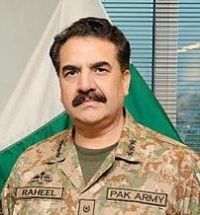
Pakistan plays ISIS card as army chief Raheel Sharif visits US – Chidanand Rajghatta – TNN – Nov 15, 2014
WASHINGTON: First it was the threat of Soviet/communism card. Then it was the al-Qaida card. Pakistan is now pulling out a new one: The ISIS card.
On the eve of the visit to the United States of Pakistan’s most powerful man, army chief Raheel Sharif, the Pakistani military has fashioned a new narrative to sell to Washington in order to return to its good books and extract continued flow of military supplies and civilian aid. It is the imminent threat of the Islamic State of Iraq and Syria (ISIS) sweeping into the nuclear-armed country that is already under siege from al-Qaida, although the alternative narrative suggests it is complicit in sheltering al-Qaida and an assortment of extremist-terrorist organizations to further its strategic and policy objectives.
One of those of objectives is to obtain continued US support in the form of aid and military hardware, so ahead of the army strongman’s visit starting this weekend, the first by the country’s military supremo in four years, Pakistani media is replete with stories of ISIS surfacing in the country in the form of flags, pamphlets, and wall-chalking. Amid some rolling of the eyes in Washington, one newspaper reported this week that signs of local support for the dreaded Islamic State have surfaced in various parts of Pakistan, including graffiti that welcomed the head of Syrian Daish Group Abu Bakkar Al Bagdadi.
While Pakistan has always been open to the threat both of and by extremist forces, some of which it is universally accused of nurturing, its policy of using it to extract support from Washington is coming under increasingly scrutiny. “The danger here is that while playing this game Pakistan will eventually end up making ISIS stronger to its own detriment,” warned a former Pakistani ambassador to Washington who is now in exile due to threat from extremist elements in his home country.
Still, regional experts expect Sharif to make a strong case for enhanced US engagement with Pakistan after years of heightened suspicion following the killing of Osama bin Laden in the Abbottabad raid. Pakistan, said one US analyst who consults with the Pentagon said in the same background conversation involving the Pakistani ambassador, will benefit from Washington’s tendency “to want to do something in situations instead of doing nothing.” Both agreed that institutional memories were very short in Washington and Pakistan’s transgressions are readily forgiven and forgotten.
Raheel has prefaced his Washington visit with a conciliatory trip to Kabul last week closely — to be followed by a return visit to Islamabad by Afghanistan’s new President Ashraf Ghani — during which both sides tried to get around the India factor. Sharif offered to train Afghan forces, and Ghani, in return, is said to be reevaluating his predecessor Hamid Karzai’s efforts to buy weapons from India for the Afghan army. Ghani visit is happening this coming week.
LikeLike