














 “Iraq, Libya and Syria are examples of the brutal cynicism of Anglo-American and French humanitarian intervention to achieve imperialist goals through regime change. The fascist Islamic ISIS, failing to make sufficient headway in Syrian, decided to create a Caliphate out of Iraq. The Iraqi regime of Nouri al-Maliki had done everything to alienate its substantial Sunni population through blatant sectarianism, thereby facilitating the Sunni reprise. The US is now facing a dilemma since a militant Sunni enclave, hostile to the West, threatens to emerge across of a swathe of the region.” – Dr Gautam Sen
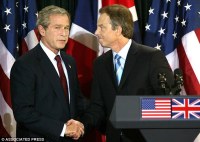 The final denouement of Iraq is proceeding apace. The sustained assault against Iraq and its people began because Saddam Hussein fell into a trap set by the US when he invaded Kuwait. The latter, a mediocre Anglo-American colony of no observable merit, did everything to provoke the Iraqi invasion of its territory by asserting unwarranted territorial claims and other acts of provocation, etc. But such is the total dependence of degenerate oil sheikhdoms Kuwait’s rulers acted as shameless agent provocateurs of its Anglo-American patrons and accepted the high cost entailed for their people of the Iraqi invasion. The subsequent US invasion of Iraq on the flimsiest excuse, which now stands exposed as a gigantic hoax, resulted in its virtual destruction as a society and deaths of anything up to two million Iraqis. Yet one of the principal schemers, the former British Prime Minister, Tony Blair, remains at large, as some sort of trifling envoy. He travels the world counselling assorted dictators and presides shamelessly over a real estate empire like any suspect used car salesman.
The US had also sponsored a Sunni-Shia sectarian war in Iraq to gain political advantage because it found itself in an unanticipated quagmire after its initial rapid military successes. The Saudis, another ever pliant sheikhdom with few historical parallels in political venality and moral bankruptcy, played the role of facilitator and financed much of the grotesque mayhem. Its dominant role in financing and promoting religious extremism across the world on an unprecedented scale has not bothered the legion of hand-wringing Anglo-American politicians and their paid media pundits. For all of them, Islamic terrorism was merely a useful tool of statecraft and 9/11 a golden opportunity for advancing imperial goals. Significantly, for Indians, Pakistani Islamists were sent to Syria recently to help overthrow Bashar al-Assad, largely a US project.
 It is has now been officially revealed that it was Bashar al-Assad’s Syria that possessed chemical weapons, but it was Saddam Hussein the US decided to remove because it was alleged Iraq had the ‘capacity to produce chemical weapons’. Syria soon also became the target for regime change, a counterpart of US attempts at regime preservation in India to thwart Narendra Modi becoming its prime minister. The decision to overthrow Bashar al-Assad, admittedly a particularly unattractive and blinkered dictator, impervious to reason when it might have yielded a political settlement when the first protests began, has a wider political dimension. Having failed to achieve regime change in Iran, despite assiduous efforts to subvert its unpopular clergy, striking a blow by removing its key Shia Syrian ally was regarded as masterstroke to undermine it. But the Israelis were not altogether convinced since Bashar al-Assad, like his father Hafez al-Assad before him, had reserved belligerence to talk while ensuring tranquillity in the Golan Heights. But they too assented because the Iranian clergy‘s attempt to enrich uranium was viewed as the greater challenge to its security.
The murderous Sunni ISIS reprise is the inadvertent product of US failure to manoeuvre successfully in Syria. It failed to achieve its preferred outcome of removing Assad and his cronies, without empowering a militant Sunni alternative. It only aided the anti-Assad insurgents sufficiently to pressurise Bashar al-Assad in the hope of forcing him out and replacing him with someone pliant, whom Israel would also find acceptable. But Russian help has allowed Bashar al-Assad to hang on though much of the country, like Iraq, is now in ruins, its people destitute refuges and dying in unconscionable numbers. The experience of Iraq, Libya and Syria are examples of  the brutal cynicism of Anglo-American and French humanitarian intervention to achieve imperialist goals through regime change. The fascist Islamic ISIS, failing to make sufficient headway in Syrian, decided to create a Caliphate out of Iraq. The Iraqi regime of Nouri al-Maliki had done everything to alienate its substantial Sunni population through blatant sectarianism, thereby facilitating the Sunni reprise. The US is now facing a dilemma since a militant Sunni enclave, hostile to the West, threatens to emerge across of a swathe of the region.
The cost in hapless non-white lives is deemed inconsequential by these three principals of old-fashioned imperial terror and no venality, like the continuing manipulation of Islamic terrorism when useful, is beyond the pale. Historically, Islamic terrorism has been used against India and Russia whenever the US sought to achieve its purposes. At present, the twin Anglo-American goals in the Middle East appear to be to secure even better leverage over oil resources and secure Israeli interests. They have been by handing control of oil resources to separatist regional governments they themselves have sponsored and enabling their effective political independence, as they have now done in Iraq and Libya. The latter is considered to possess vast oil reserves, now safely in the indirect custody of local nominees of the West. These separatist enclaves are then beholden to the US to fend off the parent state and disposed to sign lucrative contracts with US companies. The Kurds are the most obvious example of this model of imperial control. The other ancillary goal has been to demolish all possible military challenge to Israel since it can intervene in US domestic politics to oppose plans that do not suit it.
 It should be a salutary reminder of their folly to Indian nationals who have taken to appearing before US Congressional committees to denounce India, virtually inviting US intervention into their country. The alleged 2002 Gujarat genocide (sic!) has been the stick to beat Hindu India with, now known to have been cynically espoused personally by none other than Hillary Clinton. No doubt US Indian NRIs are busy raising funds for her presidential campaign, in exchange for a briefest glimpse of this utterly cynical anti-Indian creature. She has taken a leaf out of her husband’s determined earlier campaign to injure India. In the past two decades, Anglo-American agencies have had a free run in India owing to the ignorant cupidity of successive governments. No email exchange or conversation in India by any communications medium is private and foreign-funded NGOs and foreign-national nationals, often masquerading as journalists and academics, are diligently inciting protest and engaged in subversion. Yet India is too large to easily commandeer directly though many Indians are apparently ready to sell their proverbial grandmother for consideration. Yet fate has brought into power a government and a prime minister determined to defend Indian sovereignty. The new dispensation needs no reminding that seventeenth century European marauders, who eventually seized India in entirety, first arrived modestly to trade and were then allowed to build fortifications by weak and foolish rulers.
After the Portuguese arrived in Japan in 1543, along with commodity exchange and an enormous slave trade in Japanese women, they proselytised massively, converting large numbers. But Japanese rulers read the writing on the wall and by 1610 all missionaries were banned. All their activities were curbed four years later and commerce restricted to Hirado and the southern port of Nagasaki. The Tokugawa prescience prevented the eventual conquest of Japan. India’s seventeenth and eighteenth Muslim rulers failed to comprehend European imperial designs because they themselves were foreign conquerors, looking to West Asia for political and spiritual succour. India’s historical fate was almost re-enacted in the past decade by the most violently anti-Hindu government India has known since the end of British rule. Its treasonous protagonists have only been thwarted temporarily, but not erased and remain alive, nurturing foreign-sponsored plots against Indian sovereignty. – India Facts, 26 June 2014
» Dr Gautam Sen has taught Political Economy at the London School of Economics

Filed under: iraq, syria, USA | Tagged: bashar al-assad, british politics, civil war, french politics, imperialism, iraq, iraq war, ISIS, islam, islamic jihad, islamic terrorism, jihad, muslim terrorism, oil, regime change, saudi arabia, syria, syrian civil war, US politics, USA, wahhabism, war, western imperialism |












I only want to comment on the limited aspect of US NRI’s understanding of the American political personalities and their decision to support presidential candidates, prompted by what is now said about Hillary Clinton.
I wonder how much these NRIs have studied and understood the long term policies of the main US parties, their important leaders, their pronouncements vis a vis India. Whether India matters to them at all and figures in their thinking, as strategically as say China, or even Pakistan. May be they have to take sides, being US citizens as isolation may hurt. The usual approach is to side with one party, if you don’t like the other. But in the US this will not work, as far as Indian interests are concerned.
Both Democrats and Republicans share the same basic ethos- Anglo-Saxon Protestant Christian. There may be differences in approach to various problems, but these work within defined parameters. For instance, Republicans will not rush to annul a legislation just because it was made by the previous Democrats. They may filibuster,but in the end find a workable way. Fundamental differences are there about say abortion,evolution, welfare, economic liberalism etc but these are not party specific, but individual centred.
What do they feel or think about India? Pretty little, or nothing positive. Franklin Roosevelt was a clear friend of Indian freedom movement and even sent his special emissary at a crucial time to talk to the British. He withstood bullying by Churchill. In fact there are records to show that at stages the British were less brutal only because of the fear of adverse reaction from the Americans — not only the govt, but even their journalists covering the events here. But even then Churchill saw to it that the relief supplied by the Americans during the Bengal famine did not reach the victims.
After Roosevelt and to some extent Truman, and after Independence, the situation wholly changed. The US sided and supported Pakistan, ostensibly as a tool against China and USSR, but this aid was used mainly against India.
US sent a great friend of India as their first Ambassador — Chester Bowles. He had been close to Roosevelt and Truman. It was expected that he would have a tough time converting a ‘communist Nehru’ to their point of view; in the end Bowles became close to Nehru and had a tough time convincing the administration back home to aid and help India — an effort in which he did not really succeed.
Kennedy sent another great friend of India — J.K. Galbraith, by instinct and conviction a great liberal and friend of the poor. He too became close to Nehru. But he too fell out with the administration and left after a brief stint.
This again brought back Bowles who continued his good work. But all his recommendations for timely aid to India, and on other matters were received with open antagonism or indifference by the administration.
After the 1965 Pakistan War, Galbraith openly told the American administration that this war was directly due to their military aid to Pakistan. The administration did not care. This has been the position ever since. The original circumstances of military aid to Pakistan have changed — USSR is gone, China is now an economic ally, the threat of communism in Asia has disappeared. Pakistan itself has become the Mecca of terrorism — but American military aid to Pakistan has not ceased.
There is therefore something fundamental in the psyche of the Americans which makes their administration consistently anti-Indian, no matter which party runs it, no matter who becomes their president. There are still many friends of India, but they don’t count in the administration. In the circumstances, choosing between the two main parties is like choosing between Satan and Beelzebub.
LikeLiked by 1 person