










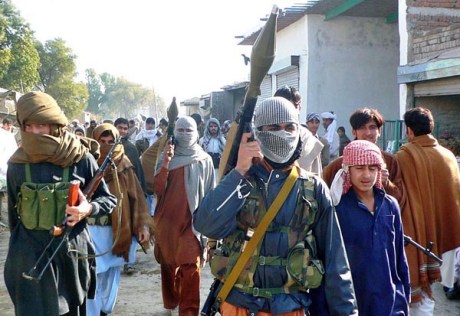
 A comprehensive investigation into 26/11, the 2008 Mumbai terror attacks, has now arrived in the form of The Siege: 68 Hours Inside the Taj Hotel. The distinguished authors Cathy Scott-Clark and Adrian Levy are well-respected names in South Asia with remarkable books like Deception: Pakistan, the United States and the Global Nuclear Weapons Conspiracy to their credit.
Levy has written extensively on Burma, Russia, Cambodia, and Pakistan. He has worked with the British print media and is an acclaimed filmmaker who has directed some incisive films for various channels, including the BBC and The History Channel.
 In this exclusive interview to Rediff.com, Levy narrates the hard work that went into the making of the book which highlights how America’s compromise with David Coleman Headley, one of the masterminds of the attacks, affected India’s national interest.
Scott-Clark and Levy travelled to 15 countries on four continents and interviewed hundreds of sources, witnesses and people, including the parents of Pakistani jihadis who landed in south Mumbai to attack the city.
Levy tells Rediff.com that even five years after the terror attacks, the Indian establishment has not honestly approached the event and learnt the right lessons. – Sheela Bhatt
• This is the second part of the interview. Read the first part here »
 • You have tried to understand David Headley‘s psyche. Can you tell me what his understanding of India is?
• It is so conflicted. I think we wrote this in the book really clearly that he loves Mumbai. He thinks it is a really rambunctious city of enormous energy. A city of enormous wealth, a city of enormous colour. A city with a large Muslim population. He loved the city’s traditions.
And he understood all of that. He liked the political hucksters, he understood the evolution of the Shiv Sena ideology. The evolution of Muslim gangsters. And you see all this in the way he wrote about the city, in the way the relationships that he formed.
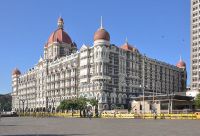 His love of the Taj Mahal hotel is recorded. He hung out at the Taj all the time. And a lot of that time he wasn’t working in the hotel. He hung out at the Taj because he liked the Harbour Bar. He liked the Sea Lounge. He liked to be seen sipping champagne with his rich friends, living the high life in Mumbai. Figure that out.
You got this split, whereby on one hand he loves the city, but he hates the country; what the country stands for. On one hand he loves the people. But he can justify his hatred of certain people, some Hindu people, some Jewish people, some American people. You know he is not really a political animal.
• So when you call him a psychopath, what do you mean?
• Well in a sense that ultimately he cares about himself. The deal with Headley is Headley. The deal with Dawood Gilani is Dawood. He has always sacrificed all the people around him.
His mother, as you know, was Caucasian. She was from Maryland and from a remarkable family, an adventuress. And she got together with his father, who was a very famous, wonderful Lahori broadcaster. Syed Gilani was a fantastic man.
And they got together during the 1950s and their son, the product of this mixed marriage, was born in 1960 as a cross fertilisation between a liberal intellectual from America and liberal intellectual from Lahore.
David, according to his mother, was suffering from lack of self. He was divided between two communities so much that he almost couldn’t find himself.
Was he the Pakistan boy? He went to the military academy in his teenage years.
Was he the all American kid who lived on the Upper Westside in New York and opened a video store and dealt in drugs?
Which one of these conflicted identities was his?
And in the midst of the fight between Pakistani Dawood and American David, he got lost.
Because, when you or I, if we have a sense of self, we have the morality, social conscience, friendships, we don’t sacrifice our friends, family. Where are those things? They have all gone. They have all been stripped away.
 The friends, he turns over, he sacrifices them. [Tahawwur] Rana he betrays. He was his best friend from school. All of his criminal associates he betrays. The Lashkar-e-Tayiba, he betrays.
• You said America gave so much information to India and other countries like France about a possible terror attack.
• Why would Headley give such important information about the terror operation in Mumbai to the Americans in first place? He was not forced to do that. He could have given any other fake or real information.
I think he also had a bigger plan. He is always trying to play people off against each other because Headley believes he is cleverer. Headley is a survivor.
If you talk to DEA [US Drug Enforcement Administration] agents who interrogated Headley and who worked with him and if you talk to the people within the intelligence community who interrogated him, they found he was amazingly charming, amazingly convincing.
If you see Headley in action on any of the tapes, when eventually he was interrogated by the FBI in 2009 and 2010 after the Mumbai attacks — there are 80 hours of footage — he is the most remarkable communicator. He puts everyone at ease in the room.
• When you say ‘remarkable,’ what do you mean?
• He is very convincing. He is a human being who understands the weaknesses of other human beings. He understands the need of people to be loved and liked. He is a salesman. He goes into these situations and he knows everyone has a weakness.
• The centre point of your story, your book is Headley, actually.
• Well, no. I think, actually, he is the evolution of the plot.
What comes out of this is the conflicts of interest of America.
On the broader scale, the backdrop is the conflicts of interest. But actually you know it is the people who drive this story.
• Tell us about the Karachi plot. How did the actual training of the terrorists happen? How did the Lashkar move ahead with this terror plan?
• The plan didn’t actually move to Karachi till a later date. The really interesting thing is that they themselves couldn’t work out how to get the plan going.
They began with a core group of 32 men and those men trained very hard, they were religiously indoctrinated … that is not really a fair word….
The LeT, you know, is quite principled — to them. the religious dogma is very important. It will not take anyone willy-nilly like Ilyas Kashmiri [did]. If you want to be a fighter, join Kashmiri.
If you want to believe in Deobandism, if you want to believe in the Sunni sect and back the Hadith view, then you would move to a different organisation.
The LeT has a bit of a secular view. So all of these people went through complex training.
 • Who was the head?
• It was run by two, three people who were effectively involved — there is a military coordinator, who is called Qahafa, it is a very strange nom de plume.
Then the second in command for foreign operations is Sajid Mir, which is his real name.
The third man involved is a military trainer who was primarily the LeT commander in Kashmir, in the valley for many years, who was brought out specifically for this job.
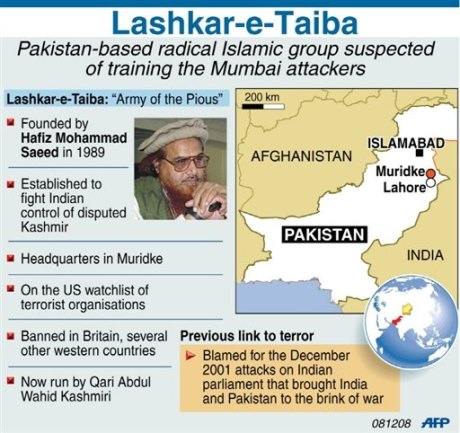
And those three were put in charge. And they got through their religious indoctrination which is very detailed. And they do that in Muridke, the LeT headquarters outside Lahore. And they are put through a whole series of experiences that none of them have had.
The philosophy of religion, it is quite challenging. It is not simply — as people portray in movies — like rote learning. They go through some very deep debates.
 • Like Ajmal Kasab?
• Yes, like Kasab. He had to confront for the first time a school of thinking. It is not just about reach for the gun; he had to actually listen to a process of thinking that he hadn’t heard before.
They [the killers] meet a community within the LeT because what the LeT does is to remove the need for everything outside the LeT.
So if you were from a fractured family and you get swept into the organisation, they slowly chip away at the bonds so that your family is the LeT.
I tell you how this works with the group of 32. Many in that group grew scared when it became clear that a plot was emerging. No one knew it was Mumbai.
But as soon as some details were clear — for example, it would be a fidayeen operation — people rang up uncles and brothers, people who had good families, and they said “I am scared, this is not why I joined. I joined to fight in a military conflict, I didn’t join for this and I didn’t join to kill myself.”
And people knocked on the gates of LeT and they said we want our sons back. They paid fines and they took their children away.
Every week people dropped out and a lot of the people who were left behind were from families who were heavily fractured, where the mother and father were split or where the father was absent. Where there was no one home, where there was no money, where there was no telephone.
They are the people the LeT picked.
So they start off there, they have religious indoctrination, they move them up beyond Muzaffarabad in Pakistan occupied Kashmir, to the Chella Bandi hills, and there is a base up there which was actually created initially for the first big push for training in the Kashmir valley.
A section of that base, in a place which they call House of the Warriors, which is just the mujahid house, was turned over to the group of 32.
When they arrived, their names were removed, they were given numbers, they were split up into canvas tents, and they were put through the military mill.
So they have gone from spiritual to military.
And the group gets smaller until there are 20 and then they go back to Muridke and they are involved in more spiritual training, physical training, they begin to introduce swimming because the marine element has come to the fore.
The Lashkar built a bit of a white elephant, a very rare folly, something really stupid.
They built an Olympic size swimming pool in Muridke in the university. But there is no filter system. So it is basically a tank, you fill it with water and the water turns black and no one wants to swim in it.
So they built this really massive pool which after a while was treacle thick. So they used to swim in the canal outside, the canal was really clean.
And these guys begin to learn swimming and went back to Muridke where they received much more intense training.
Things were very interesting in the camp. Some things stand out. The first thing that stands out is the kind of training that was offered. They were offered training in room clearance using, what I would describe as, Western methodology.
A method of moving in close spaces in rooms using hand signals so there is no speaking.
They created mock-ups with buildings so they would learn to take doors down, shield behind mattresses, to use each other as human shields, to communicate non-verbally so that the group would move together.
And they did this at night, low vision, under light fire, with no food. There was a process culminating in awards to reward 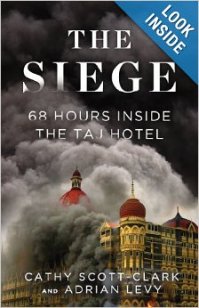 the people who were most successful. It was very sophisticated, not involving lots of money.
• So when and how did they know this training is for Mumbai and the Taj Hotel?
• They didn’t know it was the Taj initially. They didn’t know until they were given a final briefing in Muzaffarabad where the targets were identified and in this camp in the hills in the House of the Warriors, they were shown for the first time the material gathered by David Headley.
That material was the videos shots inside the Taj when he joined a tourist group on one of the Friday afternoon tours. He was there with his mother-in-law’s tourist camera shooting everything.
All the still pictures, the GPS, way-markings for the whole city were shown to the boys.
And then they mapped that over Google Earth. They [the terrorists’s trainers] could sit these country boys down before the computer. They had never seen one before, let alone the Internet.
They showed them Google Earth and a GPS system, and said you are going here. And the teams are broken up.
So, they begin to get the idea that there will be teams and that Mumbai will be the target, but in fact even then it is not the finished job.
Because another operation occurs in Kashmir and a quarter of the team are moved off for a specific hit-and-run operation and more recruits are brought in to top up the team.
And then they all get together down in Karachi where the control room has been set up, pretty near to the airport, in a military controlled area, which was an obvious place for them to be.
They had two centres, a control room there and two places for the team. One is effectively a bunking room, where there was lots of equipment, maps.
The other room is on a creek to the east of the city and on that creek you could get out to the sea eventually which meant that they could practice on the still waters of the creek.
An interesting thing happened here. The intelligence people who were hanging around the Lashkar — remember the Lashkar is full of soldiers; it is full of spies, and you never know who is retired and who isn’t.
It is a ball of wool. So many of them are military, it is very difficult to say whether they are military serving on deputation or whether they have left. They all claim to be retired.
Headley asked one of the army majors, who claimed to be a retired officer, from where a lot of the information was coming from and he was told the military have become particularly proud of a series of sources they have in India.
They had one in New Delhi. And they have these names for their sources. The prime source in Delhi was christened Honeybee. Honeybee had access to material which allowed Lashkar and the Inter Services Intelligence to know how Indian Special Forces would react if the attack took place.
So what is the security plan on the floor? How will Indian counter-insurgency happen? On the basis of the Indian material, the training manuals were prepared which included training manuals for room clearance, for top to bottom hostage taking clearance, they had all sorts of marine charts and they had a schematic of Mumbai that showed a potential number of landing places, something like four spots were identified.
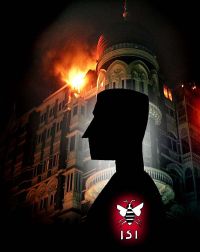 • How did they get this Honeybee?
• They claimed this was a name they used to disguise an Indian source that they recruited who was passing information for money.
• Who is he?
• If we knew, we would have written that.
• He or she?
• He. As far as we know. Based in Delhi.
• From the military?
• I cannot say. They described it as someone…. I cannot say because I don’t know. It is ambiguous whether Honeybee is military or whether it is someone in a ministry who has access to the same information.
It has to be a person connected to national security. It is someone within this orbit. It has to be.
I am less inclined to believe that it is someone in the military. Because the Indian military is a very ideological establishment. It is less likely because, as you know, it is very fraternal. But these are guesses. You have to say we don’t know.
• Did you try to find out?
• Yeah. I tried. I haven’t got very far on this. But you know…. It is quite shocking. Because it seems that it enabled them to work out what to expect after the event and what the weaknesses of the Indian response would be and how to evade it.
So for example, they knew how a Mumbai police control room worked, they knew how the GPS system works in Mumbai cars.
In Karachi, they built a model of the Taj Hotel using blueprints so they had a kind of a schematic of the Taj. That was shown to the boys in Karachi.
I think for them it was not really the most significant thing. I think the digital elements helped.
The fact that if you have never been to a city, but you know street view on the map, if you put it on street view, then you can walk down the highway in Colaba, past Leopold, and take a right and head down two blocks and hit the service lane at the back of the Taj.
That is what you need to know. You need to know the tailor shops on the left, the hardware store is on the right. It is that kind of thing that helped them. These are country boys, they don’t have any great experience.
• What is the life story of these ten terrorists?
• This is a really interesting thing. First of all, nearly all the names given are partially wrong. The lives of eight of them is pretty identical. In the sense that they are, broadly speaking, from Pakistani Punjab, broadly speaking, mostly from southern Punjab. As you know, that is the hot bed of sectarianism where there is presence of LeT or Lashkar-e-Jhangvi or Sipah-e-Sahaba, particularly.
It is also an area where a lot of political horse-trading takes place. Really, they run a government within a government and no one is in control of those groups.
 You can see that if you go to these places, particularly to Okara, where Kasab comes from. Zaki, the LeT military commander, is from Okara, too.
It is significant because Okara was a very impoverished, down-on-its-luck city until lots of boys began to die in Kashmir. Then it was renamed the Blessed City. Because the only way it got virtue was through the fidayeen.
There was no industry, no social welfare. The welfare was provided by the LeT. The hospitals are run by them, the seminary is run by Sipah-e-Sahaba.
The only way you could get medical treatment or money for the family was by being an adjunct. But it is not just joining the Lashkar, it is also about publicity.
You could go to Okara now, what it says on the walls is not Bollywood, not cricket, but jihad.
There are newspapers with cartoons and in the cartoons are the fidayeen. You know they joke that there is a character called Jihad Joe for school boys. And the Lashkar knows this. They describe children as blank blackboards. They fill them with these ideas.
• Even now?
• Even now … completely! This is a very difficult thing because in the absence of the writ of the government, in the absence of investment in education, what will happen is that these groups pick them out.
So, these 10 boys, the first thing to identify is broadly speaking their families are fractured. Broadly speaking, they are from that geographical area. They are brought up in districts that are held together by the governments of jihad.
More than that a lot of the boys come from places which can watch India. They are from border areas where they look out of their bedroom windows and they are looking over the borders.
They are involved permanently in the instability of the border. They know about the tit-for-tat raids, the shelling from all the border wars. So there is the culture.
I can think of two of the boys whose family had lost members in the 1965 and 1971 wars. So in sense, the view from the bedroom window then becomes the world view and then they are picked on by an organisation offering them a glorious way out. Even then children try to get out.
One of the ten [terrorists] is slightly different. In that the leader of the operation was much more decisive. And we know from all of the conversation that took place from the interrogations of Kasab.
The man in the end picked out to lead the operation, in some sense, was much more of a veteran. But he was not typical of the way the operation worked.
 • Nine terrorists died in Mumbai, but there is no social visibility of their parents. Neither did the media in Pakistan report about them. Why?
• The second part of the story is this. All of the families were approached by the jihadi outfit, they were all approached by LeT afterwards, they were approached by the intelligence apparatus and they told the families “I am sorry but your child is dead.” They claimed the children died in Kashmir, there was a glorious battle. “Here is a photo. This is your son, he is a shaheed (martyr). And he died in the war at Baramullah, in Sopore….”
• The families were not told that they died in Mumbai?
• The intelligence agencies categorically denied that. They told the families you would hear lots of stories. It is black propaganda. These boys fought in Kashmir. Every family was given the same story.
• How do you know that?
We went to all of them. In two cases the family was told the boy had drowned running away from the Rashtriya Rifles in a  river in Kashmir. Their whole thing was to pay money. They [the terrorists’s families] got shaheed money. They got cash from the Lashkar, pitiful amounts of money.
• How much money?
• Really insignificant amounts. They were promised like Rs 1 lakh … nothing really, for a life. And they were given this back up story and they were told that anyone comes to you, say this only. – Rediff.com, 21 November 2013
» Buy The Siege: The Attack on the Taj here
Filed under: india, pakistan | Tagged: 2008 mumbai terror attacks, 26/11 mumbai attacks, adrian levy, ajmal kasab, cathy scott-clark, CIA, david headley, dawood gilani, india, indian intelligence agencies, indian police service, indian politics, intelligence, IPS, ISI, islamic terrorism, jihad, LeT, maharashtra, mumbai, mumbai police, muslim terrorism, national security, pakistan, pakistani terrorism, psychological warfare, taj mahal hotel, terrorism, US intelligence agencies |





 BHARATA BHARATI
Definitely read the first two chapters of The Siege by Adrian Levy and Catherine Scott-Clark for prima facie evidence of possible official Indian collusion (meaning the foul ruling order) in the 26/11 assault against Mumbai. The evidence marshalled by the duo gives credence to R.S.N. Singh’s allegation that had Kasab not survived everything was in place to blame Hindu extremists for the carnage. I am persuaded the Indian government knew about David Headley, hence the ease with which was granted visas repeatedly.
When I suggested, in the immediate aftermath of the assault, Headley was a US double agent, spying on their behalf on the Lashkar, journalist Ashok Malik, dismissed it airily in the ToI as yet another conspiracy theory. It was my contention that the US knew he was conducting surveillance in Mumbai and decided allowing him to succeed would increase his credibility with the Lashkar. Now I begin to believe that it may have informed the GoI, which did nothing (because of the Indo-US nuclear accord, which I personally supported and still support).
On RSN Singh, of Indian military intelligence, see below:
Indian Politicians: Pakistan’s proxy soldiers – R.S.N. Singh
US-Pak tentacles have penetrated deep into Indian society and government. I am sure that at least one, if not more, senior Cabinet Ministers are US assets. The US shares a great deal about India with Pakistan, which is then instantly conveyed to China. China itself is spending a great deal of money to influence the climate of opinion in Delhi, by funding the publication of books denouncing Indian claims over the border. One of them is by an allegedly pro-BJP writer! — GS
LikeLike
The unresolved puzzles of the 26/11 attacks – Colonel (retd) Anil Athale – Rediff.com – 22 November 2013
The forthcoming publication of a book The Siege: The attack on the Taj and the fifth anniversary of the Mumbai attack has brought forth many newer insights on that event. As is to be expected the version of Adrian Levi and Cathy Scot-Clark that the Indians failed to act on American warnings has been contested by the Indian intelligence officials.
The authors make a point that though the Americans did give repeated warnings about the likely target and even method, they did not reveal the source.
This is unfair to the Americans as no intelligence agency ever reveals its source. But the authors have raised another serious issue — the negligence of the Taj hotel management in ignoring and then dismantling the security that the Mumbai police had insisted on. The Taj management must be held accountable for this action that jeopardised the security of its clients.
The US attempt in preserving the ‘mole’ David Hadley (or Dawood Gilani) in order not jeopardise the operation to nab terror mastermind Osama bin Laden is understandable.
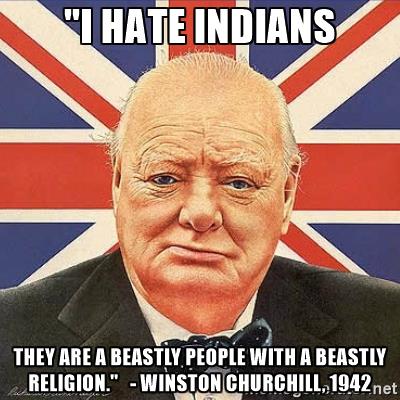
During the WW-II (Operation Bodyguard) in order to keep the secret of ‘Ultra’ (a machine that enabled the Allies to listen to the most secret German communications) Winston Churchill sacrificed Coventry and other British towns to German bombings.
Churchill was afraid that if Allies took extra precautions at those targets, about which he knew through ‘Ultra’, the Germans may well find out that their secret was compromised and may change the mode of communications.
Churchill was not prepared for this and so sacrificed British lives. In the circumstances the Americans did the second best by giving sufficient warnings; after all many Americans also died in that attack.
Vulnerability of the seas around Mumbai is a well known fact. In the early 1960s an American Daniel Walcott, had flown aircraft that dropped arms in the Murud-Janjira area. Wolcott was finally caught by the Bombay police in January, 1966. He had, a year earlier, brazenly flown off Palam airport to Pakistan!
In the 1970s, the west coast was a smugglers paradise — when names like Haji Mastan and Karim Lala dominated the Mumbai underworld. There was very little fishing since smuggling was far more lucrative!
The smuggled goods ranging from tape recorders to cameras were openly sold in tiny shops on Sukhlaji Street in the Red Light area of Foras Road! Even the tonnes of RDX that was sent to India in 1993, was unloaded on beaches not far from Mumbai.
Given this past, it was a well known fact that Mumbai was vulnerable to infiltration of terrorists from sea.
But it stretches imagination too far to say that Headley was not noticed by Indian agencies. His frequent journeys from Karachi were bound to have raised a red flag! Given the volatile situation in Karachi, the only Americans who would transit this route would be either diplomats or spies.
Headley’s shady background and ostensible job as a ‘travel agent’ were a dead giveaway. Even a dysfunctional, Bollywood aspirant like Rahul Bhatt, whom he befriended, is reported to have joked about Headley being a spy. It is mind boggling that what Rahul Bhatt could sense the Indian intelligence did not!
The truth is David Headley was hiding ‘in plain sight’ in Mumbai. From the reports about his interview with Indian intelligence, he comes out as a typical Pakistani braggart! And what a spy — with mismatched eyes that make sure that he sticks out in a crowd. It is most likely that the Indian authorities ‘knew’ about David Headley’s ‘real’ mission and decided to play him along for more or less the same reason that the Americans gave him a long rope!
His arrest by the Americans in October 2009 at Chicago, a full six months before the killing of Osama raises a question! What may well be the fact is that Headley’s usefulness ended even before the successful raid on Osama.
Headley was ‘outed’ in order to protect some others still in the Lashkar-e-Tayiba, which carried out the Mumbai attacks, and at a far higher level. Headley seems more like a pawn that was sacrificed to save the Queen!
The published details of Headley’s activities in Mumbai do not amount to much. In an era of the internet and Google Earth, with detailed street level maps and pictures freely available, an amateur taking a few photographs of sensitive installations amounts to very little. But it what may well be that Headley set up a local support cell for the 26/11 attacks.
But the ‘real’ issue of 26/11 that is shrouded in mystery is that of local support to this terrorist operation. The first issue is why did 10 men coming in a rubber dingy to the Machimar colony not make the residents suspicious? The dingy in which the terrorists landed is typically used by army or navy and not anyone else! On top of it, the men just tied the dingy and left… almost like leaving a car with ignition keys at a busy street corner!
The whole landing episode is shrouded in mystery. On top of it is a question as to how did complete strangers to Mumbai make their way to the designated targets, especially one like Chabad House, virtually unknown to most. It seems reasonable to conclude that the terrorists had a reception party waiting for them and local guides.
Even more crucial is the question as to how the terrorists holed in Taj hotel kept firing for nearly 60 hours! Given the fact that the AK-47 rifles they were armed with have a very high rate of fire, 400 rounds per minute, they must have fired thousands of rounds of ammunition! A rubber dingy is incapable of carrying that kind of weight and ten men!
The issue of local support could be easily resolved one way or the other. When the Taj was cleaned up after the attack, the police must have surely collected the fired cases… especially those with POF (Pakistan Ordnance Factory) markings.
Unfortunately over the years there is a political consensus over playing down or denying the involvement of ‘local’ elements in any terror incident.
This is done ostensibly to prevent a backlash against the minority community. India has come a long way since 1947.
Even the 7/11 Mumbai train bombings, much more ghastly than 26/11, saw no reaction against minority.
What this has done is that in a defensive reaction a sense of victimhood has been built up in the minority even over minor incidents!
An imbecile politician even had the gall to tell a foreign diplomat that it is majority communalism that is the greater threat! Internationally, this has given a handle to predator western states a handle to bash the majority community in India!
>> Colonel (retd) Anil Athale is coordinator for the Pune-based Initiative for Peace and Disarmament
LikeLike