













 India’s Hindu temples are resisting divulging their gold holdings—perhaps nearly half the amount held in Fort Knox—amid mistrust of the motives of authorities who are trying to cut a hefty import bill that is hurting the economy. – D. Jose
 The central bank, which has already taken steps that have slowed to a trickle the incoming supplies that have exacerbated India’s current account deficit, has sent letters to some of the country’s richest temples asking for details of their gold.
It says the inquiries are simply data collection, but Hindu groups are up in arms.
“The gold stored in temples was contributed by devotees over thousands of years and we will not allow anyone to usurp it,” said V. Mohanan, secretary of the Hindu nationalist Vishwa Hindu Parishad organisation in Kerala state, in a statement.
Indians buy as much as 2.3 tonnes of gold, on average, every day—the weight of a small elephant—and what they don’t give to the Gods is mostly hoarded. Jewellery is handed down as heirlooms and stored away with bars and coins as a hedge against inflation or a source of quick funds in an emergency.
That is costing the economy dear. Gold imports totalled $54 billion in the year ending March 31, 2013, the biggest non-essential item shipped in from overseas and a major factor in swelling the current account deficit to a record in 2012/13.
 Guruvayur Temple, in Kerala, one of the most sacred in India and boasting a 33.5-metre (110-ft) gold-plated flagstaff, has already told the Reserve Bank of India (RBI) it won’t divulge any details.
“The gold we have is mostly offered by the devotees. They would not like the details to be shared with anybody,” said V.M. Gopala Menon, commissioner of the temple’s administrative board.
The World Gold Council estimates there are about 2,000 tonnes of gold locked away in temples—worth about $84 billion at current prices—which Indian devotees have offered in the form of jewellery, bars, coins and even replicas of body parts, in the hope of winning favours from the gods or in thanks for blessings received and health restored.
Curbing gold imports and getting the gold squirrelled away back into circulation has become a priority for the government and RBI this year. Import duty is at a record 10 percent and the latest new rule—that 20 percent of all imports must leave the country as jewellery exports—caused confusion that dried up buying for two months.
The head of the Hindu nationalist main opposition Bharatiya Janata Party (BJP) in Kerala state, V. Muralidharan, said the RBI wanted to “take possession” of the gold and maybe sell it for dollars.
 Data Collecting?
The central bank said there was “no proposal under its consideration to convert idle gold into bullion at this juncture”.
But its letters, sent to leading temple trusts in Kerala, were prompted by a report looking at “issues related to gold imports” and loans outside the banking system in February, which zeroed in on temples and domestic hoards for fresh supplies.
Under the heading “supply-related measures”, the report looks at recycling domestic gold and notes: “Temples in India hold large quantities of gold jewellery offered by devotees to the deities.”
Subha Unnikrishnan, a clothes shop owner worshipping at one of the temples in Kerala’s capital Thiruvananthapuram, said whatever had been given to the temple should stay there.
“We have given it to the God with a purpose,” he said. “Nobody can take them away.”
Of the three major temple boards in Kerala, which administer more than 2,800 temples, Cochin board has also decided against providing details of its gold, while another has yet to decide and a third says it has not yet received a letter from the RBI.
 Some of them cite security reasons for their reticence—and the wealthiest temples do have tight controls and metal detectors at gates to keep their assets safe.
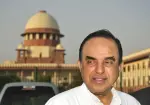
There has been no inquiry from the RBI yet at the centuries-old Sree Padmanabhaswamy Temple, where two years ago treasure then estimated to be worth over $20 billion—more than India’s education budget—was discovered in secret subterranean vaults. But its hoard is already being checked by the Supreme Court to make sure it is adequately protected.
There are some, for sure, who feel the temples should divulge their centuries of gold offerings.
“Everything the temple gets should be known to the devotees,” said Shankaram Kutty, head of an advertising firm based in Cochin, who goes at least once a year to Guruvayur with an offering. “I feel every temple should declare their assets.”
Mumbai’s Shree Siddhivinayak Ganpati Temple, often visited by Bollywood celebrities, had already put 10 kg (22 lbs) of its gold into a bank deposit scheme. It still has 140 kg in its vault.
 “The gold we have is the nation’s property, we will be proud if the nation can benefit from it,” said Subhash Vitthal Mayekar, chairman of the temple’s administrative trust. He has not yet received an inquiry from the RBI.
It is not alone. The Tirumala Venkateswara Temple in the southern state of Andhra Pradesh, considered one of India’s richest, has lodged 2,250 kg of gold with the State Bank of India, which pays it interest.
As the central bank ponders its options, it could take heart that the temples themselves are already doing their bit to circulate the gold.
“We use some of it for making gold lockets that we sell in our temple counter. For making the lockets, we send some gold to the Mumbai mint through the State Bank of India, which is one of our bankers,” said a source at the Guruvayur Temple’s administration. – Reuters, 29 September 2013
- Indian Catholic Church properties valued at rupees several lakh crores
- Devalued UPA government may grab temple gold to shore up rupee
Filed under: india | Tagged: economy, gold, hindu, hindu temple gold, hoarding gold, india, indian gold imports, indian gold market, indian government, inflation, national security, religion, reserve bank of india, temples |








 BHARATA BHARATI
Continuation on the above lines:- Reg. ” From the above, it is clear that a conclusion ‘SOME THING IS WRONG WITH THE iNDIANS-SCIENTIFICALLY THEIR GENES ARE VERY WEAK’ is much more valid than the oft repeated allegation that ‘THE WESTERNERS AND FOREIGNERS ENSLAVED US AND PLUNDRED THIS COUNTRY’!!”:- That particular weak gene has to be identified and changed. This is something like, as the story goes: a mouse, afraid of the cat, ran to a rishi and requested to save him since the cat was chasing him; so the rishi changed him to be a cat; for a while the new cat was feeling okay; but soon was afraid of the dog; so the rishi changed him to be a dog; for a while the new dog was feeling okay; but soon was afraid of the wolf; so the rishi changed him to be a wolf; for a while the new wolf was feeling okay; but soon was afraid of the tiger; so the rishi changed him to be a tiger; for a while the new tiger was feeling okay; but soon was afraid of the lion; so the rishi changed him to be a lion; for a while the new lion was feeling okay; but soon was afraid of the hunter; so the rishi changed him to be a hunter; for a while the new hunter was feeling okay; but soon was afraid of the rat because the rat was damaging the nets;once again he appealed to the rishi; now, the rishi realised that although the original rat’s body was changing, its nature-“to be afraid of something and so to run away and hide”- had not changed at any stage; that is why the rat was again and again seeking protection. So, he reconverted it back to be a rat and left it to its destiny.
Again, looking at the deer; it has such wonderfull and very long horns; but, since its mind is either not developed or structured, the deer uses its horn only to fight with another deer; seldom, no, never does the deer use its horn to fight against or even threaten other animals like the dog, the fox, the wolf, the tiger or the lion; instead in spite of having such long horns, it runs fast away from its enemy and hides. Till date, no one has even attempted to change its gene!
The above are applicable to human beings too! At some point of time, ‘Hinduism-idols and temple worship’ was the order right from present Syria/Iraq upto Thailand/Vietnam; because of its inherent weak gene, it has shrunk to be in the pockets of truncated India.
This type of another weak gene only-and not other people- is responsible for the backwardness of people; reserving seats, jobs and promotions, and even offering them living accomodations in posh areas do not help ‘ALL’ the people in those communities; a few from them get the qualifications, jobs and promotions. But, the entire community continues to be backwards; on the contrary, the efficiency, the sharpness, the ability to analyse and generate new ideas in the administration suffers very badly. this ought to have been tackled in the scientific method of artificially impregnating sperms of successfull/dynamic people so that the progeny would be deserving good rewards and bringing laurels to the community; the HRD in the cabinet should have devised educative programs to the concerned people to take to this idea objectively instead of considering it as a sexual pleasure of a few people- after all have not people taken to this artificial insemination in respect of animals and plant?
I have seen organisations not taking new ideas, not encouraging innovations meant for their ownsake and finally going into ruins. Out of concern for our own fellow Indians/Hindus, I venture to write in so much details
LikeLike
We have been telling that the British, the Portugese, the spaniards were looting this country and had taken away much of the wealth from India; that the Arab, the Iranian,the Afghan, the Turk and the Mongol Invaders did the similar thing including the golden Peacock throne and some valuable Diamond. We make much noise when some pancha Loka Idol is about to be loaded for some foreign destination.Our Ministers and foreign trained officials give nice brainwashing lectures on dispensation of PSUs, village economics visa vis the temples, the necessity to go for machine oriented agriculture ‘INDUSTRY’, the two National party system of Governance and so forth.
On the other hand the Westerners are very proud of their heritage, their Shakespere, their forts and castles, their forests and the like; they converted their local scuffles into two ‘WORLD WARS’ and involving India into them. The Indian tourist, in order to show off his ‘FOREIGN’ experiences, visits all those Heritage sights with AWE!!
We have fallen into their trap and are enmical with our neighbours; in that game, we spend much of our foreign Exchange; inorder to please them, our media have been highlighting the minor failures of collaborations with any body other than the West; much of our foreign exchange is being spent on ‘ROAD TRANSPORT and CONSTRUCTION’ equipment and the crude oil. Although we have a lot of Thorium, we are forced to accept the ‘IMPORTED URANIUM’ route. And the story, of course known to every one, is endless.
From the above, it is clear that a conclusion ‘SOME THING IS WRONG WITH THE iNDIANS-SCIENTIFICALLY THEIR GENES ARE VERY WEAK’ is much more valid than the oft repeated allegation that ‘THE WESTERNERS AND FOREIGNERS ENSLAVED US AND PLUNDRED THIS COUNTRY’!!
Once again our forign trained officials have no indigenous and innovative solutions! They are trained to curb such activities too!!
To settle the FE balances, our officials, the …MK parties, the neo converts, ie.Hinduhaters @ the ‘SECULAR ISLAMISTS and tha XIANS, the Communists and the ‘AETHISTS’ @ Brahmin haters eye not only the Gold in the temples, but also the Idols and the Temples themselves and may be some vast land like Kashmir and cities like Mumbai, Bangalore, Delhi etc. In the worst scenerio, we may export our ‘beauties’ too!!
LikeLike
India’s real wealth is the private wealth of its citizens. Govts and come and go. The nation cannot be equated with a govt of the day. Govts go, but the nation lives on. In India’s long history, it is the private holding of precious metals that have protected people amidst conflicts and invasions. The official statistics about the so called national economy are subject to manipulation, distortion and interpretation.. So much is reported about Indians holding money in foreign banks. Why does not the Reserve Bank call for information about their foreign money holdings from people—especially those in politics and bureaucracy—simply for data collection? Or collect data about the huge landed and other properties of Churches, Mosques and other outfits which are exploited commercially? India has had several such crises in the past—say 1957, 1966, 1972-3, 1991. What would have happened if the private gold had been collected then? Why should a secular govt only target Hindu temples? How do they know others do not have holdings of precious metals? After all, every corporation and bank does have ‘secret reserves’. Has Reserve Bank collected data about them? Something seems ominous in Reserve Bank addressing only Hindu temples. It should stop acting as a running dog of the modern day Gaznis.
I think some more comments are called for:
In the early 60s, Morarji Desai as Finance Minister wanted to curb people’s attachment to gold and introduced gold controls, including attempt to make 14 ct the standard. It met with failure, but only after causing misery to traditional goldsmiths and making the govt. unpopular. The same Morarji as PM introduced gold auction through Reserve Bank in 1978 to reduce the differential in domestic and international prices of gold, as a disincentive to gold smuggling. This too failed.
Universally and historically, gold has acted as the only effective hedge against inflation for common people. Investment in gold rather than in other forms of wealth basically reflects people’s lack of faith in the govt of the day. No govt. any where in the world has been able to violate historical trends and traditions respected by people. Even the IMF which wanted to introduce a free multilateral system of trade and did not want gold used, had to prescribe par values in terms of gold for the participating currencies, while the American dollar which was directly linked to gold emerged as the de facto international currency.
The real issue is the soundness of the economic policies pursued by the govt. and the level of confidence it creates. Taking away temple gold will not make policies sound. and is no guarantee that problems will not recur. Knowledge of history should make our ministers humble.
Reserve Bank should also be more circumspect. Though it conducted the gold auctions in 1978 on govt orders, the next govt. appointed a Commission to enquire into its role. That it emerged unscathed is due to the calibre of its leadership and autonomy. People have enormous respect for and faith in Reserve Bank, perhaps next only to the Supreme Court, and have high expectations from it as a guardian of the economic health of the country, no matter which govt rules the day. One fails to understand how collecting data about Hindu temples’ gold ( while so many others hold gold and other forms of wealth) is linked to its main job which is to maintain monetary stability and operate the currency and credit system to the advantage of the country.
LikeLike