







 It’s not that we’re not interested in our rich heritage in more than just name. It’s just that, well, it seems too hard. We don’t have a Hindu Barack Obama or Nelson Mandela to look up to in Britain. We’d probably like to be led, I suspect, but we don’t have anyone that can show us the way. We’re likely to learn about Hinduism’s most popular export, yoga, from a Californian; and its most recognizable deity, Krishna, from a movement that proliferated in Britain thanks to The Beatles. – Pratik Dattani
 As a young, modern British Hindu, I’m one of a confused bunch of people. Our Sanatan Dharma represents the oldest religion in the world. Our Vedic texts introduced philosophy to the world. That’s our heritage. But almost every young Hindu I know plans to marry in lavish multi-day long ceremonies not because it’s so Hindu, but because it’s so Bollywood. And most of us won’t know the meanings of any of those ceremonial wedding rituals. So most of us will be Hindu in name only, at major festivals and weddings.
It’s not that we’re not interested in our rich heritage in more than just name. It’s just that, well, it seems too hard. We don’t have a Hindu Barack Obama or Nelson Mandela to look up to in Britain. We’d probably like to be led, I suspect, but we don’t have anyone that can show us the way. We’re likely to learn about Hinduism’s most popular export, yoga, from a Californian; and its most recognizable deity, Krishna, from a movement that proliferated in Britain thanks to The Beatles.
But to “lead” Hindus, one most first “represent” Hindus. One of Hinduism’s key strengths is that it is such a broad church. It’s simply not possible to for one person to “represent all Hindus.”
So when a Hindu priest claims to do just that, I get confused. When Selena Gomez wore a bindi at a succession of TV appearances to promote her new song recently, a Hindu priest from Nevada promptly issued a statement saying she had offended all Hindus because a bindi wasn’t “meant to be thrown around loosely for seductive effective or as a fashion accessory.” Clearly he had never heard arguably one of the biggest Bollywood songs of all time, the 1969 classic “Bindiyaa chamkegi” (“My bindi will dazzle”), with lyrics such as “I will be playful and tease you.”
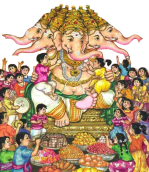
 The same Hindu preacher accused an independent theater production, from a town near Melbourne of making Hindus and Lord Ganesh “a laughing-stock” — without having seen the show (I saw the show and, to put it lightly, this was an unrepresentative view). The Vishwa Hindu Parishad (VHP) protested last year at Oscar-winner Kathyn Bigelow filming Zero Dark Thirty because her team was trying to film Pakistani scenes in the Indian city of Chandigarh. Many years ago, I remember acclaimed Indian director, Ismail Merchant, generating controversy because he cast Tina Turner to play the part of the Goddess Shakti, in a movie. Apparently she wasn’t chaste enough, but a Bollywood actress would presumably have been fine.
A research report by the Henry Jackson Society (HJS), a cross-partisan British think-tank, said earlier this year that Hindus were under-represented in the media in Britain. Out of 3,945 articles they surveyed over 10 years, the HJS found almost all of the Hindu representation in mainstream media were to do with three issues: opposition to the slaughter of a cow in Wales in 2007; asking Royal Mail to remove Christmas stamps featuring Hindu deities in 2005; and finally a case against Newcastle City Council asking for land to be dedicated for open air pyres.
While these may have been important issues, there were almost no Hindu opinions expressed in the media with relation to foreign policy, international aid, community cohesion, discrimination, defense, environment, justice, anti-terrorism, 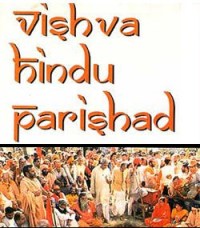 economic policy, employment, family, immigration and abortion. According to report author Hannah Stuart, “Hindu claims were often more specific, and not about wider society and contributions to public policy.”
So on the one hand, there are global organizations such as the VHP, which claim to represent Hindus, but have some views most young British Hindus would consider outdated. On the other hand, there are national organizations elected to represent British Hindus, who don’t comment on issues that matter.
Hindu community leadership in Britain is at a crossroads. Young British Hindus care about many of the same issues as other young Britons — pop music, the credit crunch, Bollywood, the environment, inflation, cultural identity and football. When community leaders do not speak the same language as the next generation, they begin to lose relevance. Many second and third generation Hindus, whose parents are from East Africa or India, have already begun to see their linguistic and cultural heritage dilute over time.
This month gave a sneak peek into what the future may hold. The British government passed legislation to specifically ban “caste” discrimination as part of the Equality Act 2010, something that was likely to happen since the Act originally came into force on 1 October 2010. Hindus condemned any discrimination based on caste (obviously), but many had serious concerns about the consequences and practicality of such legislation, and the impact it may have on entrenching the outdated notion of caste-based discrimination in Britain.
 In saying the notion was outdated, community leaders were likely in sync with what most, especially young, Hindus thought. MPs and community leaders alike, speaking in hushed tones, said it was the first time they could ever remember the Hindu community coming together in such a united voice.
And therein lies the rub. When I heard people say this to me, the statement always conveyed genuine surprise that the community had for once come together. And that too, for an issue unrelated to stamps, shoes or songs. There was also bemusement as to why, if the community felt so strongly, it chose to act only in the last few weeks rather than in October 2010.
What it means to be a young Hindu in modern Britain has changed over the last 30 years. The Hindu community faces the challenge of spending less time being issue-driven, and more time developing an ecosystem that young Hindus consider as relevant for the future. – Huff Post, 1 May 2013
» Pratik Dattani is Managing Director of EPG Economic and Strategy Consulting. He is an economist with a wide range of experience in social impact measurement and social innovation, as well as public policy, economic modelling and providing expert witness reports in arbitration and litigation cases. He is also the Chairman of a large, India-focussed membership organisation based in London called City Hindus Network.
Filed under: india, UK | Tagged: caste, caste-based discrimination, dalits, hindu, hindu unity, hindu youth, hinduism, hindus in UK, hindutva, india, lack of hindu leadership, lifestyle, philosophy, religion, UK |



 BHARATA BHARATI
As a hindu I am proud. We can’t say that “sun moves round the earth”. We have no record to burn or hang any other religion-belever. Wen RICK VEDA had written that time europeans was at primate-age.
Be hindu and spread this faith on ur europeans.
LikeLike
my forefathers were indentured labourers in fiji and which is far removed from the indian motherland. but i am very proud that they retained their culture and hinduism in very trying times when they had no indian government even caring about them or vhp to promote hinduism.
it is only the hindus who were taken away under the guise of indenture labour who have retained their hindu identity but post independence migrant hindus were very quick to lose their hinduism culture
LikeLike
Now there is the beginning of hope, the last hope: Narendra Modi.
LikeLike
Ironically, this is the plight of young Hindus even in India! Just consider the facts:
– We are supposed to be casteless, but govt. reinforces caste by granting reservation for education and employment on the basis of caste; the number of such castes is growing.
– We are supposed to be secular, but govt. runs Hindu temples but not churches and Mosques, and utilises temple funds for non-Hindu uses;
– Lakhs of Hindus have been driven away from their native, ancestral homes in Kashmir but Hindus do not even whisper about it;
-Tibet which follows Buddhism, which is also Dharma- based religion like us, has been occupied by China but Hindus have not done enough to oppose it;
– Bangladeshi muslims routinely cross over to India, but this does not bother the Hindus;
– Hindu minority in Pakistan has been almost decimated since Independence, while the muslim minority in India is bulging. The Hindus do not seem to have realised what it means.
– Indian history is being erased, and distorted, to minimise the muslim atrocities but Hindus do not question it;
– One may call oneself Muslim ,Christian- anything; but if he calls himself Hindu, he becomes communal!
– Muslims, Christians live in all states but it is only Hindus who fight among themselves on language, water, border and other such non-issues.
– Our educational system now is more un-Indian in content and spirit than in the colonial days. Macaulay is still our mentor.
Consider other intra-Hindu issues:
-we worship Ganga, but pollute it
-we worship Cow but allow it to roam the streets and survive on dirt, plastic and rubbish
-cow slaughter was banned in Akbar’s time, but our free govt allows it, though its ban is mentioned in the Constitution. Hindus are not bothered.
– all our sacred books and all the source books of all our arts, sciences, philosophy, psychology etc are in Sanskrit but our universities do not teach it or encourage it.
The fact is, Hindus in India have only a narrow linguistic or communal identity and no overarching Hindu identity. Hindus do not at all realise that while Muslims and Christians are spread all over the world, Hindus have only India as their Motherland.This is our Motherland and only that gives us identity..There is no leader here who stands unequivocally for all Hindus. Vivekananda and Sri Aurobindo have been turned into cult figures and most young Hindus do not know about their life and work. Most young Hindus here too are only interested in a well-paying job and spending as if there is no tomorrow. 800 years of Muslim domination could not shake our religion, but 200 years of colonial rule and 65 years of their imitators have almost destroyed Hindu civilization – all but in name.
If anything, it is only a handful of objective foreign scholars who come from a non-colonial background who remind Hindus of their common heritage. And what little is done by Hindus, is done by Hindus who work and reside abroad!
LikeLike
shown concerns and in between line issues are most relevant.identity crisis is more acute in inland india than in overseas.india now reduced in to no man’s land have lost its past.but consciousness is now being pressed by growing islamic influences.now serious issue of existence has come.sense of gloom and hopelessness have descended.now it seems that hinduism may vanish from world in coming 10 or 20 years.perhaps this perception as a threat is also giving a grand chance and oppourtunity for galvanising renaissance of hinduism.it calls for our wake up to find total diagnosis and solutions.we need to restore our past and activate present for bright tomorrow and future.
LikeLike
Your experience is one that we know a lot about in the USA. We are a country of immigrants. Each generation is more detached from their roots. It’s a fascinating yet troubling process.
LikeLike