













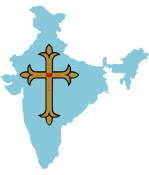

 “India’s secularism consists in repudiating the civilisational ethos of the country. Its topmost objective is to banish Hinduism from the public—political and social—life of the country. In the West secularism stood for rationalism, universalism and humanism. In India, it is a smokescreen and a shield for irrational, exclusivist and inhuman ideologies: Islam, Christianity and Communism.” – Virendra Parekh
 By defining his idea of secularism simply as ‘India First’, Narendra Modi has hit the leftist-liberal combine where it hurts most. True to style, he has just bypassed the ideological debate saturated with its loaded jargon and banal inanities. He has focused on the operative significance of secularism in practice and boldly contrasted it with National Interest. With a single stroke, Modi has brought out the anti-Indian, anti-national character of what passes for secularism in this country. This has naturally riled the high priests of the official religion of the Government of India.
In a way, secular-communal debate is meaningless. In day-to-day politics, being secular means nothing more than being anti-BJP at the moment. When Jayalalithaa, Chandra Babu Naidu, Naveen Patnaik or Mamata Banerjee are part of NDA, they are held guilty of supporting communalism. But if they join hands with Congress, they become lily-white secularists. As the railway minister in Atal Behari Vajpayee’s government in 2002, Nitish Kumar forgot his secularism when the Godhra incident and the subsequent riots took place. He did not even make a pretense of resigning. Now that he wants to impress  Muslim voters in Bihar, he suddenly remembers the sordid episode. His stand that Narendra Modi is communal but BJP is OK till it does not make him its leader is laughable. The game is so transparent that everyone, Muslims first of all, can see through it.
The debate is irrelevant also for the more important reason that the pressing challenges staring at the country cannot be reduced to communal tensions. The economy is in doldrums, the external balance of payments is a mess and investment has dried up. Although the government is in place, governance has disappeared. For ordinary people, the cancer of corruption that has spread to every nook and corner of the body politic and unbearable price rise are the existential problems that need to be tackled on war footing.
The Congress will be making a big political blunder if it resurrects the secular-communal debate as its main poll plank and leaves the field open for Narendra Modi on issues of growth, governance and development where the real political battle lies.
Yet, given the clout and the lure of Muslim votes, one cannot rule it out. It is necessary, therefore, to examine the issue once again and see what difference Narendra Modi with his ‘India First’ approach can make.
 To begin at the beginning, one is uncomfortable using the word India in the context of what passes for secularism in India. There is nothing Indian about it. It is anti-thesis of everything that is Indian. It is twice removed from Indianness.
First, the meaning of the word, as it is understood all over the world, has been distorted and perverted beyond recognition. As a result, the word secularism has not just become meaningless in India; it has come to mean the opposite of what it means all over the world. Since foreigners (and even many educated Indians) are not aware of this distortion, the label ‘secular’ confers an unfair advantage on those who wear it, and brings unfair opprobrium to those who are denied it or who express reservations about it. A bogus ‘secularism’ has confused our intellect, paralysed our will and clouded out vision in the face of mortal threats posed by forces bent on destroying India.
In any other country of the world, government subsidy for a religious pilgrimage like Haj would be regarded as violation of secularism. In India, Haj subsidy is a proof of secularism. If you support it, you are secular. If you oppose it, you are a communalist. Here, those who stand for a common civil code are reviled as rank communalists, while those who champion separate orthodox discriminatory codes based on religious texts can pose as guardians of secularism. A demand that all states should have the same rights and responsibilities is condemned as divisive and irresponsible, while those who defend the special status of Muslim majority state of Jammu & Kashmir can 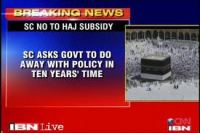 claim the mantle of secularism. Islam and Christianity can be taught in Government aided schools, but not Hinduism. The Government does not interfere in management of mosques and churches, but Hindu temples are a fair game for its plunder.
The examples could be multiplied. But the point is made. Black has become white, and white has become black. What is violation of secularism elsewhere is proof of secularism here.
We have a prime minister who says that Muslims should have the first claim on the government coffers—“What have they done to deserve it?” you ask. Proof enough to brand you as a divisive and communal fundamentalist, if not fascist. A leading luminary of the ruling party visits and offers consolation to relatives of terrorists involved in killing a police officer during an encounter. Police officers who staked their lives in eliminating a dreaded criminal and a terrorist are rotting in jail, even as crores are spent on a foreigner who killed dozens of innocents openly in the most brazen terrorist attack on the country. A large section of the political establishment believes that peace negotiations with Pakistan must proceed at any  cost (to India, of course). It is the same section for which Bangaldeshi infiltration, which threatens to sever and devour the north-east, is a non-issue.
How and how much can Narendra Modi, with his ‘India First’ approach help here? What can a prime minister not committed to ‘Muslims First’ policy do for the country? At practical level, a great deal.
First and foremost, he could stop the kid glove treatment of jihadi terrorists and Muslim gangsters. He could recognize Bangladeshi infiltration as a grave threat to the unity and integrity of the country and take steps to make India an unwelcome place for Bangladeshi Muslims. He could call the bluff of Sunni separatists of the Kashmir valley who pretend to be the voice of the people of Jammu and Kashmir. He could ensure that army and police officers who take on and eliminate terrorists, infiltrators and criminals are not hounded by human rights mafia, which has converted litigation into a lethal weapon to demoralize and emasculate security forces. One likes to think that he would not have wasted crores of rupees and several years of painstaking effort on the likes of Ajmal Kasab.
 All this would be a great improvement on the current scene. Anyone adopting these policies and approaches would generate a groundswell of public support cutting across regions and communities, making vote bank politics irrelevant. This would be real secularism in action for India, in contrast with the charade that now goes on in its name.
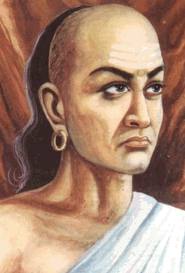
Yet, even in its pure sense of separation of state from religion, secularism has no resonance either with Indian political thought or realities. Indian political thought is centred on Dharma. Chanakya described indriyanigrah (self-control) as the root of rajya (state). The king is upholder and protector of dharma—justice, righteousness and spiritual values.
India’s secularism consists in repudiating the civilisational ethos of the country. Its topmost objective is to banish Hinduism from the public—political and social—life of the country. In the West secularism stood for rationalism, universalism and humanism. In India, it is a smokescreen and a shield for irrational, exclusivist and inhuman ideologies: Islam, Christianity and Communism.
Unlike in the Medieval Europe, the basic conflict in modern India is not between the State and organized religion epitomized in Church, but between an ancient, native civilisation which is gentle, inclusive and pacifist and foreign ideologies which are intolerant, aggressive and violent with self-declared objective of world conquest. They use the language of religion but their objectives are political.
 It is a battle for India’s soul. It pertains to fundamental questions about the cultural content of Indian nationalism, nature of Indian society, interpretation of Indian history and the role and direction of the Indian state.
Thus, is India the repository of a great ancient civilization or is it a ‘nation in the making’? Are Vedas, Upanishads, Ramayana and Mahabharata treasures of the spiritual heritage of the Indian nation, or old texts highly regarded by a section of the population? Are Ram and Krishna symbols of India’s nationhood, or are they mythological figures revered by some sections of a community? Was Babur a fanatic foreign invader who inflicted a deep wound on the Indian nation by destroying the Ram Janmabhoomi Temple at Ayodhya, or just one among the many kings who ruled India in the medieval era? Were Rana Pratap and Shivaji national heroes fighting alien rule, or rebels against a central authority? Finally, do Hindus constitute the national community, or are they just one of several communities inhabiting India?
If India is to remain India i.e. Bharatvarsh, it will have accept correct answers to all these posers, which are staring it in the face. Replacing the sham and bogus secularism with a genuine one is only the first step in a long journey. – Vijayvaani, 18 April 2014
» Virendra Parekh is Executive Editor, Corporate India, and lives in Mumbai.
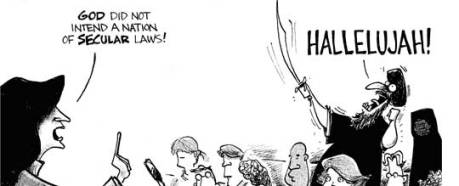
Though Christians and Muslims hate each other, they temporarily put aside their differences and join together to work against Hindus and Hindu interests.
Filed under: india | Tagged: bihar, civil rights, cultural relativism, economics, gujarat, hindu dharma, india, india elections 2014, indian economy, indian politics, islam in india, legitimizing power, narendra modi, nationalism, nehruism, nehruvian socialism, nitish kumar, politics, psychological warfare, religion, religious politics, secularism |










 BHARATA BHARATI
There is some irony about the origin of usage of the term SECULARISM.
The term was originally used by the Catholic Church to identify a priest who did not belong to a religious order.
A parish priest who did not belong to the Jesuit Order or Franciscan Order or Opus Dei was known as a ‘secular priest’.
Only in the 19th century did the term find its way into social and political discourse. The term was coined by the British writer George Jacob Holyoake.
LikeLike
The greatest irony and joke in Indian politics is that Christian missionaries and Muslims are the ones who spout most prolifically this word,”secularism”, besides the anti-BJP politicians who depend on Muslim and Christian organized voting, for their political power! Is it not funny that Muslims who insist that every thing in life is to be guided by Quran and Hadith talk constantly about secularism in politics? Orwell’s 1984 in operation in India!
LikeLike