















 “I would say that the spirit does not exactly take control of the affair [of electing a pope], but rather like a good educator, as it were, leaves us much space, much freedom, without entirely abandoning us. … Thus the spirit’s role should be understood in a much more elastic sense, not that he dictates the candidate for whom one must vote. Probably the only assurance he offers is that the thing cannot be totally ruined.” – Pope Benedict XVI
 It’s a political campaign like no other, with no declared candidates or front-runners and a well-adhered to taboo against openly gunning for the job. But the maneuvering to select the next pope is already under way a day after Pope Benedict XVI stunned the world and announced he would retire on Feb. 28.
One African contender declared Tuesday it was time for a Third World pope — and said he was free if God wanted him.
Berlin’s archbishop urged mercy for the victor, given the terrible weight of the office, while Mexico City Cardinal Norberto Rivera asked for prayers so that the best man might win.
It’s all part of the ritual of picking a pope, the mysterious process that takes place behind closed doors at the Sistine Chapel, where the “princes” of the church, the 117 or so cardinals under age 80, vote in next month’s conclave.
 MORE: Top Opinions About Pope Benedict’s Resignation
Once sequestered, they cast secret ballots until they reach a two-thirds majority and elect a new leader of the world’s 1.2 billion Catholics, sending up smoke signals from the chapel’s chimney to tell the world if they have failed (black) or succeeded (white).
In the run-up to the conclave, cardinals engage in a delicate dance, speaking in general terms about the qualities of a future pope and the particular issues facing the church. It’s rare for anyone to name names, much less tout himself as a candidate.
If asked, most cardinals routinely invoke the refrain: “He who goes into a conclave a pope comes out a cardinal.”
Such genteel public platitudes, however, belie the very real factions within the College of Cardinals that determine the outcome of the vote.
Just because the cardinals all wear the same red cassock and recite the same prayers doesn’t mean they all think alike. They have different visions of what the church needs, different views on critical issues and different allegiances: geographical, sentimental and theological.
And this time around, it seems geography is very much front and center, at least in the public debate that was in full swing Tuesday, the first day of the conclave campaign.
One of Africa‘s brightest hopes to be the next pope, Ghanaian Cardinal Peter Turkson, said the time was right for a pontiff from the developing world, and that he’s available for the job “if it’s the will of God.”
In an interview with The Associated Press inside his Vatican offices, Turkson said the “young churches” of Africa and Asia have now become solid enough that they have produced “mature clergymen and prelates that are capable of exercising leadership also of this world institution.”
 Catholics in the developing world don’t need a pope from their region to thrive, he said. They have done just fine, growing exponentially with European pontiffs. But Turkson, who heads the Vatican’s justice and peace office, said a pope from the global south would “go a long way to strengthen them in their resolve.”
MORE: How They Will Select a New Pope
Whether Turkson would have a shot at the papacy, though, is an open question. Last year he screened an alarmist video at a meeting of the world’s bishops, warning of the inroads Islam is making in Europe and the world.
He apologized, but the gaffe may have cost him a chance at the papacy. Even Vatican Radio called the film a “4-year-old, fear-mongering presentation of statistics” that have been widely debunked.
For his part, Venezuelan Cardinal Jorge Urosa said he hopes the next pope comes from Latin America, home to 40 percent of the world’s Catholics.
Berlin’s archbishop, Cardinal Rainer Maria Woelki, said he doesn’t care “whether he is African or Asian or Latin American or European.”
More importantly, Woelki said, “We should treat mercifully the person who has to take over such an office, in order not to expect of him … possibly 20, 25 or even more years.”
“Such an office wears people out,” he said, praising Benedict for setting the modern precedent of retiring as pope.
That assessment was certainly on the mind of Cardinal Francisco Javier Errazuriz of Chile, who took himself out of the running entirely. He told Chile’s Radio Cooperativa that at age 79, he’s not the papal contender he was back in 2005.
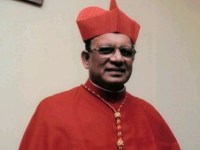 “Back then, I was president of the Latin American Conference of Bishops. It was normal that among the Latin American names they included the president of that institution,” he said. “But I’m now a cardinal emeritus, and I have a different path ahead of me.”
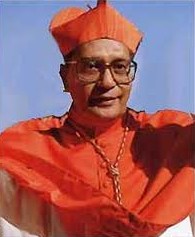
Rivera, the Mexican cardinal, struck a similar humble tone, asking for prayers from all the faithful “so that the Holy Spirit helps us choose the best candidate to guide the church.”
It should be noted that merely by speaking publicly, the cardinals may have jinxed their chances — which may have been their intention given that the papacy is a job few actively seek. But in today’s media-driven world, where cardinals and even the pope tweet, staying silent isn’t an option — at least until the cardinals enter the frescoed walls of the Sistine Chapel.
After that, what goes on in the Sistine Chapel stays in the Sistine Chapel. Violation of the code of secrecy in a conclave means excommunication.
The Rev. Thomas Reese, who wrote about the conclave process in his 1996 book “Inside the Vatican,” said each cardinal looks for three things in a papal candidate.
“Someone who has the same values and vision of the church that he has. … Someone with whom he has a positive relation. They all want someone as pope who is their friend and will listen to them. … And someone who will go over well in their own country, or at least not embarrass them.”
In an email, Reese said American cardinals, for example, want a pope who understands the church sex abuse crisis. A cardinal from a Muslim country, he added, wouldn’t want a pope who has said provocative things about Islam.
Given those requirements, it’s only natural that there be debate in the run-up to the conclave, and on the sidelines once it’s under way.
 MORE: The Resignation of Pope Benedict XVI: Is It Health? Or Politics? Or Both?
“It’s not like an American election with nominating speeches,” said Christopher Bellitto, a church historian at Kean University in New Jersey. Once the conclave has started, “all they do is vote, so all the politicking takes place over dinner and espresso and cigarettes.”
Bellitto said this conclave will be unique because cardinals won’t feel the need to refrain from discussing their picks in advance of the gathering. In the past, such discussions were considered unseemly with a pope nearing death, as during Pope John Paul II’s long, debilitating illness.
But with Benedict’s announced resignation, there’s little reason not to start the negotiations right away, he said.
“Now they’ve got two weeks’ notice, more time for cardinals to start talking,” he said. “Maybe they’ll talk more openly among themselves.”
Lest anyone forget, theologically speaking, the Holy Spirit has a role to play in the process. Picking a pope isn’t just a human process, but a divine one.
Benedict addressed that point in a 1997 interview with Bavarian television, when he was still Cardinal Joseph Ratzinger and the Vatican’s chief theologian.
 The Holy Spirit, he said, doesn’t actually choose the pope since “there are too many contrary instances of popes the Holy Spirit would obviously not have picked.”
“I would say that the spirit does not exactly take control of the affair, but rather like a good educator, as it were, leaves us much space, much freedom, without entirely abandoning us.”
In the remarks, which were reprinted in the book “Conclave” by veteran Vatican analyst John Allen Jr., the future pope continued: “Thus the spirit’s role should be understood in a much more elastic sense, not that he dictates the candidate for whom one must vote. Probably the only assurance he offers is that the thing cannot be totally ruined.” – Time, 12 February 2013
» Associated Press writers Geir Moulson in Berlin, Eduardo Castillo in Mexico City, Fabiola Sanchez in Caracas and Luis Henao in Santiago, Chile, contributed to this report.
 Can an Indian vote for the head of the Vatican City State? – Synonymous
Vatican is defined as the central governing body of the Catholic Church and sovereign entity recognized by international law, consisting of the Pope and the Roman Curia.
It means Vatican is a sovereign nation at par with India , USA , Saudi Arabia etc., It has its own geography, constitution and government. And its own citizens must elect its Head of State, who incidentally is the Pope and spiritual head of Catholics worldwide. However, it should not be possible for citizens of other countries to elect the constitutional head of a sovereign nation.
Pope is elected by the Cardinals who come from various countries. There are five Cardinals from India also. But how can these Indian citizens elect the Head of State of another sovereign nation? The current Pope is resigning by this month end and another Pope election is round the corner. It is time for true Indians to file a caveat in the Supreme Court of India restraining the Indian Cardinals from taking part in the ensuing Pope election. – Haindava Keralam, 13 February 2013
Editor’s Comment: Synonymous has confused the Holy See with the Vatican City State. They are two separate entities though there is some ambiguity about their relationship. The Holy See is the “episcopal jurisdiction” of the Roman Catholic Church with the pope as its absolute head. He is assisted in its administration by the College of Cardinals (which includes six Indian cardinals). The Vatican City State is a political entity with the Pope as its “Sovereign” i.e. king or supreme power. But the Vatican City State also has a “President of the Governorate” who is the highest executive officer of the state appointed by the pope. Indian cardinals will argue that they are electing a pope, the spiritual head of the Catholic Church, not the sovereign or president of the Vatican City State.
Because of the ambiguity between the Holy See and the Vatican City State, some countries do not recognise the Vatican as a sovereign country and do not accept its nuncios (ambassadors). The United Nations also does not recognise the Vatican as a sovereign state and the Vatican is not a member of the UN though it has observer status.
All cardinals are assigned to a Roman church of which they are the chief priest. This establishes their special connection to the City and Diocese of Rome. They may also be given honorary citizenship of Vatican City and carry Vatican City passports.
The six Indian cardinals must attend the papal conclave as it is possible that one of them may be elected pope–though this is not likely and none are on the betting lists so far! In medieval times cardinals were allowed to take their catamites with them to the conclave, but this custom has been stopped due to the on-going Vatican child abuse sex scandals which offer sordid new revelations every day.
See also
-
Pope Benedict Sex Abuse Cover-Up? Papal Resignation Prompts Speculation
-
Vatican Chorister Procures Male Prostitutes For Papal Gentleman-In-Waiting
Filed under: india | Tagged: benedict xvi, bishop of rome, christianity, college of cardinals, geopolitics, holy see, international politics, papal election, politics, pope, psychological warfare, religion, religious corruption, religious laws, religious politics, roman catholic church, roman catholic church india, vatican |










 BHARATA BHARATI
Benedict is a truth-teller!
At the beginning of his papacy he quoted the Byzantine emperor Manuel II Paleologus who criticized Prophet Muhammad and Islam.
Later on in his pontificate he stated, correctly, that St. Thomas did not come to South India.
Now in the article above he has admitted that a papal election is all politics and that the Holy Spirit has no role in it.
This is unprecedented! No Catholic pope would dare to make such an admission in public!
If the the Catholic Church has any moral sense left–which is doubtful–it would ask Benedict to withdraw his resignation and continue as the pope who tells the truth in public to the public.
Of course he has failed miserably on the matter of sex abuse by priests in the Church. But then this abuse has been going on for 2000 years and nobody has ever taken issue with it. So why should he? It is intrinsically part of the priestly culture of Holy Mother Church.
LikeLike