









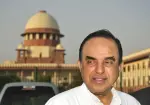


 Brinda Karat (the lady with the huge bindi on her forehead) has clearly not read her Manusmriti which has become the favourite whipping boy of liberals and leftists alike. In a rather pompous statement the other day she rebuked the unfortunate Mohan Bhagwat for being representative of the RSS‘s alleged (by her) antediluvian mentality since he called for Manusmriti to be included in the Constitution.
Whether Shri Mohanji actually said this or not is hard to verify since so much misreporting has been going on in the liberal press. At any rate, the authentic Manusmriti (not the one with the later interpolations) has called for capital punishment for rapists and has advocated many ‘progressive’ measures for women. Most scholars are agreed that the later interpolations were calculated to show Manu as a misogynist. Readers may wish to consult the excellent article by Dr. Surendra Kumar ‘The Position of Women in the Manusmriti’ (Vivekajyoti, Feb. 21, 2012) for an accurate reading of the Manusmriti.
A few points may be mentioned here for the convenience of the reader:
1. The gods make their abode in the household where women are respected.
2. Manu is perhaps the first law giver to give equal status to sons and daughters in the family.
3. Sons and Daughters inherit equally the family wealth.
4. The safety of women’s property must be safeguarded. Those who attempt to steal it from a woman, must be punished, like common thieves.
5. Capital punishment must be enforced for those who rape and kill a woman.
6. A woman has the freedom to marry a man of her choice. Manu advocates the remarriage of widows and Niyoga, temporary attachment to a man for procreation. Dowry is forbidden since women are to be treated with affection and respect and not as chattels to be bought and sold.
7. Both men and women together must perform religious rites as in Vedic times. If she wants, a woman can also wear the sacred thread and perform the Yajnas (religious rites).
8. In a family, unmarried girls and elderly women should be first fed before the husband and wife take their meals.
9. The safety and security of women must be safeguarded by the state and by law. However, it is wiser for women not to depend wholly on these agencies. She must be protected by husband or father or brother or son. That is their duty.
Not a bad record for a thinker who lived a couple of thousand years before the advent of feminism in the West, and if Shri Mohanji actually called for inclusion of some elements of the Manusmriti in the Constitution then kudos to him!
 The fact is that Ms Karat and the Left in general is in bad shape in India. Their role in several states like Kerala is to encourage murder and mayhem. And so in a lean season who else to focus on but the RSS whose sterling work in the social arena cannot be matched by them? Indeed, in the recent horrific event of the rape and death of the young woman in Delhi, passers-by paid no attention to her calls and that of her friend as they lay there on the road. Had there been RSS swayamsevaks present the scene would have been entirely different. They would have immediately come to the couple’s aid and taken them to the hospital. According to the survivor much time was lost since no one had come to their aid.
Whether it is tsunamis or natural disasters the swayamsevaks are first in line to help. The exemplary work of the RSS in bringing members of the lower classes into the mainstream is an example of how a highly motivated and dedicated organisation can contribute to the nation’s welfare. Even Mahatma Gandhi had only praise for their dedication and the inter caste mingling of the swayamsevaks. Their work in the educational field with the vanavasis is again an example of their dedication to the national cause.
 It is only fitting that Ravi Shankar Prasad of the BJP rebuked and condemned a loose cannon from the JDU who tried to slander the RSS and its leader.
The liberal media is not always helpful either. In reporting in print, both NDTV and CNN-IBN first presented with some degree of fairness what the RSS leader said about marriage. He had said that it is the duty of women to look after the home (and husband) and if not the wife can be abandoned by the man. He went on to say that the same logic applied to men. If they did not respect their women folk and take care of them then the women have a right to abandon them also.
However, in another section of NDTV the blatant headline said: ‘A shocker from the RSS Chief’ (Jan. 6. 2013). And yet another one on the same day read:
“Women meant to do household chores, and to satisfy men, says RSS Chief. Mohan Bhagwat’s brand new theory of social contract.” The second part of Mohan Bhagwat’s statement was deliberately omitted. It is still not clear whether he even said any of the above. The RSS spokesperson clarified that their leader was comparing and contrasting marriages in the West and in India. And he is right. A marriage in the West is considered a ‘contract.’ And on the face of it, calling marriage a sacred bond, not a contract, is in itself not an offensive thing to say!
 Brinda Karat piously added an amen with the following words which were quoted in the above account:
” I don’t think it is really surprising because at the end of the day, this is what RSS is. That is why I think it is the retrograde ‘samiti‘ of India. These were the regents who when the BJP was in power wanted a new Constitution based on ‘manusmriti‘. So when he talks in this language, he only reflects his ideology.”
It is really not surprising to hear such statements from the lady with the bindi. A bindi is usually worn by Hindu women as an auspicious symbol of their Hinduness. The minority communities rarely wear the bindi, and the eminence grise in Delhi does not sport one either, although she makes frequent trips to Tirupati during election time. Why this paradoxical situation then with a woman from the Communist Party of India, which has long been anti Hindu, despite the fig leaf talk about communalism versus secularism? What is she proving by wearing a bindi? That she is still a Hindu? And what does she mean by sounding off about a document that she has clearly not even read!
Clearly, she does not subscribe to the Hindu scriptures and beliefs or to temple worship. In addition, she is not well-educated in the classics of the country as her ignorance of Manusmriti shows. Has she even visited a Hindu temple or witnessed a Hindu ritual? She is surely an educated woman (or so one hopes!) and one can expect of her to show a familiarity with the Indian classics. The tired clichéd arguments (picked up from her limited education) about Manusmriti are just that, and useful for attacking the Hindu tradition in general. Whatever the occasion, whatever the issue, that is the target.
At the very least she could show some understanding of the word ‘SEVA‘ a good old-fashioned Hindu word (service) which is the slogan of the RSS.
Or will she have to wait a long time to understand the RSS philosophy of seva (service), which she cannot hope to match, at least not yet! Perhaps in a some future janmam? – Haindava Keralam, 7 January 2013
» Dr Vijaya Rajiva is a Political Philosopher who taught at a Canadian university.
Filed under: india | Tagged: brinda karat, capital punishment, civil rights, CPI (M), culture, dharma shastra, hindu, hindu dharma, hinduism, human rights, humanism, india, indian politics, manusmriti, media, mohan bhagwat, newspaper, philosophy, politics, psychological warfare, rape, rashtriya swayamsevak sangh, respect for women, RSS, RSS, sanskrit literature, seva, swayamsevak, tv, values, vedic times, women, women's rights |






 BHARATA BHARATI
Pls read Paramacharyas comments on shruti & smriti in ” Hindu Dharma”. There r several chapeters there.
LikeLike
Yes, of course you can quote me by name. What is published belongs to the public.
I tend to agree that what is presented as Manusmriti today is very probably corrupted. I know of at least four redactions of Manusmriti that are attributed to different rishis. There is no way to authenticate these editions or their authors.
We badly need an authoritative version of this dharma shastra. An authenticated version would also silence the politicians who use the shastra to bash traditional Hindus about caste etc.
LikeLike
IS agree with your comments, also instructive. I recall reading Manusmriti online a couple of years ago, shortly before writing for Indian publications, out of curiosity. I was struck by the rigorous regimen he advocated for Brahmins, and thinking: gee this is so rigorous I would want to run away if I were a Brahmin! On the other hand, from my limited observation of members of my own own family who have kshatriya and brahmin roots it occurred to me that perhaps these brahmins do practise the regimen pretty strictly. They do their sandhyavandanam and this and that . . . . For example the Namboodiri Brahmins follow the Vedic precepts very strictly. How else could they have maintained the various yagams etc.?
My own maternal grandmother was deeply religious and always had her nose buried in her prayer books (on the odd occasions that I saw her). My maternal grandfather religiously kept his sacred thread tied around his forehead when he went for his morning bath. As a child I recall seeing him look towards the morning sun. He must have been reciting the gayatri with his eyes closed and he would do some strange gestures which at the time seemed esoteric to me but must have been the various steps that a twice born (he was a kshatriya) went through during every ritual. He was also related to the present royal family.
My Dad’s ancestral house has a temple in their compound. Deity is Bhuvaneswari. There is always someone living there so that the temple could be maintained and the poojas are conducted so that the neighbourhood comes to worship there. The youngest descendant has returned with her husband from Andhra Pradesh where they were employed, precisely to keep the temple fire burning.
To complicate the issue, someone from my email list wrote and told me that there is no ONE Manusmriti and those that have been circulating are all tainted one way or other. He went back as far as 1839.
I agree that an updated version of Manusmriti would be useful.
I might consider writing a short article examining what the problematic is. In that context is it okay for me to mention some of your points from your first comment (omitting the remarks on our lady of the bindi!)? And cite your official name also?
My own experience with my own family has been one of optimism.
Not that they were/are perfect but there was always a sense of the ethicality of decent everyday behaviour. I agree these are universal values . . . .
LikeLike
My idea is to keep the universal parts of Manusmriti and then relate them to the particular problems of the present age. My sannyas guru, a Saraswat Brahmin who was in many ways a staunch traditionalist, always maintained that Manusmriti should be studied carefully but not applied literally to all the conditions of our times. I think there are Vedic scholars who could update the dharma shastra and do so with intelligence and sympathy. The problem is to find one. Nobody wants the responsibility of meddling with a traditional text and then facing the criticism that will surely follow.
I remember the Kanchi Mahaswami warning a Brahmin lady who had left her husband to become a sadhu, to be strong and not bother about the the math traditionalists who had refused to feed her. He gave her his blessing and her bhiksha too when the math managers weren’t looking. The Kanchi Mahaswami was the very personification of Vedic discipline and tradition but he would quietly bend the math rules when he saw fit to do so.
There are half a dozen or more redactions of Manusmriti attributed to various rishis. Mostly the redactors have cherry-picked Manu and left out the parts they didn’t want. So updating Manu or creating a new dharma shastra is not as radical as might seem at first.
Updating the dharma shastra would also bring NRI Hindus into line with the traditions of the homeland. It would close the gap and decrease the animosity between India-resident Hindus and those who have settled abroad.
Looking at the ten points from Manusmriti that you have quoted, it is shocking to consider that there is probably not a Hindu family in India today who follows all of these simple, straightforward and eminently practical injunctions today.
It is his practicality, fair-mindedness and plain common sense that has always impressed me about Manu.
LikeLike
IS good comment.
A few points:
1. Shri Bhagawat has been using words like Hindutva also (rightly in my opinion).
2. At any rate, whatever he says will twisted by the liberal/leftist media.
3. To complicate matters we have an idiotic BJP MLA saying or being misquoted (!) that it is understandable that adult girls are raped but how can infants be subjected to it!
4. A very difficult thing to have a consciously worked out updated version of Manusmriti. And therefore picking out the relevant parts might be the best way to go. The univeral principles can be emphasised and the practice would be updated along with the times.
The points I have summarised are already a good beginning. In Kerala owing to the matrilineal system the idea of boys and girls sharing ancestral wealth is a given . . . and so on.
5. It will also keep attention on the Hindu tradition and not let the project be hi jacked by the asuric forces. Once you let go of the classics the locusts will come in with impunity!
LikeLike
As a high profile Hindu leader, Mohan Bhagwat should be very careful with his public statements. The brown sahibs in the media are just waiting to pounce on him as he represents an India they despise. They will pick apart and scramble everything he says and then quote it out of context. Part of their animosity stems from the fact that the Indian male is being scrutinised for his perceived bad attitude towards women, and these mediawallahs themselves are all guilty of misogyny and are under the scanner.
Mohan Bhagwat is in the extraordinary position of a guru who can mould the attitude of tens of thousands of young men towards women. It is hoped that he will use his considerable influence to do the right thing. There is no valid worship of Bharat Mata if the women of Bharat are disrespected and abused in the house and on the street.
Brinda Karat is of no account at all. She is an prime example of the stereotypical empty-headed woman who wags her tongue whenever the urge comes upon her–and that urge comes often enough. Why an educated and socially aware woman would subscribe to the discredited communist ideology in this modern age only re-enforces the perception of empty-headedness and a total lack of discrimination on her part.
My reading of the Manusmriti is also very positive. Much of it contains universal principles that are timeless. But there are also certain injunctions in this dharma shastra that are absurd and humanly impossible to comply with. These parts may be the later interpolations made by motivated editors. We badly need an authoritative text that has been edited and cleaned up and made relevant to the day.
Dharma shastras are created to guide society at a particular time and place. They are not eternal in scope and do not foresee or comment on social and ethical problems that may arise at a future date. In this sense the Manusmriti is obsolete. We need a new dharma shastra that deals with today’s issues and can reconcile the many new problems thrown up by modern life with traditional Hindu values.
LikeLike