










 “The Mughals converted whole populations through fear of death or torture. The Christian missionary’s position is to barter compassion for redemption. This conflicts with the Hindu percept of salvation. Hindus use charity as a means to purify one’s own soul, instead of charity as an instrument of deliverance to others.” – Ravi Shankar Etteth
 What has been worrying the government is, millions of dollars are misused to support vested interests, like in Koodankulam. Protest is the lifeblood of the poverty industry. Protest is expensive. Ergo, protest is well-funded. Limousine NGOs live in swank houses, smoke the best cigars and swill the best of what Scotland has to offer. Charitable high society flies first class to humanitarian seminars at Reykjavik and Bergen to beg for more euros in the name of sustainability.
Sustainability for what, or for whom? For the NGO or the project? How accountable is the NGO? In each issue it addresses, how relevant is its expertise to bring change? How transparent are its methods? Is money given for gender parity used for anti-deforestation in tribal areas? Is local gratitude bought? Many NGOs function as fronts for foreign organisations, some of which send faith professionals as aid workers to India.
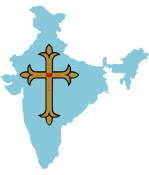
They set up schools, churches and orphanages. Many of these volunteers are periodically deported for unsanctioned religious activity, expired visas, demographic data collection, as in Kerala, Tamil Nadu and Orissa. The conversion rate of the aid dollar therefore acquires a disturbing meaning. The Mughals converted whole populations through fear of death or torture. The Christian missionary’s position is to barter compassion for redemption. This conflicts with the Hindu percept of salvation. Hindus use charity as a means to purify one’s own soul, instead of charity as an instrument of deliverance to others.
 For the ancient Indian, poverty was a virtue. For NGOs, poverty is an opportunity. Hence, it’s lucky for foreign-funded NGOs that millions of Indians are poor. It makes them rich. Most of them are veteran starvation marketers. Their challenge is to keep the money coming. But now, donors question NGOs who have been working for years in the same locality—village, slum or tribal hamlet—but are unable to free the population from dependence. Why should they pony up if no change is visible?
It’s not small change—esurience brings in big bucks, and creates a value-divide between the Lamborghini NGO and the bicycle samaritan. To dismiss all bleeding-hearts as hypocrites would be a grave mistake. Of course there are those who believe in bleeding by the bullet—some even land in jail. Not all are lucky to be rescued by flamboyant activist ministers.
 The truth is, most small voluntary organisations function with paltry funds. Their volunteers live in remote villages without electricity and water, educating the ignorant on the rudiments of commerce. They teach children subsistence skills. They fight to bring justice to women who are abused, raped or sold. They challenge unscrupulous moneylenders who cheat tribals of their land and farmers of their livelihood and lives. Unlike their air-conditioned city cousins or Maoist mavericks, these men and women lead perilous lives, facing constant danger from politicians, land mafia and human traffickers. They don’t depend on euro-poverty projects, but try to raise money from local donors or government.
Many who seek public funds complain of massive corruption: it has been reported widely that many officials at the state-run Council for Advancement of People’s Action and Rural Technology (CAPART), which disburses funds—charge commissions ranging from 10-40% in return for sanctioning projects. It costs a lot to keep moral poverty going. What India needs now are people, who, as Mark Twain said, rise from affluence to poverty. – The New Indian Express, Chennai, March 4, 2012
» Ravi Shankar Etteth can be contacted at Ravi@newindianexpress.com
See Also
- NGOs in Tamil Nadu which recieved over one crore of foreign funds in 2009-2010 & 2010-2011 – GOI
- Evangelical Christianity: Devils in high places – Yogesh Pawar
- VIDEO: The Role of Evangelicals in US Imperialism – Iain Buchanan
- WORLD VISION: Christian NGO engaged in culture murder not social service – V.K. Shashikumar
- Christian NGOs receive huge funds for conversion activities
- Foreign Contribution Regulation Act Report 2006-7
- Preparing for the Harvest – V.K. Shashikumar
- World Vision chief and Congress M.P. Radhakant Nayak accused of Lakshmanananda’s murder
- VHP Secretary Pravin Tagodia demands special commission to probe missionary activities
- American government funds Christian missionaries in India
- “The truth about World Vision” with references on Vivekajyoti Blog
Filed under: india | Tagged: christian, conversion, corruption, foreign funds, geopolitics, globalisation, india, jesus, neo-colonialism, NGOs, non governmental organisations, poverty, proselytize, religion, social service, world vision |






 BHARATA BHARATI
India has always had a larger population throughout history, in comparison to other countries.
The problem is not a large population but rather the equal distribution of goods. In ancient times this was well achieved but since the arrival of the British the distribution system was destroyed along with the educational system.
Making Hindi the national language was a wrong choice. Sanskrit should have been made the national language as it was already spoken by many groups throughout the whole of the country.
LikeLike
An optimum population figure for the 65-year old modern India is probably about 30 million. No more than a 100 million people should live in the country. In 1947 the population was 350 million. Imagine if the country had not done much else except to hold its population at 350 million. It would be a vastly better place now. Today the population is 3 times what it was in 1947.
Decades have been lost. We may be beyond the point of no return.
One nation, one language. One language for one country is enough. This is a concept if implemented will dramatically transform the country forever. Hindi with a modified grammar, such as going from a two-gender language to a three-gender language, without inflections that you can do away with and an improved alphabet, is the logical choice. But it has no takers.
For the foreseeable future, English will continue to be the language of science and technology, international commerce and aviation, and other such areas. Even in countries where English is the native language the number of people working in such fields is a small fraction of the overall population. It will not be any different in India.
Use of English in running the government, the courts, television, newspapers and so on should be gradually reduced. It should be used where it is necessary and where there is no other alternative by those who need it.
With a small population it is also easier to make it the birthright of every citizen to have access to a daily, high-protein, high-nutrition, age and gender appropriate national diet.
Dramatic results demand dramatic policy changes and actions. Do these things or get used to the way things are and expect them to get worse.
LikeLike