












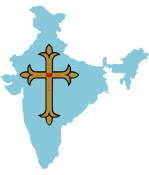


The Catholic Church acquired much of its property in India during the time of British colonial rule, under the Indian Church Act of 1927. These properties were obtained at an indicative rent, on the premise of encouraging the spread of Christianity. – Sumaila Zaman
Land is one of the oldest and most important resources that has impacted human civilisation. Land is and has always been more than just a plot of earth. It lays the foundation of agriculture, housing, industry, education, and religious life. Apart from extrapolated uses of land, land represents wealth, power, and social status. Hence, land can shape economies, politics, and societies. To an immensely populous and diverse nation such as India, land takes on a larger importance in both its physical influence on urban and rural development, and in its physical connection to social heritage, national growth and development, culture, and trade development.
Land has long been a symbol of wealth and power. Many wars and conflicts have arisen over it. Land is necessary for human existence, for it provides space for agriculture, housing, schools, factories, and churches. In a country as large and populous as India (approximately 3.29 million square kilometres of land), land can serve as a necessary condition for the livelihoods and general development of people.
Who is India’s biggest landowner in India?
Most of the land available in India is owned by the government, making it the largest landholder in the country. The second largest landholder is the Catholic Church of India. The Government Land Information System (GLIS) states that as of February 2021, the Central Government of India owned approximately 15,531 square kilometres. This land is divided among 116 public sector companies and 51 central ministries.
How much land does it own nationwide?
The Catholic Church of India owns around 7 crore hectares—roughly 17.29 crore acres—across India. This property, which includes the land on which churches and schools are built, is valued in excess of Rs 1 lakh crore.
How does its land compare in size to Indian states or other countries?
The land controlled by the Indian government is larger than the land area of a number of nations. For example, it owns more than Qatar (11,586 sq km), the Bahamas (13,943 sq km), Jamaica (10,991 sq km), Lebanon (10,452 sq km), Gambia (11,295 sq km), Cyprus (9,251 sq km), Brunei (5,765 sq km), Bahrain (778 sq km), and Singapore (726 sq km).
Among the ministries in India, the Ministry of Railways holds the largest land area with approximately 2926.6 square kilometres of land, followed by the Ministry of Defence and the Ministry of Coal, each holding around 2580.92 square kilometres of land.
The Ministry of Power, with 1806.69 square kilometres, the Ministry of Heavy Industries with 1209.49 square kilometres, and the Ministry of Shipping with 1146 square kilometres, are also ministries that have substantial land holdings.
The Catholic Church acquired much of its property in India during the time of British colonialism, under the Indian Church Act of 1927.[1] These properties range from Goa in the west to the northeastern states of India. However, there are notable disputes over some parcels of property with claims that the Church forcibly occupied some properties.
Story Highlights
- The Catholic Church of India owns around 7 crore hectares – roughly 17.29 crore acres – across India.
- Most of the land available in India is owned by the government.
- The Government Land Information System (GLIS) states that as of February 2021, the Central Government of India owned approximately 15,531 square kilometres.
- This land is divided among 116 public sector companies and 51 central ministries.
In the colonial period, land was frequently leased to many Christian institutions at an indicative rent, on the premise of encouraging the spread of Christianity. In a circular issued in 1965, a senior officer in the Government of India stated that any land leased by the British would no longer be recognised. – India.com, 31 August 2025
Reference
- The Indian Church Act 1927 was repealed by the British Statutes (Application to India) Repeal Act in 1960. The repeal aimed to ensure that the rights of possession and control vested in Indian Church Trustees regarding Church properties would not be affected.
› Sumaila Zaman is a Senior Sub-Editor at India.com
Filed under: india | Tagged: british colonial rule, catholic church in india, forced land acquisition, landownership in india, religious conversion | 1 Comment »







 BHARATA BHARATI