










Whether it is the DMK in Tamil Nadu, Congress in Karnataka, the Marxist party in Kerala or Congress in Telangana, the modus operandi is open hostility to the 5,000-year-old Sanatan Dharma and its followers. Every day sees a new form of harassment and indignity being heaped upon temple history, traditions, customs and rituals. – Dr. G. Shreekumar Menon
What was once the heinous privilege of fanatic invading hordes from West Asia in the form of jihads, and violent European inquisitions against Sanatan Dharma, is now being kept alive in South India by political parties through tacit connivance, abetting forced conversions, desecration of places of worship, temple lands being brazenly encroached, the audacious theft of temple valuables, and violence against devotees.
Whether it is the DMK in Tamil Nadu, Congress in Karnataka, the Marxist party in Kerala or Congress in Telangana, the modus operandi is open hostility to the 5,000-year-old Sanatan Dharma and its followers. Every day sees a new form of harassment and indignity being heaped upon temple history, traditions, customs and rituals.
Presently, at the centre of a controversy is the famous Thiruparankundram Hill in Madurai—home to an eighth-century Murugan temple. In addition, there are third, fourth century BCE Jain caves and a seventh century Kasi Viswanathar shrine. A Sikandar Badsha Dargah came up in the 14th century, in memory of Ala-ud-din Sikandar Shah, the last sultan of the short-lived Madurai Sultanate.
He was an Arab-origin Muslim ruler of a polity that emerged from the fragmentation of the Delhi Sultanate in southern India. His tyrannical rule in Madurai ended around 1378 CE, when he was defeated and killed in battle by Kumara Kampana, the crown prince of the Vijayanagara Empire, who then re-established Hindu rule in the region.
Today, Sikandar Badshah is revered as a shaheed, meaning martyr, by Muslims. A memorial, known as the Goripalayam Dargah—or, as Muslims call it, the Sikandar Mala Dargah—was set up in Thiruparankundram. In this context, it becomes necessary to examine what religious sanctity is accorded to dargahs in Islam.
Dargah worship is a controversial topic: while visiting graves for remembrance is allowed, many scholars (especially Salafi, Deobandi and Wahhabi) forbid practices often associated with dargahs, such as praying to or through the deceased, making vows, sacrificing animals or building shrines over graves, considering them forms of shirk (associating partners with God) and forbidden innovations (bid‘ah). They cite Islamic texts warning against grave worship, though Sufi traditions often incorporate such veneration as normal. Many Islamic texts (Hadith) forbid turning graves into places of worship, with Prophet Muhammad cursing those who did so, according to some interpretations.
Interestingly, there is not a single dargah in Saudi Arabia, the UAE or Qatar. Namaz cannot be performed on public roads in these countries. In Dubai, there is a fine of 1,000 AED (equivalent to Rs 23,673) for praying on roads. No flags or posters may be displayed in Mecca and Medina by any citizen of any country. No slogans may be shouted; doing so invites imprisonment of one month or more.
In India, there is no official count of dargahs, but they are estimated to number in the thousands, dotting the countryside, government lands and many public spaces. Uttar Pradesh is believed to have the largest number, estimated at over 100. The general perception is that this is a ruse—a kind of “land jihad”—to annex government properties and later declare them as Waqf land.
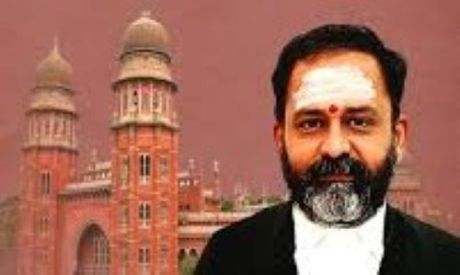
Be that as it may, the ongoing controversy surrounding Thiruparankundram began in the first week of November 2025, when the Hindu Munnani, Hindu Makkal Katchi, Vishwa Hindu Parishad and Hindu Tamilar Peravai approached the Madras High Court’s Madurai Bench seeking permission to light the sacred Karthigai Deepam (a lamp-lighting ritual observed annually in Tamil Nadu) on the traditional Deepathoon (ancient stone lamp pillar). Justice G. R. Swaminathan upheld the plea and ordered that the lamp be lit there, with police protection.
Referring extensively to a landmark civil court decree of 1923 upheld by the Privy Council, Justice Swaminathan noted that Muslims have title only over three specific portions of the hill—the Nellithope burial area, the flight of steps leading to the mosque, and the actual site where the mosque stands. “The Temple Devasthanam has title and possession over the rest of the hill. The entire upper portion of the hill did not belong to the Dargah,” he observed.
The Tamil Nadu government refused, arguing that lighting the lamp near the dargah would disturb communal harmony. It is to be noted that the Deepathoon is located on a lower peak at a distance of not less than 50 metres from the mosque. It lies in the unoccupied portion of the hill and belongs exclusively to the temple. Clarifying the geography of the present case, the judge pointed out that Thiruparankundram Hill has two peaks. “The mosque is at the highest peak, whereas the Deepathoon is at the lower peak, at least 50 metres away. It is not within the dargah campus and lies in the unoccupied portion, which belongs exclusively to the temple,” he said. Yet, the DMK government under Stalin raised an unnecessary objection, citing frivolous reasons. The fear of displeasing a solid vote bank would likely have been weighing on his mind.
Predictably, protests by Hindu organisations followed and clashes broke out. Section 163 of the BNSS (Section 144 of the CrPC) was imposed and the dispute quickly escalated into a political flashpoint.
Another connected matter came up in June 2025, when a division bench delivered split judgments. Justice S. Srimathy ruled that the hill should be known as “Thiruparankundram Malai”, and said animal sacrifice and the offering of namaz in certain areas required civil court permission; until such permission was granted, she barred goat and chicken sacrifice. However, Justice J. Nisha Banu dismissed all petitions.
The matter was thereafter referred to a third judge, Justice R. Vijayakumar, who emphasised the hill’s ASI-protected status—172.2 acres under the 1959 rules—which prohibits taking or sacrificing animals without prior permission. Animal sacrifice was stopped, though the dargah has challenged this in the Supreme Court.
Another 2014 petition challenging the existing lamp site as non-agamic was dismissed by Justice Venugopal because the petitioners failed to provide evidence. A 2017 division bench of Justices Kalyanasundaram and Bhavani Subbaroyan clearly noted that, for decades, the temple and dargah administrations had jointly agreed to the current lamp site and that it should not be disturbed.
The above spate of litigations and consequent orders has created a legal imbroglio. To add fuel to the fire, the notoriously anti-Hindu DMK under Stalin and his son Udhayanidhi Stalin has displayed the temerity to initiate impeachment proceedings against Justice Swaminathan because his judgment was not acceptable to them. A judge may be removed from office through a motion adopted by Parliament on grounds of proven misbehaviour or incapacity. While the Constitution does not use the word “impeachment”, it is colloquially used to refer to proceedings under Article 124 (for the removal of a Supreme Court judge) and Article 218 (for the removal of a High Court judge).
The Constitution provides that a judge can be removed only by an order of the President, based on a motion passed by both Houses of Parliament. The procedure for the removal of judges is elaborated in the Judges Inquiry Act, 1968.
There is no provision that a chief minister, finding a judgment not to his liking, can initiate impeachment proceedings. The entire INDIA bloc of motley politicians has made an exhibition of itself by blindly supporting the DMK’s move. The impeachment attempt is doomed to flounder, but the ulterior motive is to intimidate the judiciary into playing second fiddle to the DMK’s wishes. The same stunt was attempted against the governor, but that also failed.
The independence of the judiciary gives concrete expression to two essential principles of democratic governance: the rule of law and the separation of powers. In a constitutional democracy like India’s, the political process and any act of the State must operate strictly within the confines of the law. The judiciary is tasked and mandated to uphold the rule of law without improper influence, as it is independent of the executive and legislative branches of power. Just because the legislature or the executive finds a judicial order not to its liking, it does not mean that intimidation through the threat of impeachment should be contemplated.
Vilification of the judiciary for issuing orders that are perceived to be against the State, or for actions that have resulted in multiple court defeats for the administration, has led the government to respond with accusations of “judicial overreach”. This, in turn, has encouraged non-compliance with unfavourable rulings, creating instability by weakening the judiciary’s role as an impartial arbiter and eroding its credibility as an effective check on governmental high-handedness. The present impeachment move by the DMK appears to be part of a concerning pattern aimed at delegitimising the judiciary.
As the last bastion of defence for the rule of law in India, and a critical actor in ensuring electoral justice, the judiciary needs to be fiercely protected. As Caroline Kennedy—American author, diplomat and attorney, and former United States Ambassador to Japan and Australia—puts it: “The bedrock of our democracy is the rule of law, and that means we have to have an independent judiciary, judges who can make decisions independent of the political winds that are blowing.” – News18, 12 December 2025
› Dr. G. Shreekumar Menon is Former Director General, Multi-Disciplinary School of Economic Intelligence, and National Academy of Customs, Indirect Taxes & Narcotics.

Filed under: india, tamil nadu | Tagged: DMK, hindu rituals, indian judiciary, political harassment, politics of communalism | 1 Comment »






 BHARATA BHARATI