









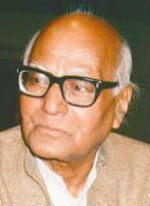
 “It is obvious that in this election there is no great ideological appeal made by any party. For example, the Left it not preaching dogmatic socialism and the Right is not making a case for laissez-faire capitalism. The centrist parties are not advocating Nehruvian socialism. Instead, we have a new election paradigm in which all means, the more foul the better, have become legitimate in the effort to gain power.” – Dr. M. N. Buch
 Soon after Independence, when the first general election took place, one could take pride in the fact that the level of political debate, whether during electioneering or in Parliament itself, was of a high order in which issues were discussed, policies criticised, suggestions for governance were made, the opposition was heard with respect but there was very little personal mudslinging. That is why a stalwart like Shyama Prasad Mukherjee or a gadfly like Ram Manohar Lohia could flay the government or even attack Jawaharlal Nehru, but with no rancour and no ill will. In fact even whilst being iconoclastic, which was the forte of Lohia, there was also a touch of humour and a degree of humility that took the sting out of even the most trenchant criticism. One actually went to election meetings to listen to our leaders and Parliament itself was a delight because during debate there was point and counterpoint, the airing of diametrically opposite views but in an understated manner and it was almost as if one was watching a well-matched bout of fencing in which the rules were strictly observed.
 That was then and this is now. In 1967, the rules of the game suddenly changed because the politics of purchase of power through bribing politicians to defect became a means of negating the choice of the electorate, with bribery bypassing the vote and turncoat politicians unseating governments and substituting new conglomerates in their place. Till 1967, power was a means of governing and promoting welfare. After 1967, power became a purchasable commodity. To purchase power one needed money and for that illegal sources had to be tapped. These sources demanded their pound of flesh, to give which one had to set aside rules, grant undue favours and promote what is today called crony capitalism. Power that is purchased has to be constantly repurchased if it is to be retained and, thus, the chain of corruption becomes both linear and unending. When service is no longer the goal of government and self-aggrandisement and wealth collection become the only objective then, for the purpose of elections, there are no rules of debate, honesty, fair play or even freedom of choice. This is a harsh reality we Indians now have to face and the sooner we do it the better.
 Let us take the 2014 general elections. Has any Indian ever sat back and thought about the level to which we have reduced this country as proved by the fact that the elections have to be stretched over nine phases because elections can only be held under the shadow of the guns of policemen? Because we cannot possibly deploy millions of policemen simultaneously, we stagger our elections and move our forces all around the country to provide coverage to the constituencies going to polls. During the course of my service I have conducted several elections, including two general elections, and I have been an international observer of four elections in Sri Lanka, ranging from local government to provincial and national elections. Even in troubled Sri Lanka, elections were held simultaneously throughout the country and the general elections that I oversaw in my district were part of a one-day national poll. If proof is needed of law and order going haywire the nine-phase election cannot be bettered as evidence.
 Our Constitution mandates free and fair elections. It allows, in fact encourages, different political parties to present their ideology, broad policy framework, specific programmes and agenda of government. Ranging from the extreme left to the extreme right every party has the right to do this, subject only to the constraints prescribed by the Constitution, which means they have to acknowledge and adhere to the principle given in the preamble that India will be a sovereign, socialist, secular, democratic republic. Any party which advocates otherwise has no right to exist. The question, however, is that in appealing to the voters what, if any, are the parameters within which the parties are required to run their election campaign. It is obvious that in this election there is no great ideological appeal made by any party. For example, the Left it not preaching dogmatic socialism and the Right is not making a case for laissez-faire capitalism. The centrist parties are not advocating Nehruvian socialism. Instead, we have a new election paradigm in which all means, the more foul the better, have become legitimate in the effort to gain power.
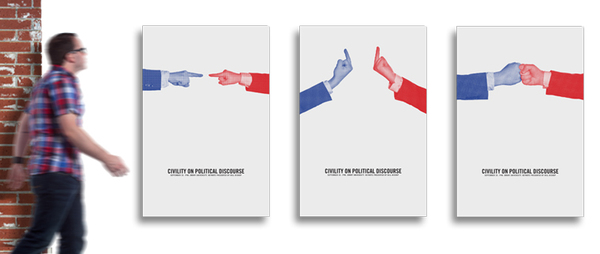
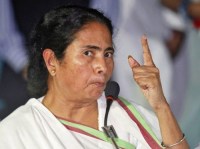 There is complete loss of political innocence and the entire political scenario has become one of just attacking one’s opponents, not for their policies or performance but on totally personal grounds. The new form of political debate is shrill, accusatory, perfectly comfortable with telling lies and happiest of all when heaping unprintable abuse on the opponent and accusing him or her of everything, including murder, sexual depravity and misbehaviour, corruption, even legitimacy of their birth. The new mantra is that under no circumstances tell the people what one has to offer them if one comes to power, because one has nothing to offer and in any case the electorate is treated as a kind of voting machine that can be milked. One is not sure if we shall ever see a replication of how Morarji Desai refused to victimise Indira Gandhi and Atal Bihari Vajpayee took care of the comfort and honour of Sonia Gandhi. At times there was acrimony but no vendetta. Certainly, there was not the kind of churlishness exhibited by Mamata Banerjee towards the Left in West Bengal after she came to power.
What is worrisome is that the parties now seem to be engaged in promoting factors such as religion, caste, region, language and group animosities to promote the narrow interests of a party. One has already seen this translating  into communal violence, undue emphasis on caste, senseless violence and weakening of the administration—these are the antithesis of government.
Part IV A of the Constitution gives the fundamental rights of the citizens, including the duty to promote harmony and the spirit of common brotherhood and to strive towards excellence in all spheres of individual and collective activity. Can this be achieved if the level of political debate is reduced to a public brawl? If democracy is to be saved and the Constitution respected it is absolutely vital to restore civility. Civility in debate and civilised debate leads to civilisation or a stage of development in human society which is socially, politically, culturally and technologically advanced. That is why if we are to ensure a corruption-free good government we need to restore to politics a standard of values and morality, we need to return to civilisational roots, we need to restore civility to debate. – The New Indian Express, 25 April 2014
» Dr. M. N. Buch, a former civil servant, is chairman, National Centre for Human Settlements and Environment, Bhopal; E-mail: buchnchse@yahoo.
Filed under: india | Tagged: india, india elections 2014, indian parliament, indian parliment, indian politicians, indian politics, political debate, political parties, politics, psychological warfare, public debate, public discourse | 5 Comments »





 BHARATA BHARATI