












 “The history of Nobel Peace Prize, in particular, appears full of howlers. While Gandhi was denied despite being nominated many times, Elihu Root, Theodore Roosevelt’s secretary of war, who occupied the Philippines, Cuba and Panama and, like Roosevelt, believed that the US was entitled to govern ‘uncivilised’ people, got it. The award of the prize to Henry Kissinger in 1973 tended to recall George Orwell’s 1984 spectre of ‘War Is Peace.’ It made caustic songwriter Tom Lehrer comment: ‘Political satire became obsolete when Henry Kissinger was awarded the Nobel Peace Prize.'” – Upendra Nath Sharma
 The 2013 Nobel Peace Prize has been handed to the Organisation for the Prohibition of Chemical Weapons (OPCW), which is currently working hard to dismantle the chemical stockpiles in Syria. Experts from the group recently entered the country following international agreements, which were proposed by Russia and prevented “limited military action” against the Syrian government of Bashar al-Assad by the US and its allies.
Skeptics have a point when they challenge OPCW director-general Ahmet Üzümcü’s claim that the award would help the organisation do its job. The awarding of the prize to that particular organisation was really a political dodge by the Oslo Nobel Peace Prize. For it was Russian president Putin’s intervention that gave his US counterpart Obama an escape route out of what potentially looked like it was going to be World War III. OPCW, the organisation designated to do such a removal job, had taken no initiative.
There is no disputing the fact that the little-known OPCW, which even US secretary of state John Kerry and his Russian counterpart Sergei Lavrov mistakenly called the organisation for prevention of chemical weapons, has done a good job. It has cleared a staggering 58,000 tonnes of chemical agents and nearly five million items of munitions and containers during its 15 years of existence. This works out to 80 per cent of chemical weapons declared by its members.
 Not unexpectedly, US president Barack Obama and the European Union have hailed the choice, trying to give the impression that the world is now safer and a more peaceful place as a result of the work of the OPCW. This is far from true. While dismantling Syria’s chemical arsenal in record time is perhaps the most daunting challenge that confronts OPCW, there are other challenges it cannot look away from.
First, the arsenals of four other OPCW members — Iraq, Libya, the Russian Federation, and the US — have not been totally dismantled. Of these, the US and Russia are reported to have the biggest remaining arsenals. Both had committed to destroy their arsenals by 2012 but have as yet failed to do so. Then there are seven nations, including Egypt, Israel and North Korea, that are not members of the OPCW but might also possess undisclosed chemical arsenals which remain to be disarmed.
The peace award to the OPCW will be vindicated only if it is able to address these challenges. Unfortunately, this does not appear possible in the foreseeable future. In this backdrop, the Nobel committee’s decision to award an international agency for doing its job appears rather thin on inspiration.
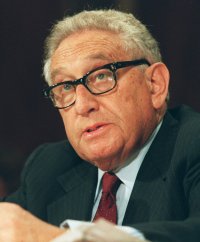
For those who have tagged controversies over the award of the Nobel Prize, however, this should come as no surprise. The history of Nobel Peace Prize, in particular, appears full of howlers. While Gandhi was denied despite being nominated many times, Elihu Root, Theodore Roosevelt’s secretary of war, who occupied the Philippines, Cuba and Panama and, like Roosevelt, believed that the US was entitled to govern “uncivilised” people, got it. The award of the prize to Henry Kissinger in 1973 tended to recall George Orwell’s 1984 spectre of “War Is Peace”. It made caustic songwriter Tom Lehrer comment: “Political satire became obsolete when Henry Kissinger was awarded the Nobel Peace Prize.”
 In his 1895 will, Alfred Nobel specified that Norway’s parliament should elect a five-member committee for awarding the prize to “champions of peace”. Yet the list of recent Nobel peace laureates is notably short on such champions. Instead, the erstwhile politicians on the Norwegian Nobel Committee have largely bypassed the original purpose of the prize.
This is because the Norwegian Parliament Peace Prize Committee is very much a political body that is connected to the NATO (North Atlantic Treaty Organisation) agenda both on the civilian side and military side. Despite its claims of independence, it is enmeshed in Norwegian politics. The committee members are chosen by leaders of Norway’s main political parties and, as a member of NATO, Norway is deeply entangled in the military alliance.
A look at the pattern of awards during the last two decades tends to strengthen this perception. Since 2001, the Nobel Peace Prize has been on a prolonged detour around the US government’s far-flung warfare, declining to honour anyone who had challenged any of it anywhere in the world. On the other hand, peace activists seeking to stop US-led war efforts have been consistently ignored. By giving the peace prize to Obama in 2009 and the European Union (EU), the committee has implicitly endorsed those military efforts as part of a rhetorical process that conflates war-making with peace-making.
When the prize went to Obama, he was in the midst of drastically escalating the US war effort in Afghanistan, in tandem with the rest of NATO. The same prize went to the EU in 2012, a year after many of its member states intervened with  military force in Libya. On both occasions, in effect, the Nobel committee bestowed a “good war-making seal of approval”.
At times, there have been efforts to earn goodwill in NGO circles by honouring humanitarian work that is laudable but not directly related to peace. However, in its search for champions of peace in preservation of human rights, the Nobel committee has danced around Uncle Sam’s global shadow.
The prize has gone only to dissidents in countries where governments are in conflict with Washington — such as Shirin Ebadi of Iran in 2003 and Liu Xiaobo of China in 2010 — while failing to honour any of the profuse activism against severe abuses by US-backed governments.
It is unfortunate in this “war on terror” world of the 21st century, that far from adopting an independent and even-handed approach, the Nobel committee has steered the peace prize away from terrain where the US government and its allies might appear to be anything other than noble peace-seekers. Relying on such a broken moral compass, the mission to assist “champions of peace” with the Nobel Peace Prize has lost its way. – The New Indian Express, 16 October 2013
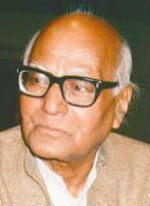
» Prof. Upendra Nath Sharma is a former professor of sociology at IIT-Kanpur. He can be contacted at email upendrasarojsharma@yahoo.com
Filed under: india | Tagged: geopolitics, henry kissinger, m.k. gandhi, nobel committee, nobel peace prize, nobel peace prize winner, nobel prize, OPCW, organisation for the prohibition of chemical weapons, peace prize controversy, politics, psychological warfare, war | 1 Comment »






 BHARATA BHARATI