











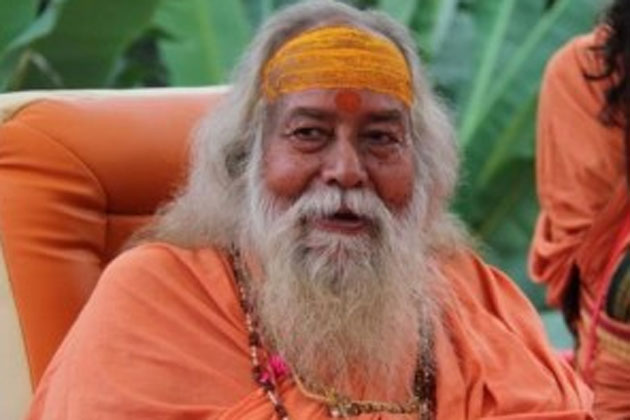
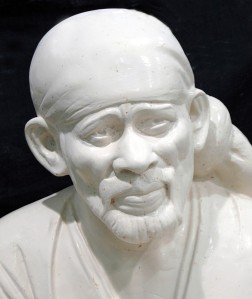
 Shankaracharya tells Hindus to stop worshipping Shirdi Sai Baba
New Delhi: Shankaracharya Swaroopananda Saraswati on Monday (June 23) raised a controversy by declaring that Shirdi’s Sai Baba is not a God and should not be given special place in prayers. He even compared Nirmal Baba with Sai Baba and mentioned that it is a conspiracy to divide existing hierarchy of Gods. “This is a conspiracy to divide the belief of common man. There are only two Gods — Lord Ram and Krishna,” he added. He informed that all those people who don’t want the Government to construct Ayodhya temple are spreading these beliefs that Sai Baba was a God. Even Sai Baba trust is involved in the conspiracy. – News Nation, 23 June 2013
2 – Shankaracharya Swaroopananda says Sai Baba is not a god
New Delhi: Even as scores of people have been protesting against Dwaraka Peeth Shankaracharya Swaroopananda Saraswati for his controversial remarks against Shirdi Sai Baba, the spiritual guru is refusing to withdraw his statement. Shankaracharya is making controversial statements one after another. In his first controversial comment he had told News Nation that Sai Baba is not a God and hence should not be worshipped. Later, he said that Sai Baba followers “should not enter our temples, should not take dip in Ganga and should not chant the name of Ram. Only then they can worship Sai Baba.”
Continuing his scathing attack on Sai followers, Shankaracharya has now said that Hindus should undergo shuddhikaran or ‘purification’ process and should stop worshipping Sai Baba. “It’s their (Hindus) obligation to perform shuddhikaran by keeping a nirjala (without water) Ekadashi fast, taking a dip in Ganga and never take Sai Baba’s name,” he said. When asked why he want to remove the word Ram from Sai’s name, he said: “Ram is worshipped since time immemorial, while Shirdi Sai Baba came after him, how can people worship him?” – News Nation, 26 June 2014
3 – Case registered against Shankaracharya for his remarks on Sai Baba’s meat-eating habits
Indore: A complaint was on Thursday (June 26) filed against Shankaracharya of Dwaraka Peeth Swaroopananda Saraswati in a court here accusing him of hurting religious sentiments with his reported remarks about eating habits of Sai Baba.
Chandrakant Kunjir, a trustee of a Sai Baba temple in Sukhaliya area here, moved the Magistrate’s Court seeking registration of case against the Shankaracharya under IPC Sections 153 (promoting enmity between two communities) and 298 (statement hurting religious sentiments).
The petitioner urged JMFC Raghvendra Bhardwaj to take note of the complaint and order trial of the controversial seer.
Kunjir’s lawyer Shailendra Dwivedi said the court adjourned the hearing to August 7 when evidence in support of the complaint would be presented.
According to the complaint, the Shankaracharya had allegedly called Sai Baba a meat-eater [italics added], thereby hurting the religious sentiments of the saint’s devotees.
The Shankaracharya courted controversy a few days ago when he claimed Sai Baba was not a God, and he should not be worshipped.
Since then, cases have been filed against him in Shirdi, which houses the world-famous Sai Baba temple, Indore and Hyderabad. – Zee News, 27 July 2013
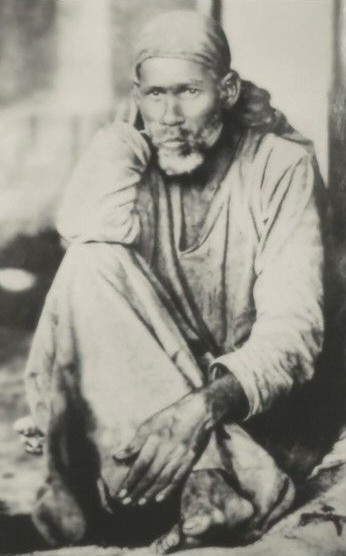
Shri Saibaba Sansthan Trust, Shirdi
Sadguru Sai Baba’s Boundless Glory
Food preparation, Handi and AnnadaanBaba considered Annadaan (donating food) as the holiest of the holy deeds. He followed the practice Himself and set an example for others. He Himself cooked food, gave Fatiya to each item of the food at the hands of a Maulavi and distributed the food with His own hands after performing Fatiya saying it was Guru prasad.
Baba had in His store only two Handis (large cooking vessels made of copper) – one sufficient for 50 and another for 100 people. Baba used the same Handis for cooking food for Hindus as well as Muslims.
In Adhyay 38 of Shri Sai Sat Charita, there is a long list of various dishes that were cooked by Baba. He lit an earthen stove and cooked Mutton, Khichdi or Mithe Chawal (sweet rice). He also cooked Hindu dishes. He Himself ground grains of Daal (pulses), wheat and Jondhalas (jowar). He prepared Bhakris from the flour. He soaked Daal in water, ground it, added condiments and made ‘Watli Daal’. He kneaded balls of Kanik (wheat flour) and made very wide Polis (bread). He even fermented Ambil in the Handis.
Those who ate meat were served non-vegetarian food. But, He never forced others to do so. However, Baba did make attempts to see whether the vegetarians were steadfast at staying away from meat.
Tatya Patil has noted down in his experience that, ‘‘During His first 40 years in Shirdi, Baba never ate meat.’’ However, in the later period, it is observed that Baba broke this rule – at least to some extent [italics added]. May be it was in an attempt to bring Hindus and Muslims together or to keep His own religion a secret? Baba always preached, ‘‘Don’t abstain from food. But, be regular in your habits.’’ He ate all the food articles brought by Hindu devotees with relish.
Baba helped several Muslims to progress in their Adhyatmik journey. Several Rohilas came to Him and – under His umbrage – stayed in Shirdi. Baba served the food to them. This has been noted in Shri Sai Sat Charita as well as in Diary of Shri Khaparde. – Extracted from Shri Saibaba Santhan Trust, Shirdi
Shri Sai Satcharitra
From Chapter 38Somebody may raise a doubt here and ask – “Did Baba distribute vegetable and animal food as prasad alike to all His devotees?” The answer is plain and simple. Those who were accustomed to (take) animal food were given food from the Handi as prasad and those who were not so accustomed, were not allowed to touch it. He never created in them any wish or desire to indulge in this food. There is a principle well established that when a Guru himself gives anything as prasad, the disciple who thinks and doubts whether it is acceptable or otherwise, goes to perdition. In order to see how any disciple has imbibed this principle, Baba at times proposed tests. For instance, on an Ekadashi day He gave some rupees to Dada Kelkar and asked him to go in person to Koralha to get mutton from there. This Dada Kelkar was an orthodox Brahmin and kept all orthodox manners in his life. He knew that offering wealth, grain and clothes etc., to a Sad-guru was not enough but that implicit obedience to and prompt compliance with His order was the real Dakshina that pleased Him most. So Dada Kelkar dressed himself and started for the place. Then Baba called him back and said, “Don’t go yourself, but send somebody.” Then Dada sent servant Pandu for the purpose. Seeing him starting, Baba asked Dada to call him back and cancelled that programme. On another occasion Baba asked Dada just to see how the saltish `Pulava‘ (mutton dish) was done. The latter said casually and formally that it was alright. Then Baba said to him – “Neither you have seen it with your eyes, nor tasted in with your tongue, then how could you say that it was good? Just take out the lid and see.” Saying this Baba caught his arm and thrust it into the pot and added, “Draw out your arm and taking a ladle, put some quantity in the dish without caring for your orthodoxy and without blustering.” When a wave of real love rises in a mother’s mind, she pinches her child with her hand and when it begins to cry and shout, she hugs it close to her bosom. Similarly Baba, in a true motherly way pinched Dada Kelkar in this fashion. Really no saint or guru will ever force his orthodox disciple to eat forbidden food and defile himself thereby.
The Handi business went on for some time till 1910 and was stopped thereafter. As stated before, Das Ganu spread the fame of Baba by his kirtans far and wide in the Bombay Presidency and people from that part of the country began to flock to Shirdi, which became in a few days a place of pilgrimage. The devotees brought with them various articles for presentation and offered various dishes of food as naivedya. The quantity of Naivedya offered by them was so much that the fakirs and paupers could feed themselves to their hearts’ content, leaving some surplus behind. Before stating how Naivedya was distributed, we shall refer to Nanasaheb Chandorkar’s story showing Baba’s regard and respect for local Shrines and deities. – Extracted from Shri Sai Satcharitra
Filed under: india | Tagged: meat-eating, muslim fakir, shirdi sai baba, sufism, swaroopanand | 8 Comments »








 BHARATA BHARATI