














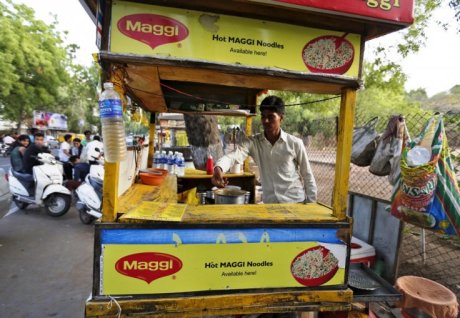
 “In a nation where there is no semblance of food safety in the unorganized food retail sector for the government and the media to go after a packaged foods corporate that holds itself to account through quality checks is reflective of an anti-enterprise mindset. … When the dust settles on this Maggi alarmism, it is the roadside vendor who sold Maggi, the street corner kirana store that stocked Maggi, and the entire supply chain of shopkeepers and distributors who will pay the economic price with their livelihoods for this collective folly of cynical politicians and opportunistic media houses.” – Offstumped
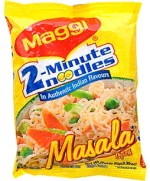 How many have reported falling sick after eating Maggi noodles?
How many complaints of ill-health attributed to eating Maggi noodles?
Questions to which there is no credible answers for in all of this frenzy over food safety and Maggi noodles we have forgotten if there was an imminent threat to public health or is this one of many routine quibbles over nutrition value of junk foods?
If the present controversy over Maggi has just made you aware that the two-minute noodles isn’t ‘the healthy food’ you thought it to be then perhaps you were more to blame than the Brand. Like any other fast food, packaged food or snack – the McDonald’s burger, KFC or Coca Cola – instant noodles was of course going to be of questionable nutritional value but what is with this HashTag alarmism and 24×7 news frenzy?
Did Maggi noodles suddenly turn unhealthy overnight ?
It all started 15 months ago in March 2014 in UP, when a district food officer collected samples of Maggi noodles from a retailer in Barabanki, which was then found to contain monosodium glutamate (MSG) and lead more than its permissible limit. On appeal from Nestle – Maggi’s parent company, the sample was sent to Central Food Laboratory, Kolkata in July 2014. After 10 months, in April 2015, the Kolkata test results confirmed the presence of MSG, as well as lead in high quantity. Why would it take a year to confirm the findings?
Since then Maggi is facing tests in various parts of the country – Delhi government banned Maggi [on June 3rd] for 15 days and has decided to initiate a case against Nestle; Karnataka, Haryana, Punjab, Tamil Nadu have ordered tests; Gujarat and Maharashtra are awaiting test results; West Bengal’s Food Department has called a high-level meeting.
What is MSG and if it is harmful at all
Monosodium Glutamate (MSG) is one of the most abundant naturally occurring amino acids found in tomatoes, Parmesan cheese, mushrooms and many other vegetables and fruits. It is a flavour enhancer, which is either added artificially or is found in other ingredients of the products. According to reports, MSG stimulates the nervous system and makes food appear tastier. It is widely used in ‘Indian Chinese’ food.
An NDTV report quoted Indian dietitians and nutritionists as saying that there was no scientific evidence to establish adverse health effects of MSG. Prominent nutritionist Hena Nafis said:
“Recent reports of MSG having adverse effects such as headache, flushing and excessive sweating – which are typically associated with Chinese Restaurant Syndrome (CRS) – have not been clinically established.”
US Food and Drug Administration (FDA) considers the addition of MSG to foods to be “generally recognized as safe”.
However, Maggi masalas were found to have monosodium glutamate without proper label declaration which is an offence under the category of misbranding. The Maggi packet says, “No added MSG”.
How harmful is lead
Lead, which was found to be more than its permissible limit, can cause can cause serious damages to internal organs including liver and intestine, said Vijay Bahadur, assistant commissioner (food safety), FSDA Uttar Pradesh.
Girish Shahane in his article ‘Maggi Controversy: Millions of Indians face danger of lead poisoning ‒ from Ayurveda’ calls the Maggi row scaremongering and another instance of bureaucratic over-reach, by highlighting that more than 20 per cent of our Ayurvedic medicines contain heavy metals including lead in amounts much more than what has been found in Maggi.
“Why go after trace quantities of lead in noodles when our air and water are poisonous, and noise levels orders of magnitude above the recommended maximum? How many food stalls, or even restaurants, in India would remain open if they had to adhere to prescribed hygiene standards? And how many have been shut down by the food safety chaps?”
 Nestle in its defence
Nestle India claimed it has got samples tested in an external laboratory as well as in-house and that the product was found “safe to eat”.
Nestle is replying to people’s questions and concerns on its website. On the question of misbranding and presence of MSG, Nestle said:
“We do not add MSG to our Maggi noodles sold in India and this is stated on the concerned product. However, we use hydrolysed groundnut protein, onion powder and wheat flour to make Maggi noodles sold in India, which all contain glutamate. We believe that the authorities’ tests may have detected glutamate, which occurs naturally in many foods.”
On withdrawal of products which had lead more than permissible limit:
“We understand that consumers are concerned by reports that the authorities in India have found elevated levels of lead in a sample pack of Maggi masala noodles. The sample came from a batch that had an expiry date of November 2014 and is therefore no longer in the market.”
That Kerala government still runs retail stores is the bigger outrage
Kerala State Civil Supplies Corporation, also known as Supplyco, has around 1400 outlets throughout the state. The government has decided to temporarily stop distribution of Maggi noodles from its retail outlets.
Today when everyone – from consumers to the private companies – is arguing for economic freedom and limited government, why is Kerala government still running retail stores? The leaky public distribution system is an example of government’s failure as a retailer. Government’s involvement in distribution and selling is wastage of government’s limited resources which should otherwise have been focused on better governance and creating conducive atmosphere for business.
Also, the state-run retail business decision on Maggi has been wrongly interpreted as a government ban. 20,000 bakeries in the state have also decided not to sell any brand of noodles until the government takes a decision on this matter.
 It adds fuel to Kejriwal’s anti-industry rhetoric
Even when the test results on Maggi were still awaited in Delhi, the Kejriwal government had already decided to initiate a case against the Indian arm of Swiss multinational giant forgetting perhaps this famous visual now doing the rounds on Twitter:
This Maggi controversy gives fodder to Kejriwal’s hypocritical anti-industry stand, which was exposed in his krantikari interview to Aaj Tak. His style of populist politics forces him to pretend like someone who is against big industries.
Why drag in the brand ambassadors?
A Bihar court has ordered that a FIR be registered against Maggi brand ambassadors Amitabh Bachchan, Madhuri Dixit and Preity Zinta and arrest them. While Bachchan said he no more endorses the brand, Dixit recently met Nestle officials in this regard and said the company has assured her about the quality of the product.
TOI quoted Anirban Das Blah, celebrity agent, who handles the work of big celebrities including Deepika Padukone, Farhan Akhtar, Shahid Kapoor and Ranbir Kapoor, as saying, “If such things happen, our contract states that the celeb is as much a victim as a consumer. Besides, we’re not investigating agencies. If celebs are being held for false promises, what about our politicians? The buck should stop with ministers and bureaucrats who give permission to sell such products.”
 Media frenzy
Though creating awareness is the fundamentals of journalism, creating frenzy is overreach and uncalled for.
Why is Times Group going after Nestle? Is this a new business model to manufacture outrage to feed the news cycle? Times group, which makes money off brand ads, is now feeding public alarmism with it’s over the top outrage.
This government alarmism feeds into media frenzy, damaging a brand and an enterprise’s reputation.
What raises further doubts about the design of isolated targeting of Maggi is that so far there is not a single reported case of sickness due to consumption of Maggi. Nobody has been hospitalized or complained of damage to health on account of consumption of Maggi.
It is irresponsible to fuel a media frenzy against a food product in this manner implying an imminent threat to public health when none exists and none has been proven. This kind of irresponsible activism will have a devastating effect on the entire ecosystem that is financially dependent on Maggi.
It is high time we demolished this negative stereotype of a greedy enterprise when in fact an enterprise assumes financial risk, creates jobs not just within its four walls but across layers of society. This is not to absolve the ham-handed manner in which Nestle responded to this crisis of confidence in its flagship brand. But in a nation where there is no semblance of food safety in the unorganized food retail sector for the government and the media to go after a packaged foods corporate that holds itself to account through quality checks is reflective of an anti-enterprise mindset.
When the dust settles on this Maggi alarmism, it is the roadside vendor who sold Maggi, the street corner kirana store that stocked Maggi, and the entire supply chain of shopkeepers and distributors who will pay the economic price with their livelihoods for this collective folly of cynical politicians and opportunistic media houses. – Niticentral, 3 June 2015

Filed under: india | Tagged: fast food, food, food ban, health, india, indian politics, junk food, lead, maggi noodles, MSG, nestle, psychological warfare, public health | 10 Comments »








 BHARATA BHARATI