















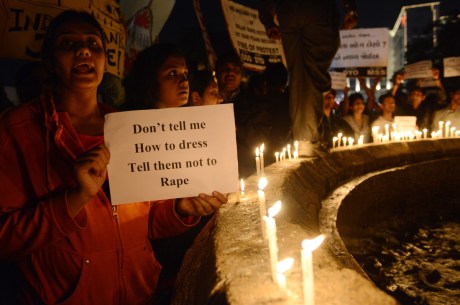
 This will probably be considered politically incorrect. One is bored with excessive propriety and one sometimes should make politically incorrect statements. This is one such occasion. There is a story about the British Army of the Rhine, which is how the British occupying forces were called in Germany after the defeat of Germany in 1945. A British major was seen running stark naked down the corridor of his hotel chasing an equally naked woman. He was court martialed for conduct unbecoming of an officer and a gentleman. His defence was that as per King’s Regulations an officer was required to be appropriately dressed for the pursuit in hand, which he was on that particular occasion. He was acquitted.
 I relate this because for every occasion and in every pursuit everyone, men and women must dress and behave appropriately. Let me start with men. One would not play tennis dressed in an overcoat, nor go swimming dressed in an achkan. There is a dress appropriate for office, another for walking in the streets and yet another for a formal function or a party. I am normally dressed in a white half-sleeved shirt and white trousers, summer and winter, but for an investiture in Rashtrapati Bhawan I wore a formal bandh-gala suit. I do not feel deprived of my rights because I wear clothes appropriate to a particular occasion. There is a time for being dressed casually, another for being dressed formally and yet another for playing games. What applies to men applies equally to women, despite the fact that many women activists say that any comment on the clothes a woman may wear amounts to a direct attack on her freedom of choice. Does this mean that a woman may go to a place of worship dressed in a swimming costume?
 Generally clothes are worn for comfort, for protection against the weather and to suit the purpose or occasion for which one dresses. Working women should normally go to work somewhat formally dressed, as is the case in the western world. A casually dressed woman executive would certainly be told by her superiors that what she wore was contrary to propriety and appropriateness and that she should not dress like this in future. Casual dressing is for comfort but it is not exhibitionist and the purpose is to allow the woman in question to walk, work in the house or attend to other casual activities in clothes which help her in doing so. However, there are occasions when western women dress skimpily and other occasions on which they dress up in finery. Normally this would be in accordance with the occasion, but there are some occasions on which women dress provocatively. Here the purpose is to emphasise one’s body, draw attention to it and thereby attract a male or males, the ultimate purpose of which may be to develop a relationship. A woman in a single’s bar dressed provocatively is obviously looking for a male companion and this is not frowned upon. At the same time she is free to repel unwanted attention and males accept this as normal. The social mores of the West are different, but nevertheless there is a code by which unwanted attention can be
  repulsed and welcome attention accepted without the woman in question being considered as being of loose morals. That is how society is constructed there.
In India the situation is different. We are still a fairly conservative society, which is why, thank god, even Goa at its worst is not a pale shadow of Pattaya in Thailand. There and in other Thai resorts foreign tourists come to have short duration liaisons and for this purpose many local women are willing. Even the best of hotels accept this arrangement. In India it does not happen like this and sex tourism, therefore, is a virtually unknown phenomenon. I hope that we never degenerate to a state where the exploitation of women through so-called emancipation takes place.
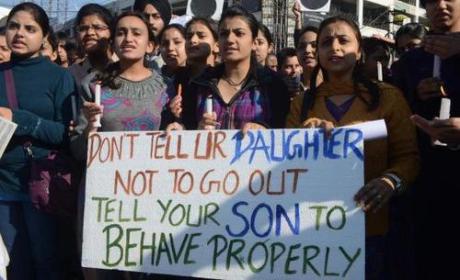
 As in India our social mores are different we do have young women aping some of the fashions of the West, but with strong reservations about what should or can follow provocative dressing. Neither the average Indian male nor the Indian woman has adopted western social behaviour in totality and except for a few cities and a small section of the middle class that has broken away from the confines of the family, we do not like inappropriate behaviour to follow upon provocative dressing. When Sheila Dikshit advised young women in Delhi that though she was not in any way excusing inappropriate behaviour by anti-social elements with women, she did feel that young women should dress appropriately and avoid going to unknown places alone at late hours. She was ferociously attacked by women activists, but was her advice really different from what a mother who would give to her daughter? Is there any harm in suggesting caution in an environment in which there is some danger? I do not agree with those who attacked Sheila Dikshit in this behalf.
 Of course we need better policing, of course we need immediate prosecution and strict punishment for those who indulge in unwanted and inappropriate treatment of women, ranging from sexist remarks all the way up to rape. We need to orient our men to distinguish between mating signals that are specific to two consenting adults and a total misreading of a statement of modernity made through dress and apparently uninhibited speech by a young woman pretending to be emancipated to the point of free love. She does not mean this to be interpreted as a sign of availability and certainly should not invite physical assault and rape. A great deal of sexual violence, especially in larger cities, takes place because superficial external signals are interpreted as changed mores. For this a whole generation has to be trained to correctly read signals in a changed idiom but where the old morality still acts as an inhibitor. We need to have a three-pronged attack. One is the stepping up of security, quick investigation and prosecution of offences as a deterrent. The second is educating the young to develop respect for traditional values and mores. The third is appropriateness of dress, language and behaviour on the part of young women. Combine the three and we move towards a society where men and women respect each other. – The New Indian Express, 10 January 2012
» Dr. M. N. Buch joined the Indian Administrative Service in 1957 and was allotted the Madhya Pradesh cadre. He has been Vice Chairman, National Commission on Urbanisation; Chairman, Inquiry Committee on the Functioning of the Slums Department of Delhi State Government; Chairman, Lutyens Bungalow Zone Committee of the Government of India and of the Committee on the Heritage Zone of Mehrauli. He has also served as Chairman of the Empowered Committee for the New Vidhan Sabha building in Madhya Pradesh and currently he is holding the purely honorary post of Chairman, National Centre for Human Settlements and Environment (NCHSE), Bhopal. Contact M.N. Buch at buchnchse@yahoo.com.
Filed under: india | Tagged: bharatiya tradition, clothing, culture, eve teasing, globalisation, hindu, hindu values, human rights, india, indian boy-girl relationships, indian dress, lifestyle, modern culture, psychological warfare, psychology, rape, society, tourism, traditional morality, values, women's rights | 4 Comments »










 BHARATA BHARATI