















To shift a capital is not an act of vanity; it is an act of clarity. Every civilisation must one day look in the mirror and admit: the centre cannot hold. Delhi has served its sentence; seven times built, seven times burned, and now smothered under its own history. – Ravi Shankar
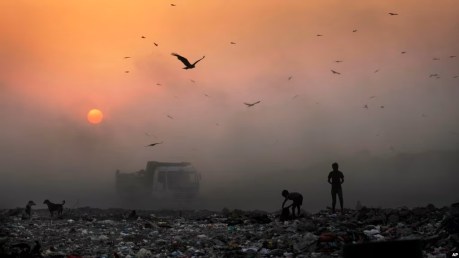
It begins, as every Delhi dawn does, with a cough. It’s the city clearing its throat. The air hangs heavy with burning ambitions, the sky bruised with smog. Delhi, once the radiant heart of the empire, now feels like a lung on its last gasp. When Indonesia decided to pack up its power and prestige from Jakarta and haul it 2,000 km away to Nusantara, the world watched in disbelief. The reasons were stark: a city sinking under its own weight, literally. Jakarta’s polluted air, congested arteries, and collapsing infrastructure had become metaphors for national decay. So Indonesia did the unthinkable, it rebooted. Nusantara rose from forest floor to national nerve centre. A city reborn, a state redeemed. And yet here we sit, wheezing in history’s waiting room.
Delhi’s sickness is not sudden. It’s the slow rot of neglect. Unchecked migration has turned the city into a claustrophobic archipelago of unauthorised colonies. Traffic crawls, rivers curdle, crime hums in the background like a bad soundtrack. What once symbolised civilisation now reeks of entropy. Long before Lutyens drew his imperial circles, India knew how to build cities that breathed. Mohenjo-daro had drainage when London was a swamp. Pataliputra ran on timber and logic. Ujjain, Varanasi, Madurai—each was planned on the mandala, the cosmic map of balance. In those days, a city was not merely a collection of houses but a moral diagram, a reflection of the universe, the matrix of dharma. Delhi has lost that matrix. What remains is a fever dream of flyovers and fumes.
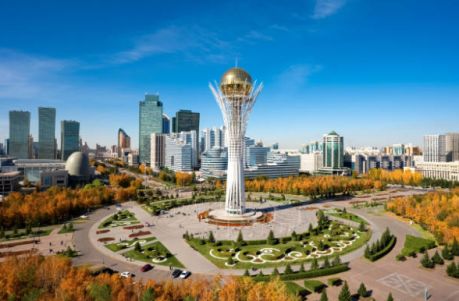
Tughlaq tried to move his capital: ambition without empathy, a migration without meaning. Akbar built Fatehpur Sikri, a palace-city too perfect to live in. Both failed because they forgot the first rule of statecraft: a city cannot be imposed, it must evolve. But modern nations have done what medieval monarchs could not. Brazil built Brasília out of red dust and resolve. Nigeria shifted to Abuja to escape chaos and tribal tension. Kazakhstan erected Astana in the steppes, turning emptiness into emblem. India, which can land on the moon, cannot pretend it lacks the courage to build on land.
Call the new capital Bharatpuri; a city in the navel of the nation, perhaps near Nagpur, where India’s compass crosses itself. A capital not of pomp, but of purpose. Here the skyline must rise with reason. Roads should be arteries, not scars. Housing must be vertical, affordable, and legal. Migration should be managed through a humane right-to-residence policy. The river—and there must be one—should run through the city like conscience through a soul, visible and unpolluted. Bharatpuri should not mimic Lutyens, but mirror the mandala. Ministries arranged like petals around a transparent core of governance.
Nagpur may be one idea, but not the only one. The Deccan plateau calls with its high, dry promise. The cool plateaus of Bhopal whisper of balance, Nava Raipur glimmers with bureaucratic readiness, Mysuru seduces with grace, Pune hums with pragmatic precision, and Aurangabad sleeps atop buried splendour. Each carries a different metaphor: Raipur for rebirth, Mysuru for moderation, Pune for practicality, Bhopal for balance.
But if India builds a new capital, it must first learn what not to do. India needs no more colonial colonnades for clerks. Let the architecture breathe local: basalt from the Deccan, laterite from the Konkan, walls that remember monsoons. No real-estate raj, no land sharks turning policy into profit. Bharatpuri must outlaw speculative buying and resale rackets. Land should serve citizens, not speculators. The new city must plan for dignity—legal, vertical housing for every worker, janitor, and driver.
No bureaucratic fortresses: the state must not hide behind tinted glass. Ministries should be transparent, literally and philosophically. Governance should be walkable, not walled. Build for feet, cycles, and silence. No concrete rivers; water must be religion, not real estate. No flyover fetish, no concrete ego trip. A modern capital should go underground, not overboard. No vertical vanity: skyscrapers are not symbols of progress but of insecurity. Let Bharatpuri rise modestly—more courtyards than corridors, more light than lift shafts. No cultural landfill either; do not import Dubai malls or glass towers. Every street should hum with craft, cuisine, and memory. Above all, do not forget why the capital was moved. Cities die not of floods or fires but of arrogance to think growth is the same as greatness. Bharatpuri must be born of humility.
To shift a capital is not an act of vanity; it is an act of clarity. Every civilisation must one day look in the mirror and admit: the centre cannot hold. Delhi has served its sentence; seven times built, seven times burned, and now smothered under its own history. Let it become India’s ceremonial soul, the Vatican of memory, the museum of the Republic.
When Indonesia planned to move to Nusantara, it wasn’t fleeing, it was renewing. India, too, needs that renewal. The courage to build a city not of conquest but of conscience. Let Delhi remain our past tense. Let Bharatpuri, wherever it stands, be our future perfect. – The New Indian Express, 16 Novemeber 2025
Filed under: india, new delhi | Tagged: air pollution, environmental pollution, indian cities, new national capital, smog | Comments Off on A capital case for Bharatpuri, the jewel in India’s crown – Ravi Shankar








 BHARATA BHARATI