








 “Can we have enduring material development with a section of the women in India having a threat of divorce at a whim without receiving adequate support for the rest of her life? … Or allowing the loot of the Hindu mandirs continue under government management of the institutes? … Or the Hindus not getting back their holy sites, where temples in honour of our civilisational heroes were vandalised, and monuments of our slavery built in their place?” – Ashok Chowgule
 In the making of national policy, three points explain what goes into the making of a sturdy infrastructure. These three points – the three I-s – are Ideas, Institutions, and Individuals.
Ideas, or the agenda, is the vision the party has for the country. This should be in the interest of the people of the nation and for the greater good. Ideas should also be rooted in the civilisational and cultural values of the nation. Clearly expressed ideas enable people to understand what a party intends to do, giving little ground for misunderstandings to arise.
Importantly, ideas should not be limited to slogans, important as they are. It is also necessary to spell out the rationale and implementation mechanism behind it. The slogan of the Congress in the early 1970s, “Garabi Hatao” (Banish Poverty), became meaningless since there was no real program to back it. The BJP’s slogan “Justice for all, appeasement of none” was a very powerful statement that mobilised a large section of the people. However, when in power, it was perceived that the slogan was given a go-by when some of the important actions of the BJP were evaluated on this criteria.
Discussion and debate should be an inherent part of formulating and crystallising ideas – and ideas should be allowed to evolve over time. They should take into account the concerns of people, of new research and of the practical elements of implementation. In that sense, the ideology would always be relevant for the time. Ideas should, therefore, be dynamic.
The next I, Institutions, are the mechanisms through which ideas are implemented. They include society, parliament, government and the bureaucracy. The robustness of these institutions will determine how effective the implementation of ideas will be. Institutions are the link between the abstract ideas and the physical individuals that promote, propagate and implement the ideas.
Finally, the last I – Individuals – are the personal and physical aspect of the framework. Sound and convincing ideas, plus robust institutions, have less need for strong individuals. The strength of an individual – the leader – is however crucial when a major change in direction is required. On the other hand, without the right ideas and proper institutional mechanisms, even strong leaders will not be as effective as they wish.
What exactly are the ideas that are relevant for the nation? Economic development does play an important role in the scheme of things. After all, one cannot sing a bhajan on an empty stomach. But for an overall growth, spiritual and social development is needed as well.
 Devdutt Patnaik, in his book 7 Secrets of Vishnu has explained it as follows: “Material and spiritual reality are interdependent. Without material reality, spiritual reality cannot be discovered, and without spiritual reality, material reality has no purpose.”
On the material reality, he writes:
“(Material growth) means access to all the wonderful things (that) please the five senses…. But material things are impermanent. Sooner or later, they wither away or cease to pleasure the mind. This causes pain, frustration, anxiety, stress, insecurity and fear, emotions that are most undesirable. Left unchecked, they can evoke in the mind greed and jealousy, rage and attachment.”
And on spiritual reality, he writes:
“Spiritual growth is the ability to overpower these emotions so that one has the wisdom to appreciate and enjoy all things material without getting greedy or clingy. One is happy when the material world favours us and not unhappy when it does not. This can only happen when material growth is accompanied by intellectual growth. Only intellectual growth can control emotional turmoil caused by dependence on material things.”
Suppose you had a very enjoyable holiday to Manali, and you were talking about it to a friend. A third person comes in and inquires where you were staying. When you tell the name of the hotel, the third person says that an acquaintance of his had stayed in another hotel and tells you all about it. With only material reality, you feel dissatisfied with your holiday. When there is also a spiritual reality, you would probably say, “I am happy that your acquaintance enjoyed his holiday in Manali in his wonderful hotel, as much as I did in my nice hotel.”
If material reality, i.e. economic development, alone becomes the source of ideas, then we need not look further than Singapore and China. But, we cannot accept only part of the model, without understanding the other aspects that in no small measure contribute to the spectacular success of these two. For example, Singapore has no concern for real democracy, and the laws are such that the ruling party can financially bankrupt an opponent by filing cases of defamation, etc. In China, other than lack of democracy, there are major human rights violations, lack of environmental concerns, etc.
However, today the people of China are not content only with a higher level of living standards. They are also exhibiting an appetite for political change. A well-informed observer of China, Prof Minxin Pei,  recently wrote: “The Chinese society that embraced Deng’s vision – a society traumatised by Mao Zedong’s brutal rule and grinding poverty – no longer exists. It now aspires not just for economic well-being, but also for political rights and personal dignity…. By denouncing and rejecting the most moderate approach to political reform – transforming a one-party state through the implementation of the existing Chinese constitution – the party is merely encouraging the radical view that the regime is so bent on self-preservation that the only possibility of change lies in revolution.”
Material reality also means that we are accepting the philosophy set out by Rishi Charvak. The danger here is that the society will head towards hedonism, with the individual having a priority over the society.
Materialism also leads to excessive insistence on rights and near zero recognition of duties. In an article titled ‘Gandhi on Freedom, Rights and Responsibility’, Dennis Dalton writes:
“When (the English writer of science fiction stories) H.G. Wells sought Gandhi’s opinion on the ‘Rights of Man’ drawn up by him, Gandhi argued for a ‘Charter of Duties’ instead…. ‘You will permit me to say that you are in the wrong track. I feel sure that I can draw up a better charter of rights…. But what good will it be? Who will become its guardian? Begin with a charter of Duties of Man and I promise the rights will follow as spring follows winter.’”
In case of India, what exactly is the content of spiritual reality? It is best expressed by the shloka “Ekam sat, viprah bahudda vadanti”. This is the spirit of tolerance of differences and acceptance that these differences need not affect the essential unity. From this, follow many social programmes that need to be taken along with the material development programmes. It also lays the basis of the spiritual values that are important to make man and society complete.
Can we have enduring material development with a section of the women in India having a threat of divorce at a whim without receiving adequate support for the rest of her life? Or having affirmative policies which partition the poor on the basis of religion? Or allowing the loot of the Hindu mandirs continue under government management of the institutes? Or having a constitutional provision (namely Article 370) which is designed to make a section of the people of a State feel very different from the rest of the country? Or the Hindus not getting back their holy sites, where temples in honour of our civilisational heroes were vandalised, and monuments of our slavery built in their place?
We in the VHP would like such issues to come on the table for discussions. As we have said earlier, enduring ideas for the nation come out of a discussion. If anyone thinks that the specific programmes 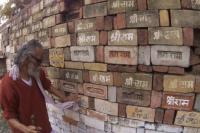 that we have in mind are not good for the nation, the same should be cogently explained. This will help us understand the issues with better nuances than what we have at our command at the moment.
It is necessary to go beyond material development alone, and take into consideration other issues relating to the social and spiritual realm. Only then will we have an India reflecting in the greatness it is destined for, and make the material reality purposeful. – Hindu Vivek Kendra, 4 July 2013
» Ashok Chowgule is the Working President (External) of the Vishwa Hindu Parishad, India.
Filed under: india | Tagged: BJP, civilization, hindu, hindu intellectuals, history, ideology, india, indian politics, integral humanism, material development, nehruvian secularism, politics, spiritual reality | 2 Comments »