













Despite China’s strategic maneuvers, the true spiritual authority and the decision regarding the Dalai Lama’s reincarnation will be determined by the Tibetan people and the international Buddhist community, not by the will of an authoritarian state. – R.K. Raina
The recent high-profile meeting between Chinese President Xi Jinping and Gyaltsen Norbu, Beijing’s appointed Panchen Lama, after a decade-long hiatus, underscores China’s aggressive campaign to dictate the future of Tibetan Buddhism.
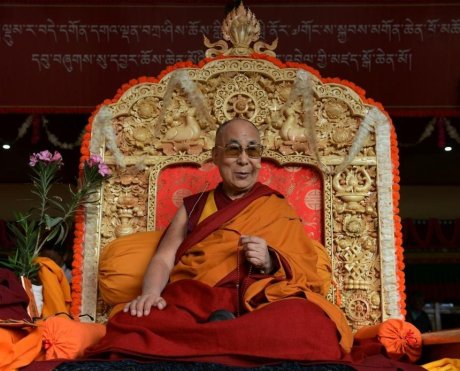
With the 14th Dalai Lama’s 90th birthday approaching on July 6, 2025, China is intensifying its efforts to legitimise its control over the succession narrative, particularly by misrepresenting the role of the Panchen Lama.
However, a close examination of Tibetan Buddhist tradition reveals that Beijing’s claims of an essential and decisive role for its Panchen Lama are not only historically unfounded but also legally and spiritually invalid.
The Fabricated Necessity: Panchen Lama’s Role In Succession
Historically, the Panchen Lama holds the second-highest spiritual authority in Tibetan Buddhism, traditionally playing a significant role in identifying the reincarnation of the Dalai Lama, and vice-versa. Yet, the Chinese Communist Party (CCP) propagates a distorted narrative—that the Panchen Lama’s involvement is “essential and decisive”—to position itself as the ultimate authority in determining the next Dalai Lama.
Crucially, the provided information explicitly states that the Panchen Lama’s involvement in confirming the next Dalai Lama, while significant, “is not mandatory according to Tibetan Buddhist principles.” The recognition process is described as a “complex process of spiritual signs, visions, and religious rituals conducted by senior lamas and monasteries, not the dictate of a single individual.” This fundamental truth dismantles Beijing’s assertion of a unilateral, mandatory approval, highlighting it as a political contrivance rather than a spiritual requirement.
China’s Illegal Intervention And A Disappeared Lama
Beijing’s attempts to control this spiritual process began in earnest in 1995. Following the Dalai Lama’s recognition of six-year-old Gedhun Choekyi Nyima as the 11th Panchen Lama, the Chinese authorities swiftly abducted the child. Gedhun Choekyi Nyima has been missing ever since, tragically dubbed the world’s youngest political prisoner. In a brazen act of interference, China then installed Gyaltsen Norbu, a boy of their own choosing, as their version of the Panchen Lama.
This act of forced installation, coupled with the disappearance of the Dalai Lama’s choice, fundamentally undermines any claim of legitimacy for Beijing’s appointee. Norbu has consistently “struggled to gain acceptance among Tibetan Buddhists” and is “widely viewed as a political appointee lacking spiritual legitimacy”. His movements are severely restricted, and his limited public appearances further underscore his lack of genuine spiritual authority, as evidenced by his denial of entry to Nepal for a major Buddhist event in 2023.
A History Of Failed Impositions & Atheist Irony
China’s current strategy is not unprecedented. Historically, even the Qing dynasty attempted similar interference in Tibetan religious succession, including offering the title of Dalai Lama to the 9th Panchen Lama, an offer that was consistently refused. The 10th Panchen Lama, despite initial cooperation with Beijing, later became a vocal critic, famously condemning the CCP’s repressive policies in Tibet in his 70,000-character petition in 1962. This historical pattern demonstrates that external imposition on Tibetan spiritual matters has consistently failed to gain lasting acceptance.
The irony of an officially atheist Communist Party deeply involving itself in religious succession is stark. The Xi-Norbu meeting is a “narrative building” effort, designed to project Beijing’s authority.
The Dalai Lama’s Unassailable Authority
The 14th Dalai Lama himself has repeatedly affirmed his autonomous authority regarding his reincarnation. He has unequivocally stated that the decision concerning his successor is “ultimately his own, and he has the authority to determine whether the institution should continue.” Furthermore, he has indicated the significant possibility that his successor could be “born outside Chinese-controlled Tibet, possibly in the ‘free world’.”
These statements directly challenge Beijing’s claims of control and highlight that the absence of approval from China’s installed Panchen Lama does not, by any means, “invalidate the identification of a new Dalai Lama”. The spiritual and traditional protocols for identifying the reincarnation rest with senior lamas and the Tibetan Buddhist community, not with political dictates from an external, non-religious power.
Conclusion: Legitimacy Cannot Be Imposed
The Xi-Norbu meeting is a clear signal of Beijing’s determination to control the future of Tibetan Buddhism and the Dalai Lama’s succession. It is a calculated move to impose political authority over a deeply spiritual process. However, history, the intrinsic nature of Tibetan Buddhist tradition, and the widespread rejection of China’s appointed Panchen Lama demonstrate that “legitimacy cannot be imposed by decree”.
As the Dalai Lama’s 90th birthday approaches, the stakes are indeed high. Should the Dalai Lama announce his successor in exile, it would directly challenge China’s fabricated claims and potentially create a spiritual divide between Beijing’s appointee and the candidate recognised by the global Buddhist community. Ultimately, despite China’s strategic maneuvers, the true spiritual authority and the decision regarding the Dalai Lama’s reincarnation will be determined by the Tibetan people and the international Buddhist community, not by the will of an authoritarian state. – News18, 29 June 2025
› R.K. Raina is Consultant to the International Buddhist Confederation, New Delhi.

On June 6th, 2025, Gyaltsen Norbu, the Chinese government-appointed 11th Panchen Lama, met with Chinese President Xi Jinping in Zhongnanhai, the government compound in the center of Beijing, and presented him a silk scarf (khata). He said he would “firmly support the leadership of the Communist Party of China, and resolutely safeguard the unity of the motherland and national unity,” the Xinhua News Agency reported. – AP News
Filed under: china, india, tibet, world | Tagged: 14th dalai lama, chinese government interference, dalai lama's succession, panchen lama, tibetan buddhism | Comments Off on Dalai Lama’s Succession: Why Beijing’s claim of Panchen Lama’s veto is invalid – R.K. Raina







 BHARATA BHARATI