












Idols are sacred objects, created and used for worship; they are not “art” in that sense although their immense artistic merit is undeniable. They were also not the personal property of anyone but rather a collective inheritance of communities of Hindu devotees. So how could these antiquities ever be “sold”? – Reshmi Dasgupta
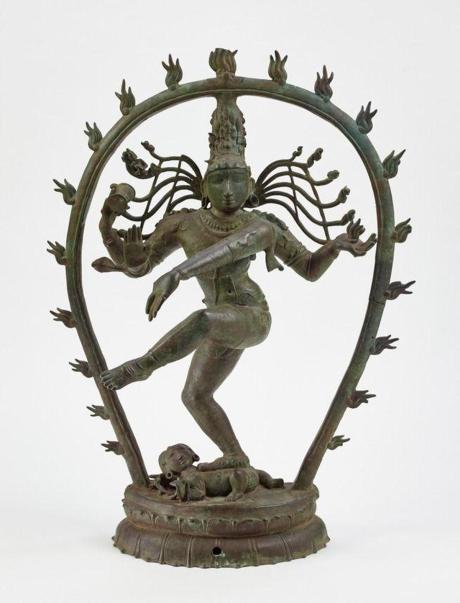
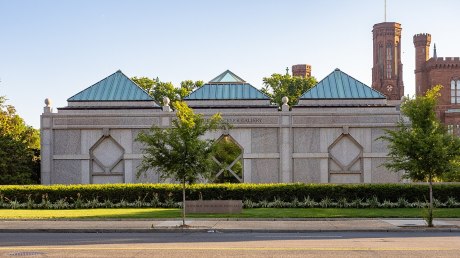
The Smithsonian’s National Museum of Asian Art in Washington DC said on Wednesday that it will return three antique bronzes to India: Shiva Nataraja (from 990 CE), Somaskanda (12th century) and Saint Sundarar with Paravai (16th century). All these used to be circulated in temple processions and disappeared from Tamil Nadu sometime in the 1960s. And now, over 20 years after the museum “acquired” them, they are finally being returned to India.
The NMAA comprises the collections the Arthur M. Sackler Gallery and Charles Freer Gallery, and the three smuggled Indian bronzes are part of the former. Two are from Sackler’s personal collection (part of his initial donation to the museum in 1987) and the third was acquired by his gallery in 2002 from the Doris Wiener Gallery. Since Sackler donated 1,000 pieces of “art” to what is now NMAA, a rigorous forensic examination of all their artefacts is certainly called for.
No matter how self-righteous the NMAA sounds now about returning the antiquities in its possession, illegally sourced from all over Asia, the truth is that it took considerable private efforts to “persuade” them to admit these were stolen. In fact, these bronzes are being returned 10 years after the antiquities dealer Nancy Wiener (Doris’s daughter) was arrested and charged with conspiring with smugglers to buy and sell stolen Asian art via prestigious auction houses.
The criminal complaint said that for 30 years Wiener bought stolen antiquities from smugglers, had them “restored” to hide evidence of their theft and then funnelled them through top auction houses, using false ownership histories. Her gallery sold these to private collectors and museums, including the Metropolitan Museum of Art, Asia Society, the Los Angeles County Museum, the National Gallery of Australia and the NMAA. How were they all so gullible?
Now, a decade after her arrest and four years after her conviction in 2021, the Smithsonian’s “provenance research” has discovered that the three bronzes were illegally sourced. Only in 2023 did the museum partner with the French Institute of Puducherry and found in the latter’s archives that the idols were photographed in temples in Tamil Nadu between 1956 and 1959. The question is, why was this due diligence not done before NMAA “acquired” those bronzes?
Clearly because there was a “nod-nod, wink-wink” complicity between museums, dealers in Asian/Indian antiquities, galleries, auction houses and western collectors. The museums in particular probably superciliously thought they were doing these priceless sacred sculptures a favour by keeping them “safely” within their premises rather than in their Asian homelands. India’s assertiveness in the past decade has effectively punctured their self-serving assumption.
Other Asian nations echoed India’s proactive stance and the results are telling. In 2024 New York’s Attorney General announced the return of 27 antiquities to Cambodia and 3 to Indonesia, valued at $3 million. All had been trafficked by Subhash Kapoor and Nancy Weiner. The Bronze Shiva Triad, for instance, was smuggled out of Cambodia by Wiener, “restored” and offered for sale. When she could not find a buyer, she “donated” it to the Denver Art Museum.
The NMAA is trying to convince the public now that it did not fail to conduct a proper investigation into the provenance of the Indian bronzes. The museum’s director said, “NMAA is committed to stewarding cultural heritage responsibly and advancing transparency in our collection” and asserted it carries out “a robust programme of research that seeks to trace not just how they came to the museum, but the history of their origins and movements across time.” Really?
For the Sundarar-Paravai bronze, the NMAA website says: “Provenance: By 1956 – ? Shiva Temple in Veerasolapuram village, Kallakuruchchi Taluk, Tamil Nadu, India. About 1961 to 1968: William H. Wolff, Inc., New York, NY, method of acquisition unknown. 1968 to 1987: Arthur M. Sackler, New York, NY, purchased from William H. Wolff, Inc., NY. From 1987 Arthur M. Sackler Gallery, Smithsonian Institution, Washington DC, gift of Arthur M. Sackler.”
For the Somaskanda bronze, the website has a similar entry. “Provenance: By 1959-? Shiva Temple in Alattur village, Mannarkudi taluk, Tamil Nadu, India. From at least 1970 1987: Arthur M. Sackler (1913 1987), method of acquisition unknown. From 1987: Arthur M. Sackler Gallery, gift of Arthur M. Sackler”. A note mentioning the museum’s belated (2022) “discovery” of its true provenance, adds “It is unclear when the sculpture left the Tamil Nadu temple.” Left?
The question marks are also curious. Did none of the worthies in the NMAA wonder why idols which were clearly hundreds of years old and were in temples for all that time suddenly became part of some American’s private art collection, and be acquired by another American art aficionado? Why did it take the conviction of crooked art dealers and India’s vigorous demands for the museum to actually mount probes instead of simply putting question marks?
In the light of that evident laxness—whether deliberate or inadvertent—the rest of NMAA’s statement yesterday sounds even more self-serving: “Although the Smithsonian has legal title or custody of its collections, continued retention or sole stewardship may cause harm to descendants or communities and be fundamentally inconsistent with the Smithsonian’s ethical standards and values.” How can there be “legal titles” for these clearly trafficked antiquities?
It must be noted that the NMAA and other museums abroad contain many more Indian bronze idols whose provenances are far from clear. It stands to reason that those idols are sacred objects, created and used for worship; they are not “art” in that sense although their immense artistic merit is undeniable. They were also not the personal property of anyone but rather a collective inheritance of communities of Hindu devotees. So how could these antiquities ever be “sold”?
Take the example of the 7th century Tamil child saint Sambandar, one of the 63 Nayanmars who adored Shiva. NMAA’s Sambandar is part of Freer’s collection. The NMAA website says, “Provenance: ?-1974 Reported to have been with a private collector or art dealer in Singapore. 1974-1976: William H. Wolff, Inc., New York, purchased from an unidentified individual or art dealer in Singapore. From 1976 Freer Gallery of Art, purchased from William H. Wolff, Inc.”
According to an appended note, in early 1974 William H. Wolff wrote to Freer Gallery’s director, Harold P. Stern about selling a bronze image of a ‘Dancing Krishna’. Wolff said he had bought it in Singapore but was told “it was excavated on the land of a South Indian nobleman within the last four or five years” (1969-1970) and that it was “completely virgin and has never seen the light of day in India.” But there are no details of who he bought it from, or when.
Why did the museum not find Wolff’s “south Indian nobleman” provenance fishy? The note adds “no records of the sculpture have currently been identified” in the French Institute’s photographic archives (unlike the three bronzes now being returned to India), and mentions “scientific examination” by NMAA’s conservators revealed “evidence of long-term burial on the object’s surface”, indicating. That should have set off alarm bells for NMAA’s “experts”.
It is well known that during the repeated Muslim invasions of South India from the 13th century, many bronze idols of gods and goddesses were hidden—buried in tanks and underground—by temple servitors and devotees to save them from desecration. In many cases all those who had hidden them died in the process, leaving no records of where the idols were buried. Simply excavating them later did not give anyone the right to claim them as their personal property.
The note also says in 1974, Freer Gallery’s Stern “exchanged “extensive correspondence” with Indian government officials asking if any of them “knew of a reason why the sculpture should not be acquired by the museum.” He sent photographs of the sculpture to India for review by the Archaeological Survey of India and noted that “if we do not hear from the Indian Embassy within the month (December 12, 1974), the Embassy will give us the ‘go-ahead’ to buy it.”
It seems no word came from ASI within Stern’s stipulated deadline—not unusual given the glacial pace of sarkari actions in India—so in December 1974, Wolff sent the bronze to the Freer Gallery as a buy option and the Smithsonian approved the purchase in January 1976. It was described at the time as an 18-inch bronze statue of Dancing Krishna (Balakrishna), from the early Vijayanagar period, dateable to 13th-14th century, from the Tanjore District in South India.
This modus shows a willingness on the part of not only NMAA, Wolff and Freer galleries but many museums, dealers, galleries and collectors to utilise the Indian government’s previous notoriously slow pace and lack of extensive archives and records to push ahead with questionable sales and acquisitions of antiquities. That is why India needs to push for a far more intensive scrutiny of all antiquities in museums and collections abroad and insist on their return forthwith. – News18, 30 January 2026
› Reshmi Dasgupta is a freelance writer.
Filed under: india, USA | Tagged: art theft, artefacts returned, indian government, national museum of asian art, stolen idols |







 BHARATA BHARATI