









While the Ministry of Ayush has acknowledged the growing interest in cannabis and its potential in medicinal applications, the regulatory framework surrounding cannabis in India remains cautious. The government should make a beginning by including medical cannabis in the syllabus for all medical and allied health courses, apart from coming out with a crystal-clear policy in tune with global trends. – Dr G. Shreekumar Menon
Signalling a ceasefire after decades of the “War on Drugs“, started by President Richard Nixon in 1971, declaring drug abuse “public enemy number one” and shifting focus to law enforcement, interdiction, and strict prohibition, especially for cannabis, current President Donald Trump, on December 18, 2025, signed an executive order shifting marijuana, presently controlled under Schedule I of the Controlled Substances Act (CSA), to Schedule III of the CSA.
The Executive Order states, “Marijuana is currently controlled under Schedule I of the Controlled Substances Act (CSA). In 2023, the Department of Health and Human Services (HHS) recommended to the Drug Enforcement Agency that marijuana be controlled under Schedule III of the CSA. Schedule I drugs are defined as drugs with no currently accepted medical use, a high potential for abuse, and a lack of accepted safety for use of the drug under medical supervision. Schedule III drugs are classified as having a potential for abuse less than the drugs or other substances in Schedules I and II, a currently accepted medical use in treatment in the United States, and a potential for moderate or low physical dependence or high psychological dependence in the event of drug abuse.”
The recommendation from HHS included a determination that medical marijuana has a currently accepted medical use. That determination was based, in part, on a finding by the HHS Office of the Assistant Secretary of Health that more than 30,000 licensed healthcare practitioners across 43 United States jurisdictions are authorised to recommend the medical use of marijuana for more than six million registered patients to treat at least 15 medical conditions. It was also based on a finding by the FDA of credible scientific support to substantiate the use of marijuana in the treatment of pain, anorexia related to certain medical conditions, and nausea and vomiting induced by chemotherapy. The National Institute on Drug Abuse concurred with the FDA’s recommendation that marijuana be rescheduled from Schedule I to Schedule III of the CSA. In May 2024, the Department of Justice issued a proposed rule to reschedule marijuana to Schedule III. The proposed rule received nearly 43,000 public comments and is currently awaiting an administrative law hearing.
“It is the policy of my administration to increase medical marijuana and CBD research to better inform patients and doctors. It is critical to close the gap between current medical marijuana and CBD use and medical knowledge of risks and benefits, including for specific populations and conditions. The Attorney General shall take all necessary steps to complete the rulemaking process related to rescheduling marijuana to Schedule III of the CSA in the most expeditious manner in accordance with Federal law, including 21 U.S.C. 811″.
The UN human rights chief has called on leaders and international stakeholders to radically rethink global drug policy, stating that the decades-long “War on Drugs” approach has “destroyed countless lives and damaged entire communities”. Speaking at the Dealing with Drugs II conference held in Warsaw in December 2024, High Commissioner Volker Türk highlighted the urgent need for a human rights-based approach to drug regulation, pointing to record numbers of drug-related deaths and increasing drug use disorders.
During the decades after the proclamation of the “War on Drugs”, medical science has progressed by leaps and bounds and, borrowing from Ayurvedic science, has started affirming that marijuana, or cannabis, has innumerable unstudied medical properties. Medicinal cannabis (or medical marijuana) means using cannabis plants or their compounds (cannabinoids like THC & CBD) to treat symptoms or diseases, prescribed by doctors for conditions like chronic pain, nausea, muscle spasms, or appetite loss, focusing on therapeutic effects rather than getting “high”. It involves herbal cannabis or extracts, differing from recreational use and aiming to improve health by targeting specific symptoms, though research on its full safety and effectiveness is ongoing.
The landscape of medical cannabis has evolved dramatically over the past few decades. The transition from prohibition to medical recognition is shaped by interactions among scientific advancements, public perception and regulatory frameworks for its legalisation. Medical cannabis has now been recognised as a potential treatment for a wide range of conditions, including chronic pain, epilepsy, multiple sclerosis, and chemotherapy-induced nausea and vomiting.
The top countries producing cannabis for medical and/or scientific purposes are Canada, the UK and Israel. Germany is home to one of the largest medical cannabis markets outside North America but depends exclusively on imports. Currently, 50 countries worldwide allow the use of medicinal cannabis. Its recreational use has been legalised in several countries. Israel is home to one of the biggest centrally regulated medical marijuana markets in the world.
Israeli universities, especially Hebrew University (HU) and Ben-Gurion University (BGU), are global leaders in medical cannabis research. The Multidisciplinary Center for Cannabinoid Research (MCCR) at the Hebrew University of Jerusalem is engaged in exploring cannabinoids, endocannabinoids, and medical cannabis across biology, chemistry, medicine, and technology.
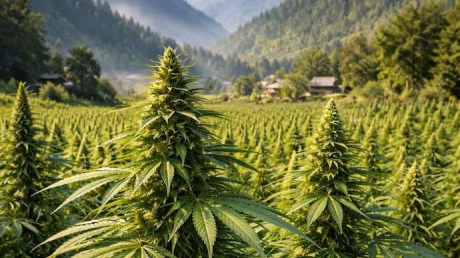
On December 22, 2025, the news was that even the UAE has issued a Federal Decree permitting medical use of hemp. Hemp (Cannabis sativa), a plant of the family Cannabaceae, is cultivated for its bast fibre or edible seeds. Hemp is often confused with the cannabis plants that serve as sources of the drug marijuana and the drug preparation hashish. Although all three products—hemp, marijuana, and hashish—contain Tetrahydrocannabinol (THC), a compound that produces psychoactive effects in humans, the variety of cannabis cultivated for hemp has only small amounts of THC relative to that grown for the production of marijuana or hashish. Along with bamboo, hemp is among the fastest growing plants on Earth. This law not only establishes a new economic sector and supports sustainable economic development, but it also enables the use of hemp in several industries, including textiles, construction, and paper and packaging.
Where does India stand in the global race for harnessing the power of cannabis for medical purposes? The law in India distinguishes two types of cannabis products—Ganja and Hashish. Several Indian states have legalised the use of cannabis for medicinal purposes, especially for conditions like chronic pain, epilepsy, and anxiety. The legal framework for medical cannabis in India falls under the purview of the Ministry of AYUSH, which oversees traditional and alternative medicines, prominently Ayurveda.
The Cannabis Research Project of CSIR-IIIM, Jammu, is the first of its kind in India under Public Private Partnership (PPP) with a Canadian firm. RVD University and Rajasthan Vidyapeeth are setting new standards for cannabis education in India. But India is lagging behind other countries and universities. The government needs to liberalise the policy on medical cannabis, as it can emerge as a cheap alternative for people unable to afford expensive medicines required for cancer treatment.
In a statement presented on January 10, 2022, at the Delhi High Court, the Union government clarified that the use of cannabis is not entirely prohibited in the country, as the law permits its use for medical and scientific purposes. The affidavit, filed by the Director of Narcotics, under the Department of Revenue, Ministry of Finance, states, “There is no absolute ban on cannabis under the NDPS Act. It can be used for medical, scientific, and industrial purposes by obtaining the necessary permissions from the respective state governments.” The Centre further emphasised that state governments are empowered to license cannabis cultivation for industrial and scientific purposes.
While the Ministry of Ayush has acknowledged the growing interest in cannabis and its potential in medicinal applications, the regulatory framework surrounding cannabis in India remains cautious. The government should make a beginning by including medical cannabis in the syllabus for all medical and allied health courses, apart from coming out with a crystal-clear policy in tune with global trends.
In the words of Professor Yossi Tam, a leading researcher at the Hebrew University’s Multidisciplinary Center for Cannabinoid Research, aiming to integrate cannabis into mainstream medicine for better patient outcomes: “The importance of medical cannabis education is undisputed. As cannabis is becoming legalised in an increasing number of countries, it is more important than ever for doctors to understand this drug, its myriad uses, and its benefits, as well as its current shortcomings.” – News18, 22 Decemeber 2025
› Dr. G. Shreekumar Menon is Former Director General, Multi-Disciplinary School of Economic Intelligence and the National Academy of Customs, Indirect Taxes & Narcotics.
Filed under: india, USA | Tagged: cannabis, cannabis legalisation, ganja, indian narcotics law, medical marijuana |






 BHARATA BHARATI
India’s Cannabis Paradox – Akankshya Abismruta – Frontline – August 21, 2025
Despite its deep-rooted cultural and historical significance, cannabis remains a contentious subject in India. While the dried and crushed buds of this plant (colloquially known as ganja, charas, or maal) are banned, the leaves and stems are legal and are often used to prepare bhang. This is because the buds and the flowers have high tetrahydrocannabinol (THC) and cannabinoid (CBD) content as compared to the leaves, the secret behind the much sought-after “high”.
Cannabis, which was once cultivated freely and abundantly across India, sustained countless farmers’ livelihoods until it was suddenly criminalised under the National Drugs and Psychotic Substances (NDPS) Act in 1985. In his book Ananda: An Exploration of Cannabis in India, the writer Karan Madhok asks: why does India not look at its indigenous knowledge—history, mythology, and cultural practices—to form laws that benefit the farmers as well as the future of medicine instead of giving in to prohibitionist pressures?
Madhok begins his journey in Himachal Pradesh which features many hotspots of “pure” charas procured for recreational purposes. He enlightens the readers on the botanical aspects of cannabis and its impact on human physiology as he travels to the remote village of Malana in Parvati Valley, known for Malana Cream, the most potent cannabis in the world. He then proceeds to the hills of Kerala in search of the legendary but elusive Idukki Gold, which has now been replaced by the Sheelavathi strain grown in the Andhra-Odisha border.
Hemp, the legal name for cannabis with less THC, is used for weaving baskets and handlooms, thus providing a vocation for women in the villages. In Kangra, it is also used to make sanitary pads. When he speaks to the locals, Madhok learns that in the coldest months of the year, cannabis is also used as a vegetable for survival. State governments such as Odisha routinely burn the crop, a topic explored in the writer and bookseller Akshaya Bahibala’s Bhang Journeys. In states like Uttarakhand, cannabis farming is legal, but bureaucratic red-tape has ensured that it remains a distant dream for many.
In exploring the various strains of cannabis in detail, Madhok traces the roots of its recreational and medicinal usage to various mythologies of Hinduism (especially Shaivism), Sufism, and Islamic practices. He recounts the cult practices in various States in north-eastern India as well as an Ayurvedic cannabis retreat in Kerala. He also touches upon the countercultural representation of cannabis, associated with “hippies” of the 1970s such as the Beatles, Pink Floyd, and Bollywood’s very own anthem, “Dum Maro Dum” in the film Hare Rama Hare Krishna (1971). Madhok’s careful detailing of these is juxtaposed with the state’s punitive attitude toward cannabis, highlighting a growing disconnect between the law and lived practice.
Madhok also presents harrowing pictures of addiction and rehabilitation through various testimonials. He speaks to a transwoman he meets in Mumbai, who narrates her experience of coming to terms with her gender identity through marijuana addiction. He also speaks to people running a rehabilitation centre in Delhi who recount their days of addiction to cannabis vis-à-vis harder drugs such as heroin or ecstasy.
Legalising cannabis
The most prominent argument for legalising cannabis is its ability to relieve people from pain, especially in cases of cancer patients who need palliative care. Dr Pankaj Chaturvedi, deputy director of Tata Memorial Hospital’s Centre for Cancer Epidemiology, expresses his concern about the marketing and endorsement of ganja by celebrities if it is legalised. He states that learning from the mistakes of the past (in legalising tobacco and alcohol), there needs to be a stronger justification for legalising cannabis. While cannabis can help meet the “unmet needs” of people with clinical depression and anxiety, it can also easily turn into a health hazard, as has been the case with both tobacco and alcohol. There is no easy solution here.
Part-travelogue, part-research, Ananda is as much Madhok’s journey as it is of cannabis. Madhok reflects on his social position, ancestry, privilege, and limitations that have allowed him to undertake this journey. Ananda begins with his love of travel: “I crave the high of the road all the time, not to escape the stresses of life, but to escape its utter dullness.” He is quick to acknowledge that women in India do not have the privilege to travel as a man can and does, a simple yet significant act that invites women aboard his journey rather than leave a trail of resentment about the lack of similar access.
Madhok’s personal experiences are seamlessly rolled into the narrative along with hard facts about cannabis, with a touch of humour, which keeps the book informative yet light. In one instance, he swiftly moves from his deep meditation on being alone to contemplate the uses of cannabis after being bitten by a mosquito. Mosquitoes “gravitate to human body odour abundant in carboxylic acids, like butyric acid, which is produced naturally in our body. … The solution to this issue—i.e., the opposite of carboxylic acids—is any odour rich in eucalyptol, which the American Chemical Society says is found in tea tree oil … and Cannabis Sativa.” Such transitions are in equal parts entertaining and intriguing.
Ananda is a book that requires the reader to slow down and take in every episode. Witty, reflective, and evidence-based, it is also the kind of book where the footnotes demand as much attention as the main text. It neither glorifies nor vilifies but shines a clear light on the historical, scientific, cultural, and medicinal aspects of cannabis. Even as it underscores the plant’s complexity, and its importance as an economic resource and a medical option, Ananda makes a persuasive case for reconsidering India’s laws against cannabis.
>Akankshya Abismruta is a writer and editor based in Sambalpur, Odisha.
LikeLike