







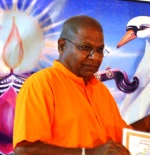





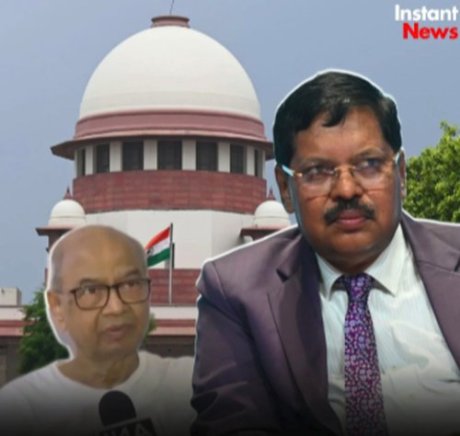
Dr. Rakesh Kishore feels that the courts in India mistake Hindu tolerance for timidity and trample on the community’s rights selectively. – Rahul Shivshankar
A lawyer attempted to hurl his shoe at Chief Justice of India B.R. Gavai. The elderly lawyer was thwarted mid-act. The act was unprecedented, a shocking recourse to violence that has no place in a democracy. The CJI has decided not to take action, even though the lawyer remains unapologetic.
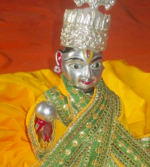
The lawyer, who goes by the name of Dr. Rakesh Kishore, says he was triggered by the CJI’s oral observations during a hearing a few weeks ago. The CJI chided a petitioner, asking him to “go and ask the deity itself to do something,” adding, “You say you are a staunch devotee of Lord Vishnu.” The CJI was clearly upset that the petitioner had the temerity to approach the top court, hoping that it would intervene and order the Archaeological Survey of India to restore a mutilated statue of Lord Vishnu. The petitioner had claimed that his religious rights were violated, as he was forced to pray to the defaced statue placed in a temple that was part of the Khajuraho cluster in Madhya Pradesh. Historical records show that the statue bore the brunt of Islamist anti-Hindu iconoclasm during Mughal invasions.
Dr. Kishore says he was one among many observers who felt the CJI had crossed the line, not least because the reason cited by him was deficient in judicial reasoning. In fact, it is plain to see that the ground for dismissing the petitioner’s prayer is founded in prejudice and not in law. Many hurt Hindus asked, if the Supreme Court is urging petitioners to appeal straight to a God for justice, why does anyone need the courts?
It was a valid critique, but one that worked up one lawyer to such a degree that he decided to take matters into his own hands. Understandably, the act has been condemned, with Prime Minister Modi himself calling it “reprehensible”. Unfortunately, opposition parties and a section of so-called rights activists have politicised the shoe-throwing incident. They have said that Dr. Kishore is a “Sanghi terrorist” with a “Brahminical” mindset who was trying to show the “Dalit” CJI his place.
The attempt to yoke the Hindu faith to a random act is mischievous. The authors of this sleight of hand are the first to claim that “terror” has no religion. For this lot, slain Hizbul commander Burhan Wani was the “son of a school principal and a social media icon”. Lashkar-e-Taiba operative Ishrat Jahan was “a 19-year-old college student”. And another Hizbul insurgent, Riyaz Naikoo, was a “maths teacher turned militant after persecution”.
Dr. Kishore himself has said that his actions were not borne out of disregard for the CJI’s caste. Neither, he claims, is he given to violence. Dr. Kishore has pointed out that he is an educated MSc and a gold medallist, a lawyer who merely feels that the courts in India mistake Hindu tolerance for timidity and trample on the community’s rights selectively.
While not justifying Dr. Kishore’s decision, as violence cannot and must not be a substitute for reasoned dissent, his act does raise uncomfortable questions about how, even while the Constitution promotes secular equality, the state in India has tested Hindu restraint.
The courts are particularly guilty. For instance, the five-judge bench that decided the Ram Janmabhoomi title suit wove into the Ayodhya judgement a needless reference to what they believed was the sanctity of the Places of Worship Act, 1991, when they were not even called upon to decide on the law’s legality. Readers may recall that the law, brought in by a Congress government, among other things, shockingly denies non-Muslims the ability to exercise their constitutional right to legal redress. There are many other selective interventions, like exclusively codifying Hindu religious practices and customs or facilitating the exclusive state capture of Hindu places of worship.
It is striking that the Hindu community in India has shown remarkable patience in the face of these slights from the Indian state. The shoe-throwing incident may be the first indication that prolonged patience is being severely tested. The question then is whether the state will continue to rely on Hindu patience or begin to see that even tolerance, when tested too long, can fray. – News18, 7 October 2025
› Rahul Shivshankar is Consulting Editor at Network18.

See also
Filed under: india | Tagged: angry hindus, anti-hindu courts, b.r. gavai, rakesh kishore, supreme court of india |








 BHARATA BHARATI
Ex-SC judge’s advice after Rakesh Kishore’s ‘shoe attack’ on CJI B.R. Gavai: ‘Talking too much in court…’ – HT News Desk – Hindustan Times – Oct 9, 2025
Former Supreme Court judge Markandey Katju has urged judges to exercise restraint in court and “talk less”, days after 71-year-old lawyer, Rakesh Kishore, allegedly attempted to hurl a shoe towards Chief Justice of India (CJI) BR Gavai, accusing him of insulting Hinduism.
According to Rakesh Kishore, he was unhappy over the CJI Gavai’s remarks during a hearing last month concerning the restoration of a Vishnu idol in Khajuraho.
In his opinion piece for a news outlet, Markandey Katju condemned the act but said such incidents are often provoked by unnecessary courtroom remarks. “I condemn the throwing of a shoe at Justice Gavai. But at the same time, I wish to say that talking too much in court by judges only invites such incidents,” he wrote.
The controversy erupted after Justice Gavai, during a hearing on a petition seeking restoration of a damaged idol of Lord Vishnu in Khajuraho, reportedly told the petitioner, “Go and ask the deity itself to do something. You say you are a staunch devotee of Lord Vishnu. So go and pray to it (to restore its own head).”
Katju wrote that “a much talking judge is like an ill tuned cymbal (Jo judge bohot bolta hai woh besura baaja jaisa hota hai),” quoting former Lord Chancellor of England Sir Francis Bacon. “The job of a judge is to hear, not talk, in court, and then decide whatever they thought was proper,” he said.
Sharing his experience of visiting a British court, Katju said, “There was almost pin-drop silence, the judge quietly hearing, and the counsel arguing in a very low tone. Occasionally, the judge asked a question to the lawyer to clarify some point; otherwise, he was silent throughout. That is how the atmosphere of a court should be: one of serenity, calm, and tranquility.”
Referring to recent Supreme Court hearings, Katju said, “I saw former CJI Chandrachud talking on and on in court, e.g., in the case relating to a lady doctor of R.G. Kar Medical College, Kolkata, who was raped and murdered, asking questions like why there was delay in filing the FIR. … I noticed a similar thing recently regarding the bail hearing in the Supreme Court of Prof. Ali Khan Mahmudabad.”
While welcoming the interim bail granted to Prof. Mahmudabad, Katju questioned one of the judge’s remarks. “Where was the need for the comments of one of the judges on the bench that Prof. Mahmudabad was doing dog whistling?” he asked.
Last month, a bench headed by Justice Gavai had dismissed the plea seeking directions to reconstruct and reinstall a seven-foot idol of Lord Vishnu at the Javari Temple, part of the UNESCO World Heritage Khajuraho temple complex in Madhya Pradesh.
Terming the plea a “publicity interest litigation”, the CJI had said, “This is purely publicity interest litigation. … Go and ask the deity himself to do something. If you are saying that you are a strong devotee of Lord Vishnu, then you pray and do some meditation.”
On Monday, Prime Minister Narendra Modi spoke to Gavai to convey his condemnation of the lawyer’s act, and said the attack has angered every Indian.
“There is no place for such reprehensible acts in our society,” he said and praised Gavai for maintaining calm following the incident.
Modi posted on X, “Spoke to Chief Justice of India, Justice B.R. Gavai Ji.
“The attack on him earlier today in the Supreme Court premises has angered every Indian. There is no place for such reprehensible acts in our society. It is utterly condemnable.”
He added, “I appreciated the calm displayed by Justice Gavai in the face of such a situation. It highlights his commitment to values of justice and strengthening the spirit of our Constitution.”
Police sources said a note, containing the slogan “Sanatan dharma ka apmaan nahi sahega Hindustan” (India will not tolerate insults to Sanatan Dharma), was recovered from his possession.
The CJI, who remained unfazed during and after the unprecedented incident during the court proceedings, asked the court officials and the security personnel present inside the courtroom to just ignore it and to let off the errant lawyer identified as Rakesh Kishore with a warning.
The Bar Council of India (BCI), however, ordered the immediate suspension from practice of Rakesh Kishore after prima facie material indicated that he allegedly removed his sports shoes and attempted to hurl them towards the Chief Justice of India during proceedings in Court No 1 of the Supreme Court at about 11:35am.
LikeLike