










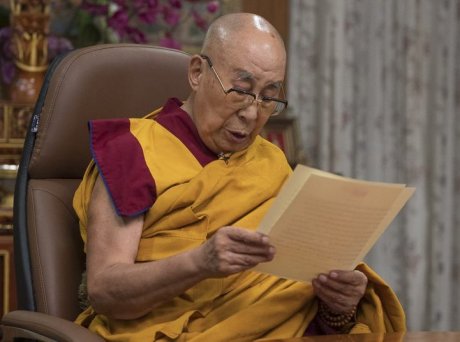
“I hereby reiterate that the Gaden Phodrang Trust has sole authority to recognise the future reincarnation; no one else has any such authority to interfere in this matter.” – The Dalai Lama
The Dalai Lama’s announcement has profound spiritual significance, offering an opportunity to shape the future of Buddhist diplomacy and Tibetan identity from Dharamshala rather than Lhasa. – Manoj Gupta
The Dalai Lama has taken a decisive step to anchor his succession in Tibetan spiritual authority, ensuring continuity of leadership posthumously. Top intelligence sources say his statement pre-empts any Chinese propaganda or parallel installation efforts with Panchen Lama’s appointment. The statement, sources say, also reflects a diplomatic win for India and Dharamshala. The Dalai Lama has clearly stated that the institution of the Dalai Lama will continue through his succession, reversing the ambiguity he maintained since 1969 about whether the lineage should persist. Now, he confirms that the lineage will continue beyond his lifetime.
Top intelligence sources emphasise that the Dalai Lama’s statement neutralises Beijing’s narrative that the Dalai Lama’s role is outdated or that his successor can be controlled through state machinery. It creates a shield around his reincarnation, rooted in tradition and institutional legitimacy, making any future Chinese-appointed Dalai Lama appear inauthentic.
Intelligence sources also note that the inclusion of consultations with Mongolian, Russian, Himalayan, and Chinese Buddhist communities internationalises the selection process and signals broad legitimacy. Operationally, it empowers the exile apparatus, including the Gaden Phodrang Trust and the Central Tibetan Administration (CTA), to begin preparing succession mechanisms discreetly before his passing.
How The Statement Is A Setback For China, Gain For India
Intelligence sources reveal a significant setback for China and a gain for India as the Dalai Lama’s recent speech directly challenges Beijing’s long-term Tibet strategy. According to sources, the Dalai Lama’s clarification of his spiritual succession mechanism represents a substantial strategic blow to China. By declaring that only the Gaden Phodrang Trust will oversee his reincarnation, the Dalai Lama has completely invalidated any future Chinese governmental attempts to appoint a [its own] Dalai Lama. Intelligence sources highlight that such an appointment by China would lack both political and spiritual legitimacy and be perceived globally as fraudulent.
Sources also note that Beijing’s efforts to use soft power in Tibet have been undermined. Chinese investment in the Panchen Lama has been rendered futile by the Dalai Lama’s statement, which has presented him as a progressive, consultative leader deeply rooted in traditional Buddhist authority.
Top intelligence sources underscore that with the Gaden Phodrang Trust operating under Indian protection in Dharamshala, the recognition locus of the next Dalai Lama and the seat of Tibetan spiritual legitimacy are firmly established on Indian soil. This development showcases India’s soft power throughout the Buddhist world. Nations with substantial Buddhist populations, including Mongolia, Sri Lanka, Thailand, Japan, Bhutan, and Vietnam, are now more inclined to seek moral and spiritual leadership in Buddhism from India rather than China.
Sources point out that India, by providing asylum to the Dalai Lama and upholding religious freedom, exemplifies its liberal and democratic values. Conversely, China’s authoritarian control over religion and attempts to manipulate reincarnation processes reveal its repressive regime image. Intelligence sources further indicate that an India-backed succession will possess greater spiritual authority, especially among Himalayan Buddhist communities in regions like Ladakh, Sikkim, Arunachal Pradesh, and Tawang, neutralising Chinese attempts to assert influence in these areas.
Sources affirm that the Dalai Lama’s statement aligns with internal Tibetan sentiment, indicating that decades of Chinese repression have failed to extinguish Tibetan faith or loyalty. This represents a defeat for the Communist Party and subtly reinforces India’s Tibet policy. The Dalai Lama’s announcement has profound spiritual significance, offering an opportunity to shape the future of Buddhist diplomacy and Tibetan identity from Dharamshala rather than Lhasa.
The Gaden Phodrang Trust, which is the private office of the Dalai Lama, has been given exclusive authority to identify and authenticate his successor, effectively delegitimising any Chinese state-backed attempts to install a rival reincarnation. No external actor, political or religious, can interfere in this process, the Dalai Lamai stated. The defined procedure of recognition involves consultations with high Tibetan Lamas and references to Dharma Protectors, spiritual entities tied to the Dalai Lama lineage. Sources say this process rejects any claims by China or unauthorised actors, ensuring the continuity within a Pan-Buddhist, exile-led spiritual framework.
What Did Dalai Lama Say On His Succession?
The Dalai Lama has made it clear that only the Gaden Phodrang Trust, the Office of His Holiness, holds the sole authority to recognise his future reincarnation.
“The process by which a future Dalai Lama is to be recognised has been clearly established in the 24 September 2011 statement which states that responsibility for doing so will rest exclusively with members of the Gaden Phodrang Trust, the Office of His Holiness the Dalai Lama. They should consult the various heads of the Tibetan Buddhist traditions and the reliable oath-bound Dharma Protectors who are linked inseparably to the lineage of the Dalai Lamas. They should accordingly carry out the procedures of search and recognition in accordance with past tradition,” he said
“I hereby reiterate that the Gaden Phodrang Trust has sole authority to recognise the future reincarnation; no one else has any such authority to interfere in this matter,” the Dalai Lama stated. – News18, 2 July 2025
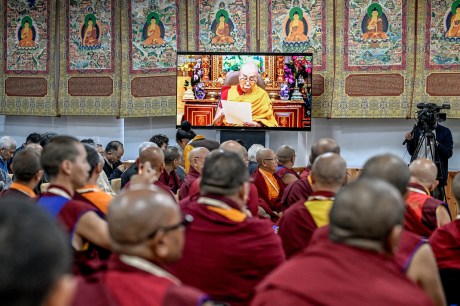
On 24 September 2011, at a meeting of the heads of Tibetan spiritual traditions, I made a statement to fellow Tibetans in and outside Tibet, followers of Tibetan Buddhism, and those who have a connection with Tibet and Tibetans, regarding whether the institution of the Dalai Lama should continue. I stated, “As far back as 1969, I made clear that concerned people should decide whether the Dalai Lama’s reincarnations should continue in the future.”
I also said, “When I am about ninety I will consult the high Lamas of the Tibetan Buddhist traditions, the Tibetan public, and other concerned people who follow Tibetan Buddhism, to re-evaluate whether or not the institution of the Dalai Lama should continue.”
Although I have had no public discussions on this issue, over the last 14 years leaders of Tibet’s spiritual traditions, members of the Tibetan Parliament in Exile, participants in a Special General Body Meeting, members of the Central Tibetan Administration, NGOs, Buddhists from the Himalayan region, Mongolia, Buddhist republics of the Russian Federation and Buddhists in Asia including mainland China, have written to me with reasons, earnestly requesting that the institution of the Dalai Lama continue. In particular, I have received messages through various channels from Tibetans in Tibet making the same appeal. In accordance with all these requests, I am affirming that the institution of the Dalai Lama will continue.
The process by which a future Dalai Lama is to be recognized has been clearly established in the 24 September 2011 statement which states that responsibility for doing so will rest exclusively with members of the Gaden Phodrang Trust, the Office of His Holiness the Dalai Lama. They should consult the various heads of the Tibetan Buddhist traditions and the reliable oath-bound Dharma Protectors who are linked inseparably to the lineage of the Dalai Lamas. They should accordingly carry out the procedures of search and recognition in accordance with past tradition.
I hereby reiterate that the Gaden Phodrang Trust has sole authority to recognize the future reincarnation; no one else has any such authority to interfere in this matter.
Dalai Lama
Dharamshala
21 May 2025(Translated from the original Tibetan)
Filed under: china, india, tibet, world | Tagged: 14th dalai lama, chinese government interference, dalai lama's succession, panchen lama, tibetan buddhism |







 BHARATA BHARATI
China reacts to Dalai Lama’s remarks: Successor’s name must come from ‘golden urn’, needs Beijing’s nod – Hindustan Times News Desk – new delhi – July 2, 2025
China on Wednesday said that the Dalai Lama’s successor “must be approved by the central government,” responding to the Tibetan spiritual leader’s announcement that he would have a reincarnated successor after his death.
Tenzin Gyatso, the 14th Dalai Lama, was 23 years old when he fled Lhasa in 1959, fearing for his life as Chinese troops took control of Tibet.
The Nobel Peace Prize winner has since become the global face of Tibetans’ struggle to preserve their cultural identity, and a prominent symbol of peace and non-violence.
On Wednesday, he reaffirmed that the 600-year-old tradition of the Dalai Lama would continue, bringing reassurance to many Tibetans concerned about the future of their spiritual and cultural leadership.
Followers of the Dalai Lama praise his efforts to secure greater autonomy for Tibet, a sprawling high-altitude region in China roughly the size of South Africa.
China, which considers the current Dalai Lama a separatist, has asserted that only Beijing has the authority to decide who his successor will be.
“The reincarnation of the Dalai Lama, the Panchen Lama and other great Buddhist figures must be chosen by drawing lots from a golden urn, and approved by the central government,” said foreign ministry spokeswoman Mao Ning at a regular press briefing, referring to a selection method introduced by a Qing dynasty emperor in the 18th century.
China says rules in place for reincarnation of Tibetan spiritual leaders
“The Chinese government implements a policy of freedom of religious belief, but there are regulations on religious affairs and methods for managing the reincarnation of Tibetan living Buddhas,” Mao added.
Defending China’s religious policies, Mao said on Wednesday that the effort to shape religious practices in line with Chinese traditions “is not its restriction. The survival and development of any religion lies in adapting to the country’s social environment and cultural traditions.”
“Tibetan Buddhism was born in China and carries Chinese characteristics,” she said.
With AFP inputs
LikeLike