









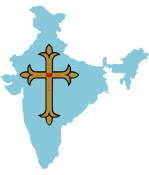

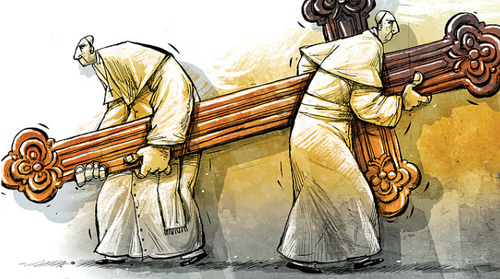
“In 1965, the Indian government issued a circular stating that any land granted on lease by the British government would no longer be recognised as Church property. However, due to lax enforcement of this directive, the legitimacy of certain Church-owned lands remains unresolved,” – Sashank Kumar Dwivedi in Organiser
The web portal of an RSS-linked magazine has in an article obliquely sought to draw the Narendra Modi government’s attention towards the land held by the Catholic Church after the successful passage of the Waqf (Amendment) Bill in Parliament.
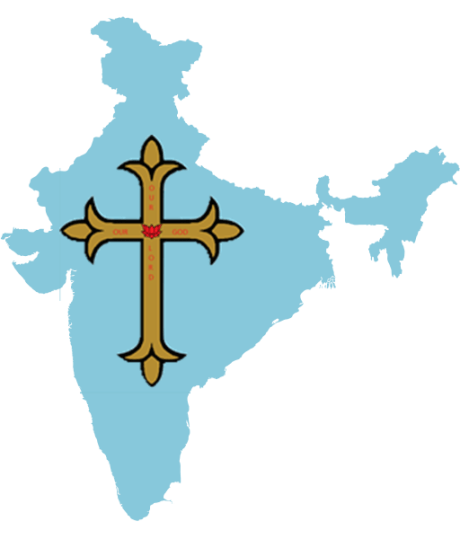
In an article titled “Who has more land in India? The Catholic Church vs Waqf Board debate”, the web portal of Organiser has claimed that the land holding of the Catholic institutions stands at 7 crore hectares, terming it “the largest non-governmental land owner”.
The Waqf (Amendment) Bill proposes sweeping changes to the 1995 Waqf Act to give the government significant powers to regulate waqf properties and settle disputes. A waqf property is an endowment made by a Muslim for religious, educational and charitable causes, and the legislation has drawn flak for allegedly enabling the government to gain control over the land held by the waqf boards.
To push through the contentious legislation, the BJP had used the support to the bill by the Kerala Catholic Bishops’ Council to taunt the Opposition. The article in the web portal appeared to be setting the agenda for a similar move aimed at the Catholic Church.
“According to the Government Land Information website, as of February 2021, the Indian government owned approximately 15,531 square kilometres of land. … While the Waqf board does own significant land parcels across various states, it does not surpass the holdings of the Catholic Church in India,” an article by Sashank Kumar Dwivedi posted on Organiser.org stated.
“Reports suggest that the Catholic Church of India owns around 7 crore hectares (17.29 crore acres) of land throughout the country. … The total estimated value of these properties is around ₹20,000 crore, making the Church a significant player in India’s real estate landscape,” it added.
The RSS-BJP had been traditionally known to target Christian missionaries for allegedly resorting to religious conversions through allurement and coercion. In recent times, however, the issue has been put on the back burner as part of a poll strategy to woo Christian voters in the northeastern states, Kerala and Goa.
The article said that most of the land acquired by the Catholic Church was during the British period, stressing that many of them had been obtained through “questionable means”. The article goes on to obliquely draw the government’s attention to a 1965 circular to take over land leased to the Church that failed due to poor enforcement.
“In 1965, the Indian government issued a circular stating that any land granted on lease by the British government would no longer be recognised as Church property. However, due to lax enforcement of this directive, the legitimacy of certain Church-owned lands remains unresolved,” it said. – The Telegraph, 5 April 2025
› Sashank Kumar Dwivedi writes for the Organiser. His article “Who has more land in India? The Catholic Church vs Waqf Board debate” has been removed from the Organiser website.
See also
- Catholic Church largest landowner in India after the government – Ritik Raj
- Indian Catholic Church properties valued at rupees several lakh crores — D.P. Satish
Filed under: india | Tagged: catholic church in india, christianity in india, land granted by british, land ownership, organiser magazine |






 BHARATA BHARATI
Organiser Article Says Catholic Church Surpasses Waqf Board In Landholdings – K.S. Sreejith – The New Indian Express – Thiruvananthapuram – 5 April 2025
An article in the Rashtriya Swayamsevak Sangh (RSS) mouthpiece, Organiser, has said that it is not the Waqf Board but the Catholic Church of India which is the largest landholder in the country.
This comes at a time when BJP leaders, especially in Kerala, are celebrating the passing of the Waqf Amendment Bill as a ‘gift’ to the Munambam protesters led by the Catholic Church.
The article ‘Who has more land in India? The Catholic Church vs Waqf Board Debate’ published on April 3 said: “For many years, there has been a common belief that the Waqf Board is the second largest landowner in India after the government, however, this claim does not align with the actual data on land ownership in the country. The Catholic Church of India holds the distinction of being the largest non-governmental landowner, possessing vast tracts of land spread across the country.”
The article also said that the Catholic Church owns around 17.29 crore acres (7 crore hectares) of land throughout the country.
“The total estimated value of these properties is around Rs 20,000 crore, making the Church a significant player in India’s real estate landscape. As of 2012, the Catholic Church has 2,457 hospital dispensaries, 240 medical or nursing colleges, 28 general colleges, 5 engineering colleges, 3,765 secondary schools, 7,319 primary schools and 3,187 nursery schools in the field of education and healthcare sector in the country. Much of its land was acquired during British rule. In 1927, the British administration passed the Indian Church Act, facilitating large-scale land grants to the Church,” it said.
The Organiser article also pointed to a major contention, whether some of the land was obtained through questionable means. It also alleged: “Many reports suggest that Church-run schools and hospitals lure economically disadvantaged individuals by providing free or low-cost services, and in turn, pressure them to convert to Christianity.
“Several instances have emerged where landowners from tribal and rural communities were encouraged – or in some cases coerced – into converting to Christianity, after which their lands were taken over by Church-affiliated organisations. While the Church denies these allegations, multiple cases of illegal land acquisitions linked to conversion activities have surfaced in various states, fuelling concerns about the role of missionary institutions in India’s socio-religious landscape. Several cases have surfaced where tribal lands, once belonging to indigenous communities, were gradually transferred to Church authorities under various pretexts,” the article went on to say.
The article assumes significance as it came at a time when the Waqf bill, subsequently passed by both Houses of Parliament, was being debated. Are these churches in Kerala set to come in the line of RSS’ barrage next? We will have to wait and see.
LikeLike
The Syro Malabar Church: India’s Biggest Corporate House – Dilbert – Kreatly – August 26, 2020
Which is India’s biggest corporate house?
It’s not Ambani or Tata. There is one organization that is valued with over 3,00,000 lakh crore of assets.
It is the Syro Malabar Catholic Church which has absolute control over more than 10,000 establishments
So if you consider the Syro Malabar Church as a business organisation then TaTa and Reliance come no where near in financial assets value.
Don’t believe me? Check out the statistics…
9000 – Priests
30,000 – Nuns
34 – Dioceses
71 – Seminaries
3763 – Churches
77 – Monasteries
4860 Educational Institutions
2614 – Hospitals and Hospices and Clinics
11,000 – Total number of Establishments
50 Lakh+ – Members of the Church
The most powerful Church association under the umbrella of The Syro Malabar Church is CMA. The CMA alone has 1514 institutions under it. This includes schools, colleges, hospitals, orphanages, etc
The Syro Malabar has 77 such associations under its jurisdiction. The Church has has at least 50 establishments that can be listed in the stock exchange by value of their assets.
If you calculate the annual income of all the establishments under the Church, no other business or other organisation comes even close to it in terms of money or assets. The Church has a presence all over India and in most countries abroad.
The Syro Malabar Church is an autonomous body under the Roman Catholic Church and holds it’s HQ in Kakkanad Mount St. Thomas.
All the members of this church are Malayalees. The entire management committee of the Church is also completely Malayalee.
The head of the Church is called Major Arch Bishop. The most powerful committee of the Church is the Synod and is preside over by its Bishops.
The Syro Malabar Church is the most powerful church of all the international Catholic churches. It has the most presence and holds the largest number of financial assets as compared to other Catholic churches.
The different dioceses and monastries have independence to deal with their finances.
Since it comes under the minority tag, it doesn’t have to have its assets or establishments included in the income tax department and hence no one really knows the real value of their holdings.
The real estate value of the land they hold all over India and outside comes to over 100s of crores.
This too is outside the realm of auditing. In India, the minority tag and secularism has its uses.
As such the Syro Malabar Church cannot be considered as just another religious organisation. It is a powerful business organisation that lies outside the scrutiny of government agencies.
None of its land or profit making organisations are taxed or even recorded. Just think of the power this Church has. It is almost like Medusa’s head or like Raktabheeja. Cut off one head and a hundred others sprouts in its place.
Indian nationalists must understand that enrolling their child into one of their educational establishments is like feeding the dragon that will ultimately swallow them.
Pay a little more to the tax paying schools and are burdened with unfair laws that don’t effect minority institutions like the ones run by the Syro Malabar Church.
Understand that they can afford to reduce the fees for you simply becos of their financial might and because they don’t come under the income tax structure.
They own prime land all over India and abroad and can afford to bring the school next door to residential areas. Our tax paying schools simply cannot afford this. So even if the distance is more, endure that hardship. You are saving the future of your country and your descendants
LikeLike