








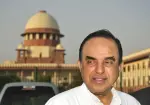


 “Trudeau, sociologically and politically, is an idiot,” Ujjal Dosanjh declares, “because he’s an imbecile in terms of understanding how you build nations, how you build countries.” – Donna Kennedy-Glans
“A silent majority of the Sikhs do not want to have anything to do with Khalistan. They just don’t speak out because they’re afraid of violence and violent repercussions,” reports Ujjal Dosanjh, as a Sikh living in Vancouver, B.C.
The call for a separate Sikh homeland in Punjab, India—to be called Khalistan—has been brewing since the 1930s, when British rule in India was nearing its end. Although the movement now has marginal support in India, it has taken wings in Canada and escalated into the present derailing of relations between two friendly Commonwealth democracies, India and Canada.
Unlike many of his Sikh peers in Canada, Ujjal—a former NDP premier of British Columbia and a former federal cabinet minister under Liberal prime minister Paul Martin—isn’t afraid to speak out. He’s been extremely vocal, especially since 1985; that’s when the bombing of Air India Flight 182 by Khalistani extremists, killing 329 people, brought the separatist movement to Canada.
Ujjal, now 78, has faced death threats from extremists but remains unwavering in his determination to convince fellow Canadians that the overwhelming majority of the nearly 800,000 Sikhs in Canada do not support the Khalistani movement. “I’d say less than five per cent, less than five per cent,” he emphasizes.
To be clear, Ujjal is not denying the awfulness of recent events on North American soil. The brazen murder of Hardeep Singh Nijjar, a Sikh separatist designated a terrorist by India, in the parking lot of a Sikh gurdwara in Surrey, B.C. And the foiled murder plot in the United States against another Sikh separatist, dual U.S.-Canadian citizen, Gurpatwant Singh Pannun.
While accountability for this violence is an imperative, the purpose of my conversation with Uijal is not to sift through the evidence and intelligence. What I want to understand is how we got to this place where Canada’s Sikh population, the largest Sikh diaspora in the world, has in effect been co-opted by the Khalistanis to the point where this obscure separatist movement has become a Canadian problem.
Without hesitation, Ujjal points to Prime Minister Justin Trudeau.
For two reasons, Ujjal blames Trudeau: “One, he’s never really understood the vast majority of Sikhs are quite secular in their outlook, despite the fact that they go to the temple,” he says. And the second reason: “Khalistanis are not a majority, and the fact nobody speaks against them is out of fear.” Through intimidation, Ujjal elaborates, Khalistani supporters control many of the temples in Canada. And it’s Trudeau’s fault, he asserts, “that Canadians now equate Khalistanis with Sikhs, as if we are all Khalistanis if we’re Sikhs.”
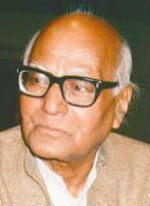
I hear much the same in private conversations with Canadian friends who are Sikh. Yet here is this clean-shaven man, born in a village in Punjab, speaking to me—openly, frankly and on the record. In his plaid flannel shirt, a towering collection of books behind him, Ujjal comes across as the quintessential retired lawyer, well-researched, methodical and deliberate.
“Justin (Trudeau) and I had a long debate in the lobby of the Commons when I was with him as an MP for a couple of years,” Ujjal relates. “We were MPs from 2008 to 2011 together, and I had a long chat with him about identity and religion and all that, with all of these Khalistanis sitting around the table. And he agreed with them, rather than me,” he shrugs, his irritation still obvious. “Trudeau’s most famous utterance on immigrants?” Uijal mutters: “You come here, you can be who you are.”
“I was arguing that this extra special emphasis on uniqueness, exclusive identities, that it would become a deterrent to political, cultural and social integration,” Ujjal continues. “That ultimately you need shared values. It’s basic, you need shared values.”
Ujjal pauses and suddenly his lawyerly delivery of arguments becomes impassioned: “Trudeau, sociologically and politically, is an idiot,” Ujjal declares, “and you can actually quote me, I really don’t care. Because he’s an imbecile in terms of understanding how you build nations, how you build countries.” Trudeau’s vision of Canada—“a post-national state without a mainstream culture”—deeply offends Ujjal. “If we don’t have a mainstream, then we’re not really a people. We have a mainstream,” he insists. “We may not sing the same songs. You may not do the same dances. Our mainstream is in our values, how we treat each other, how we behave politically, how we behave on the street, how we vote, what we take into account when we vote.”
It’s obvious Ujjal has been reflecting on these questions for decades. Certainly since he left India at the age of 18 and perhaps even earlier; as Ujjal recounts, his grandfather campaigned against colonial rule and spent eight years in jail before India’s independence from Britain.
The consequences of Trudeau’s vision of a Canada without shared mainstream values strike deeper than identity politics, Ujjal suggests; politicians pandering to a well-orchestrated Sikh vote to tip the balance in close elections. And it’s more than clumsy or naive statecraft, including Trudeau’s notorious eight-day-visit to India where, Ujjal chuckles, “he made of fool of himself with all the Indian costumes; even I don’t have that many kurta pyjamas in my closet.”
There are ways Trudeau could deescalate this tense relationship with India, Ujjal reflects. “It’s just a matter of eating a bit of humble pie and saying, ‘Look, let’s start over again. India is a good friend.’ That’s all you do,” Ujjal suggests, “That’s how diplomacy works.” Thus far, Ujjal continues, “Trudeau has approached the relationship strictly from the point of view of saying, ‘I have this incriminating intelligence, and I want you to investigate.’”
The president of the United States didn’t stand in the Oval Office and make a statement about the foiled murder plot against a Sikh separatist, Uijal observes. The U.S. Secretary of State didn’t make a statement, he continues. Instead, “it was some lowly State Department official who talked when the indictment was unsealed.” We agree, the justice systems in the U.S. and Canada are different in how they handle evidence, but one thing is certain, Ujjal asserts, the U.S. dealt with it discreetly and we dealt with it by having the prime minister stand up and make a bold statement in the House of Commons.
“He (Trudeau) did it because he wanted to look strong, and he wanted to please his cabinet members and his caucus members, and (reinforce) his own perception that all Sikhs are Khalistanis … so he did what he did, and we got off on the wrong foot.
“India could have played the big brother and said, ‘OK, OK, we’ll deal with it,’” Ujjal shrugs, “But they have their own population to deal with, right? They don’t want to look weak either, just like Trudeau.
“It’s not about blame,” Ujjal concludes, “It’s about how wise you are as the leader of the country.” – National Post, 3 Novemeber 2024
› Donna Kennedy-Glans is a former member of the Legislative Assembly of Alberta.

Filed under: canada, india | Tagged: india-canada relations, justin trudeau, khalistani separatists, state-sponsored terrorism, ujjal dosanjh |





 BHARATA BHARATI
Khalistan-Linked Gangster Busted In Falkland, B.C For Running $490M Worth Drug Superlab – Sandhya Sharma – Eurasian Times – 7 Nov. 2024
In what could be seen as the biggest vindication of India’s long-standing stance that Canada is struggling to deal with transnational crime groups from Punjab, the RCMP (Royal Canadian Mounted Police) has busted a drug “superlab” in Falkland, B.C., worth nearly US$490 million, run by a Punjab-origin mastermind, allegedly having Khalistani connections.
The alleged mastermind, Gaganpreet Singh Randhawa, 32, who is currently in Canadian Police custody, has been charged with seven drugs and firearms-related offenses under the Controlled Drugs and Substances Act and the Criminal Code of Canada.
Meanwhile, Indian government sources hinted at Randhawa’s links with Khalistan sympathizers in Canada. They pointed out that this news seems to have vindicated New Delhi’s earlier “extradition” requests of many other pro-Khalistani sympathizers who have been working right under the Canadian government’s nose and are linked to transnational criminal activity across the globe.
In a written statement, Corporal Arash Seyed, Media Relations Officer of the Federal Policing at the Pacific Region, says this RCMP investigation has delivered a “decisive blow” to a major “transnational organized crime” group by dismantling the largest and “most sophisticated” fentanyl and methamphetamine “drug superlab” in Canada.
The drug superlab could have produced over 95 million potentially lethal doses of fentanyl to kill the Canadian population twice over. The police raid will dent the profit of US$485 million to the transnational organized crime group.
Hinting at the RCMP’s inability to deal with organized criminals, Kirk Lubimov, a Canadian political analyst, said on social media platform X: “Having compromised borders and 1/3 of our trucking industry being black market has consequences.”
See full article here >>>
LikeLike