













 “The Bharatiya Janata Party, which Singh belongs to, has made it a point to reintroduce – through rhetoric and action alike – the narrative of India’s ancient texts and the knowledge they believe is locked in them. … Singh is extending that tradition of wrongly clubbing cultural and theological traditions with scientific facts.”- Vasudevan Mukunth
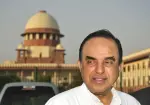
Political rhetoric is making it increasingly hard to tell what science is in the Vedas and what is not. Home Minister Rajnath Singh said on Sunday that Heisenberg’s principle of uncertainty – a concept in quantum mechanics – was based on the Vedas. This was recognised, he said, in a 1975 book by Austrian-American author Fritjof Capra.
The book in question, The Tao of Physics, actually makes no such connections. In fact, in drawing parallels between the work of Werner Heisenberg, a German theoretical physicist, and Oriental mysticism, the book only highlights an ex post facto connection between the uncertainty principle and the Upanishads.
The principle is a cornerstone in the investigation of quantum mechanics. It states that both the position and momentum of a particle cannot be known with the same precision at the same time. In other words, if you were tracking the position of an electron increasingly precisely, the uncertainty principle would make your knowledge of how fast it is travelling increasingly blurred.
Ideas of oneness
The discovery laid the foundation for a new conception of reality at the time it was proposed in 1927. It made the observer a part of the observation, breaking down the distance from the observed. Heisenberg went on to become an intellectual giant of the early 20th century. At the same time, the reality he was discovering did not sit well with what he had assumed it to be until then.
According to The Tao of Physics, both Heisenberg and Niels Bohr, the Danish physicist whose work laid the foundation for quantum mechanics, were able to take recourse through the ancient Indian texts, as well as the Chinese philosophy of Zhuang Zhou dating back to the fourth century BC. To cite the Upanishads as quoted in Capra’s book:
Where there is a duality, as it were, there one sees another; there one smells another; there one tastes another… But where everything has become just one’s own self, then whereby and whom would one see? Then whereby and whom would one smell? Then whereby and whom would one taste
On the same page, Capra also quotes from Zhou’s text Zhuangzhi:
My connection with the body and its parts is dissolved. My perceptive organs are discarded. Thus leaving my material form and bidding farewell to my knowledge, I become one with the Great Pervader. This I call sitting and forgetting all things.
These ideas of oneness – between the observer and the observed – helped Heisenberg and Bohr reconcile with the disturbing facets of the discovery of the uncertainty principle after it was made. They did not lead up to it. Nevertheless, we should be glad that our philosophy helped.
Rajnath Singh also said that Heisenberg got the ideas for his principle in a conversation with Rabindranath Tagore, this time alluding to another of Capra’s books called Uncommon Wisdom: Conversations with Remarkable People, published in 1988. The error here is starker: Heisenberg proposed the principle in 1927 and met Tagore in 1929.
Perhaps Singh did not know the contents of the meeting and its position in time simultaneously with the same precision.
But like with the previous example, as Capra again writes, the “introduction to Indian thought brought Heisenberg great comfort”.
Old crusade
The Bharatiya Janata Party, which Singh belongs to, has made it a point to reintroduce – through rhetoric and action alike – the narrative of India’s ancient texts and the knowledge they believe is locked in them. During BJP’s previous stint in government, Minister for Human Resources Development Murli Manohar Joshi wanted to add astrology and Vedic mathematics (which the Vedas have never been concerned with) to university curricula. Now, Singh is extending that tradition of wrongly clubbing cultural and theological traditions with scientific facts.
Even at a BJP national council meeting in March 2013, he had said, “The basis of the discovery of [the Higgs boson] had been established 70-80 years back by taking inspiration from a similar principle by the great scientist of India, Satyendra Nath Bose.” This assertion maligns the nature of Bose’s work, obscuring its real significance behind a recent and very different discovery, made at the Large Hadron Collider experiment in Geneva in July 2012.
Bose’s ground-breaking work in the 1920s led to the establishment of a class of fundamental particles called bosons, which mediate the forces between particles of matter like electrons and protons. On the other hand, the Higgs boson was only postulated in 1964 and is one specific boson whose various properties, or even existence, Bose’s work did not deal with. To Singh, the tenuous connection between Bose and the Higgs boson is an example of India’s contribution to modern science. It is not.
If Singh wanted that, he should have celebrated actually modern contributions – like India’s formidable string theory and dark matter research, experiments in gamma-ray astronomy, an ongoing and fruitful participation with the Large Hadron Collider in experimental high-energy physics. – Scroll.in, 18 November 2014
» Vasudevan Mukunth writes on science and technology for The Hindu.

Filed under: india | Tagged: rajnath singh, science, uncertainty principle, vedas, zhuang zhou |






 BHARATA BHARATI
the Vedic concept is extremely clear :
the observer , the observed , and the observation make a triad , inseparable from each other ;
the three form together , no individual existence ;
and that is why the creation is an integral whole , each part connected to , and affecting , each other ;
and the Ultimate Truth is beyond this triad ;
there , the three components dissolve together ;
( ref: the middle line of the upanishdic quotation above )
what Heisenberg discovered and what the Veda proclaimed are in conformity ;
of course , we can not claim that Heisenberg drew from Veda ;
but , we should be proud that we are heirs to such exquisite knowledge , and we should try to live up to it ;
LikeLike
Vasudevan Mukunth’s reference to Vajpayee’s Minister for Human Resources Development Murli Manohar Joshi wanting to add astrology and Vedic mathematics to university curricula is not correct.
It was the University Grants Commission that wanted to add ‘Vedic astrology’ to university curricula, not Dr. Joshi. See the article Science Wars: The Saffron Villains by Aravindan Neelakandan at http://wp.me/pEi6D-jdu
There is not such thing as ‘Vedic mathematics’. The mental calculation techniques advocated have nothing to do with the Vedas or mathematics of the Vedic period of Indian history.
LikeLike
If Rajnath Singh’s ‘scientific’ pomposities are absurd, our prime minister Narendra Modi’s are not any better when it comes to fantasies about Vedic science. Here is what he has to say about our ancient scientific accomplishments as quoted in the FirstPost article by Sandip Roy:
The last paragraph says it all!
LikeLike