















 “The official data published by Switzerland’s central bank, SNB, has shown that Indian money in various Swiss banks rose by 43 per cent during 2013 to close to Rs 14,000 crore, while including the money held directly by Indian clients and those through fiduciaries or wealth managers.”- PTI
 India’s efforts to crackdown on black money stashed abroad on Sunday got a major boost with Switzerland readying a list of Indians suspected to have un-taxed money in Swiss banks, while special investigation team constituted by Indian government promised action if any illegality is found.
The names of certain Indian individuals and entities came under the scanner of the Swiss authorities during an ongoing exercise to identify the real beneficiary owners of funds held in various banks operating in Switzerland, a senior Swiss government official told PTI.
The list of such people and entities is being shared with India, while further details would also be provided in due course and all necessary administrative assistance would be made available as well, he said.
Reacting to the development, Justice M. B. Shah, who is heading the SIT on black money in India, said that the list would be verified and action would be taken against those found to have kept unaccountable money.
The Swiss government official refused to divulge the identity of the concerned entities as also the quantum of funds involved, citing the confidentiality clause of the information exchange framework between India and Switzerland.
He, however, said that they are suspected to have held untaxed money in Swiss banks through structures like trusts, domiciliary companies and other legal entities based out of countries other than India.
The Indian link of these entities came to the fore after enquiries by the banks and regulatory authorities about the source of the funds and the beneficiary ownership of such accounts.
 The development comes at a time when the official data published by Switzerland’s central bank, SNB, has shown that Indian money in various Swiss banks rose by 43 per cent during 2013 to close to Rs 14,000 crore, while including the money held directly by Indian clients and those through fiduciaries or wealth managers.
The Swiss official said that these funds might not necessarily be illicit funds as these clients have themselves declared to be Indians.
He also dismissed claims about Indians having trillions of dollars of black money in Swiss banks, saying that the total size of foreign money from across the world in all 283 banks operating in Switzerland stands at just about $1.6 trillion.
Justice Shah also said, “… It is not a list of only black money. It is a list of those persons who are also legally vested. It is a combined list. We are asking for the list of the said persons. Then we will verify. Then action is taken.”
“If it is legal we cannot do anything, If it is illegal or unaccounted money then we take action. It depends on which manner the amount is deposited,” he added.
The Swiss government official also said that Switzerland is looking forward to working with the new government in India and it will also extend all possible support to the SIT on black money.
Senior advocate Ram Jethmalani, who has been a petitioner in Supreme Court in the black money case, said from London, “I am very happy and feeling relaxed today and I am hopeful that the NDA government will take the fullest possible advantage of this information.
“So much of wealth is stolen from India and they will be punished. The money will be used to eradicate poverty and all other ills of the society.”
 AAP leader and senior lawyer Prashant Bhushan said that SIT was formed on the orders of the Supreme Court, so government need not take credit for this.
“And if Swiss government will share any formation that is a welcome step. But government must stop illicit flow of money into such instruments such as p-notes and the money into the companies which are registered in tax havens,” he told reporters in Delhi.
While declining to be named, as he is not authorized to speak to media, the Swiss official further said the details are being shared with India on a “spontaneous” basis and are different from the information sought earlier by the Indian authorities on the basis of “leaked” or “stolen” lists of certain banks, including the so-called “HSBC list”.
Swiss government has been refusing to share details about the Indians named in this “HSBC list”, which was stolen by a bank employee and later found its way to tax authorities in various countries including India.
Despite repeated requests from India, Switzerland has said its local laws prohibit administrative assistance in matters where information has been sourced illegally, including through stolen lists.
The said ‘HSBC list’ allegedly contains names of Indians and other foreign nationals having ill-gotten wealth in Swiss unit of the global banking major.
India is one of the 36 countries with which Switzerland has signed treaties to provide administrative assistance in tax matters in accordance with international standards. – Times of India, 23 June 2014
 Two big banks have 2/3rd of all Swiss money of Indians – PTI
It is just two big banks — UBS and Credit Suisse — which appear to be accounting for almost two-third of the total money held by Indians in Swiss banking system, known for their famed secrecy walls.
According to the latest official data disclosed by Switzerland’s central banking authority Swiss National Bank (SNB), Indians’ money in Swiss banks rose by 43 per cent last year to 2.03 billion Swiss francs (nearly Rs 14,000 crore), despite growing global pressure on Switzerland to share client details of their banks.
 A further analysis of SNB data shows that the “big banks” account for 68.2 per cent or about 1.4 billion Swiss francs (close to Rs 10,000 crore) of the total money belonging to the Indian clients of Swiss banks.
There are a total of 283 banks in Switzerland, out of which only two — UBS and Credit Suisse — have been classified as ‘big banks’ by Zurich-based SNB. There are also 93 foreign-controlled banks operating in the country.
However, the amount held by Indian clients in “savings and deposit accounts” of Swiss banks is comparatively less at about 63 million Swiss francs (less than Rs 500 crore) and account for just about three per cent of the total exposure of Indians to the Swiss banking system.
Swiss banks classify a major portion of their clients’ money as “other amounts due to customers” and such funds due to their Indian clients stand at nearly 1.6 billion Swiss francs (over Rs 11,000 crore).
The “other” avenues through which clients park their funds with Swiss banks include “trading portfolios, financial investments and participating interests”. Besides, banks are also said to be promoting “precious metals” among their clients for parking their funds.
A small portion of clients’ money is also held by Swiss banks through other banks in the foreign countries. For Indian clients, such funds stood at about 94 million Swiss francs (about Rs 650 crore) at the end of 2013.
The total Indian money held in Swiss banks include 1.95 billion Swiss francs held directly by Indian individuals and entities, and another 77.3 million Swiss francs through ‘fiduciaries’ or wealth managers at the end of 2013.
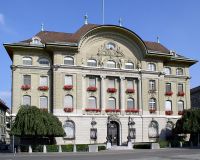 The latest data from Zurich-based SNB comes at a time when Switzerland is facing growing pressure from India and many other countries to share foreign client details, while its own lawmakers are resisting such measures.
India has also constituted a special investigation team (SIT) to probe cases of alleged black money of Indians, including funds stashed abroad in places like Switzerland.
The funds, described by SNB as “liabilities” of Swiss banks or ‘amounts due to’ their their clients, are the official figures disclosed by the Swiss authorities and do not indicate towards the quantum of the much-debated alleged black money held by Indians in the safe havens of Switzerland. – Times of India, 20 June 2014


Filed under: india | Tagged: banks, black money, corruption, corruption in india, credit suisse, HSBC, india, indian black money, indian politicians, pictet & cie bank, politics, sarasin bank, swiss bank accounts, swiss banks, UBS, vatican bank |










since stashed money is enormous so its mere arrival in India will be a positive gain. without going into culpability of money, depositors be given option to bring money in Indian banks without facing any questions or penalty. course involving punishment will be nasty one and will enrich only legal fraternity with further corruption. so arrival of money be pursued only.
LikeLike
Special Report: How Germany’s taxman used stolen data to squeeze Switzerland — By Edward Taylor, Matthias Inverardi & Mark Hosenball — Duesseldorf, Germany, Thu Nov 21, 2013, 5:06am EST
In the digital age, pen and paper are useful tools for intrigue. In 2007, Sina Lapour, an assistant to a private banker at Credit Suisse, hand-copied the names of potential tax evaders listed on two of the firm’s internal computer systems. By not downloading information, Lapour avoided leaving electronic fingerprints. His employer did not detect his actions.
He put the notes in his briefcase and took them home, where he created an Excel spreadsheet which he called “Mappe1-test1.xls.” The spreadsheet held names, addresses, and amounts held by clients.
Despite trying to cover his tracks, Lapour was eventually convicted of economic espionage, among other crimes. According to a statement he made in a plea bargain, the data he stole gave details of as many as 2,500 clients with combined assets up to 2 billion Swiss francs ($2.2 billion). He sold it to a middleman, who then sold it to German tax inspectors. The information led to police raids in 2010 on Credit Suisse’s main offices in Germany.
Lapour’s spreadsheet was one of a half-dozen sets of stolen data for which Germany has paid millions of euros over the past five years. Those purchases pushed the boundaries of German law; Reuters’ inquiries have found Germany’s 16 federal states all cooperated in making them.
German parliament and court records, Swiss legal documents and interviews with bankers and politicians show the states and the central government in Berlin gradually constructed a system, partly funded by Germany’s federal finance ministry, to buy information on tax evaders. It’s a campaign which involves hundreds of Germany’s roughly 2,500 tax inspectors, includes a formula to calculate each state’s share of a purchase, and continues to this day, German tax officials say.
Some German politicians say buying stolen data added to pressure on Switzerland to share more information about tax evaders. Last month, Switzerland, which for decades has nurtured bank secrecy as a cornerstone of its offshore wealth industry, signed a convention to exchange some tax information with other countries. If approved by the Swiss parliament, it could be the end of a long and passionate battle.
Swiss officials accuse the Germans of breaking Swiss laws on banking secrecy and of committing economic espionage. According to arrest warrants seen by Reuters, the Swiss prosecutor is seeking the arrest of three German tax inspectors on these charges. Swiss finance minister Eveline Widmer-Schlumpf declined to comment, but a spokesman for her ministry said Germany’s handling of stolen goods “is highly questionable with respect to the rule of law.”
In June this year, Germany’s parliament received a draft law with a clause to exempt from prosecution civil servants who handle stolen data. As Berlin parties haggle over a new government, it has yet to be passed.
Nonetheless Norbert-Walter Borjans, finance minister for North Rhine-Westphalia, the state which bought the Lapour data, says he would support the purchase of such information “so long as there is data containing valuable tips to be bought.” His predecessor, who signed off on the Lapour deal, could not be reached. Switzerland has filed no charges against the politicians involved.
Buying stolen data is an “emergency remedy”, a spokesman for Germany’s federal finance ministry told Reuters: It was justified because Germany and Switzerland did not have a deal through which Germany could enforce its tax claims. None of the tax inspectors could be reached, and the state declined to comment on their behalf.
THE DECEASED WITNESS
The Swiss prosecutors suspect the German tax inspectors of more than handling stolen goods. They allege the taxmen even solicited the theft of specific information, according to an international request for legal assistance that Switzerland sent to Germany on the case.
In that confidential document, seen by Reuters, Lapour is quoted as saying a middleman showed him a text message in which tax inspectors allegedly requested specific information.
Tax inspectors in North Rhine-Westphalia say they don’t solicit data stealing. Ingrid Herden, a spokeswoman for the state’s finance ministry, said German tax authorities had not actively encouraged theft of client data from Swiss banks. “There is no evidence that tax inspectors from NRW did such a thing,” she added in a written statement to Reuters.
However, Herden added that she could not rule out that a middleman may have incited Lapour to steal information.
That go-between, named in the Swiss request as an Austrian graphic designer called Wolfgang Umfogl, committed suicide in prison in Switzerland in 2010, weeks after his arrest on suspicion of money-laundering, according to police in Berne, Switzerland.
Lapour, who was given a two-year jail sentence but spent less than six months in custody, could not be reached for comment. His lawyer declined to be interviewed. North Rhine-Westphalia declined to comment on the details of the case.
THE FITNESS CENTER
Lapour was born in 1983 in Tehran, Iran. By the mid-2000s he was working at Credit Suisse in Zurich and would meet up with Umfogl at the Banane Fitness Centre in Winterthur, according to the Swiss request for assistance, which is also based on Umfogl’s testimony and other material gathered by Swiss police. How the two got talking about stealing data is not revealed.
Lapour created a data file on March 2, 2008, containing names, addresses, net worth and contact details for clients, the request for assistance says; Umfogl flew to Duesseldorf to meet German tax inspectors at the end of that month to see what this information was worth. His opening price: 6.75 million euros ($9.13 million).
By that time, North Rhine-Westphalia already had experience of handling stolen information from other sources. In 2008, it emerged that the state’s tax inspectors had obtained data stolen from LGT Group, a Liechtenstein bank, from a thief who originally sold it to Germany’s federal intelligence service, the BND.
That year, North Rhine-Westphalia officials commissioned a legal opinion from the regional prosecutors to determine if they were within their rights to buy stolen data from Lapour. The prosecutors found in their report that for civil servants, dealing with LGT data did not amount to handling stolen goods – the theft happened in Liechtenstein, to a foreign company. They also said “emergency measures” are justified if tax claims cannot be enforced by other legal means: Authorities in Liechtenstein had not cooperated with requests for legal assistance.
Tax authorities at three German states would go ahead with deals, buying at least five sets of data since 2008 according to media announcements they made; the data was stolen from banks including UBS, Julius Baer and HSBC. The banks declined further comment or said they had resolved the issues.
THE UPDATED FILE
In Switzerland, Lapour was busy. The Swiss prosecutor says his data file was updated on July 21, 2008, four months after Umfogl allegedly first met the German tax inspectors, to add the dates each account was opened.
This, the Swiss prosecutor asserts, suggests he was stealing to order: German tax authorities needed the dates to see how long a client had evaded taxes. In the request for legal assistance, Lapour is cited as saying Umfogl asked him to get that extra data: Umfogl had shown him a text message from June 24, 2008 in which the tax inspectors purportedly demanded more information. The alleged message’s exact contents are not described.
In May 2009, Umfogl and the German tax inspectors met again, at the Kronen Hotel in Stuttgart, the Swiss document says. There, prosecutors say, tax inspectors asked for a sample of the data and for information beyond names and dates.
According to the Swiss prosecutor, Lapour confessed he stole and sold a PowerPoint presentation that Credit Suisse made for staff on how to handle German clients who were “non compliant” – evading German tax. The presentation told staff how to avoid implicating themselves or the bank in aiding tax evasion. The Swiss say the Germans wanted to use it as evidence Swiss banks had a strategy to look after foreign tax-evading clients.
Credit Suisse would eventually pay 150 million euros to the state of North Rhine-Westphalia to end an investigation into allegations it helped German citizens evade taxes. Neither the bank nor North Rhine-Westphalia would comment further.
Back in 2009, after another meeting in the German lakeside city of Konstanz, Umfogl handed tax inspectors a USB stick containing a sample of 10 percent of the data, according to the Swiss request for assistance. In mid-July, he purportedly handed over the PowerPoint presentation. It’s not clear from the document when or how the rest of the information was handed over or paid for.
In all, Umfogl allegedly paid Lapour at least 65,000 euros for his information; Lapour later told Swiss prosecutors that he used most of the money to support his Czech girlfriend. He showered her with gifts including a car, paid for vacations to Italy, Spain and Egypt, and helped her to pay off a mortgage in the Czech Republic. She was not accused of wrongdoing and could not be reached for comment.
Germany’s legal machinery continued to gather opinions on how far tax inspectors could go. In 2010, the North Rhine-Westphalia inspectors got some legal reassurance.
A CHANGE OF VIEW
“With the LGT CD, many said it’s a one-off, but then came 2010,” said Borjans, the finance minister of North Rhine-Westphalia.
On February 23, representatives from the Federal Central Tax Office, an authority under the jurisdiction of the German Ministry of Finance, contacted officials from what is now Borjans’ ministry and decided to coordinate bank data purchases so different states would not all buy the same set, parliamentary questions show.
Days later, Borjans’ predecessor, a member of Chancellor Angela Merkel’s CDU party, announced he had struck a deal to buy a “client data CD” – the Lapour data – for 2.5 million euros.
In November, a legal opinion from Germany’s Federal Constitutional Court added weight to that plan. The court found that if data had been “received” rather than actively solicited, then those who used it were not guilty of abetting the theft. Whether it was legal to buy stolen data was a question it referred to other courts.
“It’s not like I commission a purchase, or people come directly to me,” Borjans told Reuters this year. Tax inspectors, not politicians, are in the driving seat, he said. They act on tips and then ask him for resources.
THE KEY OF KOENIGSTEIN
By 2010, all Germany’s tax collectors had reached agreement on how to split the cost if the federal ministry decided to join the states in funding a purchase, parliamentary questions show.
Acquisitions of taxpayer names are funded using a formula known as the “Koenigsteiner Schluessel,” which translates as “the key of Koenigstein.” The formula, named after a wealthy Frankfurt suburb, was devised after World War Two to work out how to spread the cost of funding scientific research in Germany.
“Should the Federal Ministry of Finance decide to make a purchase, it will contribute 50 percent of the acquisition costs,” a spokesman for the ministry told Reuters. All 16 states told Reuters they have helped pay for data: Berlin and Hamburg say these purchases led to the recovery of more than 100 million euros each.
But not all are convinced the system is legal. After initially joining in, one state – Brandenburg – said it was opting out because of such doubts. Last June, when the draft law on handling stolen data went to parliament, Brandenburg’s finance minister issued a news release saying it would “provide long overdue legal certainty for our finance officials.” The state which bought the material paid the shortfall, a spokesman for Brandenburg said.
Volker Kauder, head of the parliamentary group for the CDU, is still “highly critical” about buying such data, a spokesman told Reuters. “In doing so the state is in danger of slipping into the role of a dealer in stolen goods,” he said.
THE TELEVISION CABLE
In March 2010, Umfogl opened a bank account in Austria. According to the Swiss request for legal assistance, he was trying to divide the 2.5 million euros he had received between banks in Germany, Austria and the Czech Republic. Staff at a savings bank in Dornbirn, Austria, got suspicious about a deposit of 893,000 euros, and raised the alarm with police on March 25, 2010, believing Umfogl could be a money-launderer.
Austrian authorities froze Umfogl’s funds that September, said the prosecutor’s office in Feldkirch, Austria. Swiss Federal Police were notified because Umfogl lived in Switzerland. They arrested him at his work. A day later, Lapour was tracked down and arrested in the Czech Republic where he was visiting his girlfriend.
Lapour was convicted in Switzerland’s Federal Criminal Court of economic espionage, violating bank secrecy and violating trade secrecy, by passing client data outside the bank. Besides his 24-month sentence, he was fined 3,500 Swiss francs.
At a house in a suburb on the outskirts of Winterthur, given in the request for assistance as Lapour’s parents’ address, a man told a reporter he did “not know where Sina is.”
At about 6.30 a.m. on September 29 2010, just days after Umfogl was arrested, he was found dead in his police cell in Berne. He had left a note before hanging himself with a television cable, according to a joint statement issued by the coroner and police. Both declined to reveal the note’s contents.
That month, Switzerland’s government said it had agreed to resolve the problem of untaxed money stashed away by Germans in Swiss accounts.
North Rhine-Westphalia’s Borjans believes the purchase of stolen names was crucial to that. “You could tell this was not only a question of decency,” he told Reuters. “It was also about hardcore commercial interests. And that’s why Switzerland was suddenly willing to negotiate.”
The Swiss finance ministry said it had been Swiss financial market policy since 2009 to seek international tax agreements.
By August 2011, Switzerland and Germany had reached an outline deal on sharing tax information. But the pact failed to win political support within Germany and the upper house threw it out in November last year.
Borjans was one of the pact’s opponents. He said he felt Berlin had sold itself short. “It left the door open to bank secrecy and tax evasion,” he said.
Last month, Switzerland finally signed onto the international tax convention, giving Germany some of what it wanted. The Swiss request to Germany to arrest three tax inspectors has gone unanswered: Germany’s finance ministry said it is still evaluating it.
(Hosenball reported from Berne, Switzerland; Additional reporting by Andreas Rinke and Michelle Martin in Berlin and Jan Lopatka in Prague; Edited by Sara Ledwith)
LikeLike
Black Money: No list of Indian stash, say Swiss authorities — DC | Pawan Bali | June 24, 2014, 08.06 am IST
New Delhi: The Swiss government on Monday denied outright that it is preparing a list of suspected Indian tax evaders or had plans to prepare one to be given to India.
“It is completely wrong. There is no list,” Swiss spokesman Mario Tuor, from the department handling international financial affairs, told this newspaper over the phone from Bern.
A news agency report, widely reported in the media, had quoted unnamed Swiss government officials claiming that it has prepared a list of Indians suspected to have stashed black money in Swiss banks, and that details of this would be shared with the Indian government.
Mr Tuor said that he was aware of the reports in the Indian media, but these were not correct.
Union finance minister Arun Jaitley said on Monday that his ministry will write to the Swiss authorities to expedite information on Indians who have unaccounted money in banks there. Mr Jaitley said that his ministry is yet to receive any official communication from Switzerland on the “black money” suspected to be stashed in Swiss banks.
A Swiss embassy statement in New Delhi said that there was no new development. “Since a high-level Swiss delegation met its India counterparts in New Delhi in February 2014, no further official meeting has taken place”, it said.
Mr Tuor said the Indian government had requested details of some people from the Swiss government. “As per our laws, we can’t provide information based on stolen data. The list which was given to us by India was based on stolen data, so we couldn’t give details,” said Mr Tuor. However, he said if some information is sought within the legal framework and as per the bilateral agreements, the Swiss government will look into it.
LikeLike