










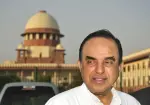


 “Takeover of temples can happen, the Supreme Court held, only on establishing a clear case of mal-administration and that too the takeover can be for a limited period, and the management of the temple will have to be handed back immediately after the ‘evil has been remedied.'” – Dr. Subramanian Swamy
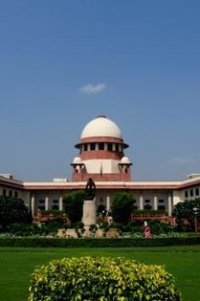 The Supreme Court delivered a landmark judgment on January 6, 2013, allowing my Special Leave Petition that sought the quashing of the Tamil Nadu Government’s G.O. of 2006 which had mandated the government takeover of the hallowed Sri Sabhanayagar Temple (popularly known as the Nataraja Temple).
The Madras High Court Single Judge and Division Bench had in 2009 upheld the constitutionality of the G.O. by a tortuous and convoluted logic that new laws can overturn past court judgments that had attained finality earlier. The Supreme Court in 1953 had dismissed the then Madras Government’s SLP seeking the quashing of a Madras High Court Division Bench judgment of 1952 that had upheld the right of Podu Dikshitars to administer the affairs of the Nataraja Temple while dismissing all charges of misappropriation of temple funds against the Dikshitars. The Supreme Court thus made this judgment final and hence that which cannot be re-opened. But in 2009 the Madras High Court did precisely that. In 2014, in my SLP, the Supreme Court Bench of Justices B.S. Chauhan and S.A. Bobde therefore termed this re-opening of the matter as “judicial indiscipline” and set aside the 2009 Madras High Court judgment as null and void on the principle of res judicata.
In their lengthy judgment, the Bench has clearly set the constitutional parameters on the scope of governmental intervention in the management of religious institutions. In particular, the Court has opined that any G.O. that legally mandates a takeover of a temple must be for a fixed limited period, which I had suggested as three years.
The Dravidian Movement intellectuals and politicians in various parties in Tamil Nadu are incensed with the judgement. The recent article “Reforms in the House of God” (A. Srivathsan in The Hindu January 13, 2013) is one such example that laments the Supreme Court judgment.
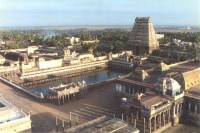 In this Dravidian movement background, it is not difficult to understand the views of those who believe that Hindu temples ought to be managed by the government, and that any deviation is a social, ethical, moral and legal sacrilege! In Mr. Srivathsan’s article it is stated that: “For almost a century, the Tamil Nadu government has been trying to bring the Chidambaram Natarajar Temple or the Sabanayagar Temple as it is officially known, under state administration”. This is one expression of the outlook that only Hindu religious affairs need to be managed by the government. The obvious question, why should a ‘secular, socialist’ government control only Hindu places of worship, but not Muslim and Christian religious institutions clearly has been avoided.
But the country has moved on after the phase of British imperialist grip on Tamil Nadu during which phase the Dravidian Movement was founded. Prominent leaders of this Movement had declared that “blowing up of the Nataraja Temple by a cannon is the goal of the Dravidian Movement”. Unfortunately for them, in the last two decades, the rising popularity of the Hindu religion among the youth, and the debilitating corruption in financial affairs of the Dravidian movement have made such a violent aim unattainable. But the biggest roadblock is the Constitution of India.
In fact, what is scandalous is the corruption after takeover of temples by the Tamil Nadu officials, MLAs and Ministers by looting the temple wealth, lands, and jewels, and the reckless diversion of donations of devotees to non-religious purposes.
 For example, temple properties: Tamil Nadu temples, under Hindu Religious & Charitable Endowments Department (HR & CE), has control over more than 4.7 lakh acres of agricultural land, 2.6 crore square feet of buildings and 29 crore square feet of urban sites of temples. By any reasonable measure, the income from these properties should be in thousand of crores of rupees. The government, however, collects a mere Rs.36 crore in rent against a ‘demand’ of mere Rs. 304 crore — around 12 per cent realisation. How much is under the table only a court-monitored inquiry can reveal. In any corporate or well-managed organisation with accountability, those responsible would have been sacked. Yet, we have people rooting for ‘government administration’.
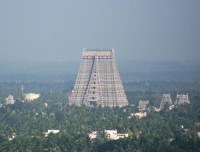
Temples themselves: The Srirangam Ranganathar Temple paid the government a (yearly) fee of Rs. 18.56 crore (2010-11) for ‘administering the temple’; for employees rendering religious services, like reciting Vedas, pasurams during the deity procession, no salary is paid. There are 36 priests in Srirangam who perform the daily poojas — they are not paid a monthly fixed salary. They are entitled to offerings made by devotees and a share in the sale of archana tickets. Yet the temple pays a monthly salary ranging from Rs. 8,000 to Rs. 20,000 for the temple’s government-appointed employees, like watchman, car drivers etc. who perform no religious duties.
The situation is “significantly” better at the famous Nellaiappar Temple in Tirunelveli. In this temple, priests performing daily pujas are paid monthly salaries, but ranging from Rs. 55 — Rs. 72 (and this is during 2010-11). But did some politician not say you can have a hearty meal for Rs. 5 per day? But it is just Rs. 1.65 per day, going by the standards of the ‘secular’ government.
 Many large temples maintain a fleet of luxury vehicles, typically the ‘fully loaded Toyota Innova’, for the use of VIPs! And for the use of assorted Joint and Additional Commissioners and, of course, the Commissioner himself. It is very difficult to understand the religious purpose such extravagance serves or even a ‘secular’ purpose! The HR & CE takes away annually around Rs. 89 crore from the temples as administrative fee. The expenditure of the department including salaries is only Rs. 49 crore. Why does the government overcharge the temples – literally scourging the deities – for a sub standard service?
Temple antiquity: The third ‘contribution’ of the government is the mindless destruction of priceless architectural heritage of our temples.
There are several instances of sand blasting of temple walls resulting in loss of historical inscriptions; wholesale demolition of temple structures and their replacement by concrete monstrosities; in a temple in Nasiyanur near Salem, an entire temple mandapam disappeared, leaving behind a deep hole in the ground, literally.
Recently the government started covering the floor of Tiruvotriyur temple with marble, a stone never used in south Indian temples. The original floor was of ancient granite slabs with historical inscriptions. There are several initiatives for ‘renovation’ of temples — the bureaucrats rarely consult archaeologists or heritage experts. Without knowledge, experience, competence or appreciation and with great insensitivity they use inappropriate chemicals on ancient murals, insert concrete/cement structures, use ceramic tiles to ‘embellish’ sanctum sanctorum and construct ‘offices’ within temple premises. Ancient monuments 300 to 1000 plus years old are never ‘renovated’, only ‘restored’, a distinction that escapes the babus.
 More importantly, the Supreme Court, in the 2014 Chidambaram case has held that the government cannot arbitrarily take over temples, which is what has been happening in Tamil Nadu under the Dravidian movement’s influence.
In the case of Trusts and Societies, takeover of temples can happen, the Supreme Court held, only on establishing a clear case of mal-administration and that too the takeover can be for a limited period, and the management of the temple will have to be handed back immediately after the ‘evil has been remedied’.
There are several large temples in Tamil Nadu under government control for several decades. If the Supreme Court judgment is applied, then the government is in illegal, unethical and unfair control of these temples. apart from being answerable for innumerable acts of dereliction of duty, defiling of temples that has resulted in loss of several thousands of crores of rupees to the temples and to their antiquity. That is my next move — to liberate all Hindu temples presently in government control on expired GOs. In the future we need to bring some mosques and churches to rectify the mismanagement going on in these places. Then the secularism of India’s intellectuals will be truly tested. – The Hindu, 20 January 2014
» Dr Subramanian Swamy is a former Union Minister and a member of the Bharatiya Janata Party.
See also
- Hindu acharyas call for ending government control of Hindu temples – HPI
- The Chidambaram temple and the Podu Dikshitars – T. R. Ramesh
- HR & CE Act: A fraud on the Constitution – B.R. Haran
- HR & CE: Rogue department of the Government of Tamil Nadu – T. R. Ramesh
Filed under: india | Tagged: anti-hindu, archaeological survey of india, consitution of india, corruption, culture, dravidian politics, god, goddess, hindu dharma, hindu temples, hinduism, HR&CE department, india, indian politics, politics, psychological warfare, religion, supreme court of india, temples |








 BHARATA BHARATI
The problem is the weakness of Hindus themselves; if freedom is given, then thy remain slack-inactive-not caring for eiher the temple or the Deity or the Poojas or for the public at large-often on the verge of deserting the Temples and culture; they are in utter povety and are unable to feed themselves; under the guise of traditions, they prevent any reorientations in tune with the changing times and almost push out even the local caste Hindus; they can not generate enough funds or motivate the big money spinners to give them money-people are prepared to buy flats at costs ranging from 40 lakhs of rupees to 4 crores of rupees; they buy cars, white goods and so on; lavishly spend for travel by air and ac class in either trains or in cars or in buses; they buy costly jewellery; but few give any significant money for the temples; they ask questions and seek good returns!! Which priest can answer them and guarantee them? Even big ‘MATAMS’ with branches all over India are unable to manage their temples even in their own head quarters; In a nut shell the LAW & ORDER all over the World has gone down; this reflects in India and in Hinduism; more so because the per Capita Income of the Hindus is very very poor-however much the Governments try to project a Rosy picture! In good faith, barring some exceptions, the Governments try to educate the people to come up and maintain their Traditions and belongings; but the Genes of the people does not change so fast; The TTD is one example of growth-of course, there are many lapses and many letting go of the ground rules. All the HinduMatadhipathis have to sit together and first of all educate ‘ALL THE PEOPLE’ on Hinduism, its past Glory, the weaknesss in it and which have been exploited by all the foreigners and then direct them to manage ALL their inheritances; the real earning Power of the Hindus has to go up several hundred folds! until then, for a while, we have to tolerate the Government’s Management Skills; but checking the Government Agencies with Economically and Powerful Hindu Trustees.
LikeLike
The size i.e. numerical strength along does not matter . If so , a big giraffe could take on a tiger instead of getting killed by it. Ants kill much bigger insects than them through well knit organization and a killer spirit. Instead of harping on minority syndrome, if we can place ourselves at power centres , we can constitutionally undo the past mistakes and mitigate many injustices meted out to the Hindus . regarding the issue as to why the Hindu temples are an easy prey for these satanic politicians whether they be of Dravidian type or otherwise is they are cocksure of not having any reaction whereas the consequences of such action in respect of churches or mosques is well known to them . These modern day politicians , beilievers in dravidianism or not , are all no better that the marauding Gazni . These people are eyeing temples for the same reason that Gazni and his likes invaded Hindustan centuries ago.. It is the lure of wealth , my dear.
LikeLike
Govt.control over Hindu temples is a subject which has not engaged the attention of Hindus at large. Some of those who feel strongly about it also feel helpless, in the absence of political support. In this country civic voice does not count unless it is backed by political muscle. I think there are enough legal grounds to fight this issue as it involves discrimination between different religions in a secular state. Hindu temples alone are managed by the govt, leaving alone Churches,mosques, etc. If being minority is the criterion, then every Hindu cult can claim to be a minority!
To start with, at least the BJP ruled govts should free the temples from under their control and enact suitable legislation if that is required.
Here in Karnataka, we have an agnostic or atheist Chief Minister who talked of retaking Hindu temples which had been freed.
Some time ago, Reserve Bank of India collected information about Hindu temples having precious metals, while no attempt was made to collect details of the extensive properties held by other religious organizations.
LikeLike