













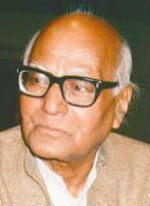
 Astrology is an imported concept and was not a part of the Vedic era, scientist Jayant Narlikar said on Oct. 3rd, 2013 while speaking at the two-day workshop on comet ISON at the college of Engineering, Pune, auditorium.
The lecture was dedicated to anti-superstition activist Narendra Dabholkar, who was murdered in the city in August.
Narlikar spoke about his association with Dabholkar and how they and two other researchers had compiled a study called ‘A statistical test on astrology’.
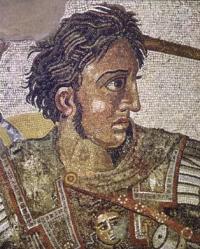
Narlikar said, “In the Vedic era, there was never a seven-days-a-week concept. Similarly, astrologers were also not known at the time. They came later, when Alexander came to India and brought several of them along with him. Indians carried forward astrology.”
He added that a closer examination comparing astrology with science reveals that the former is not science. Narlikar said the study he conducted with Dabholkar goes to explain why astrology is not a science through a simple experiment. They adopted an experiment conducted by Bernie Silverman, a graduate student of Michigan State University, USA. They collected horoscopes of 100 scholarly students and 100 students with learning difficulties.
 After a random selection from these horoscopes, two sets of 40 horoscopes each were prepared. They then invited astrologers in the country to separate horoscopes of scholarly and disabled students and laid down some statistical guidelines for them. It was decided that of the 40 horoscopes, the astrologer needs to get at least 28 accurate results as a testimony of their successful predictions.
Around 53 astrologers asked for samples of the horoscopes and 27 replied with results. The best performer among the respondents had 24 correct results. Hence, none of the astrologers could pass the test. The average of all the respondents came to 17, way below the 28-mark, he said.
Narlikar said, “Our test asked a focused question and the astrologers could not point toward any ambiguity in interpretation. We told the astrologers that the real predictive success could be claimed only at the 70% level for their sample size. The test demonstrated the hollowness of the basic claim of astrology.”
The study was published in the Current Science journal in March 2009.
Narlikar said that Dabholkar and his team did a great job of collecting 200 horoscopes as they were so well connected to the common people. – Times of India, 3 October 2013
» Jayant Vishnu Narlikar is an Indian astrophysicist.
Filed under: india | Tagged: astrologers, astrology, bernie silverman, hindu, india, jayant vishnu narlikar, jyotish, narendra dabholkar, pseudo science, sanskrit literature, science, superstition, vedic astrology |








 BHARATA BHARATI
Elst is right completely and unlike that self hating Jayant Narlikar (who specializes in taking straw man arguments and then bashing hinduism for less progress in science) is spot on about transmission of astrological elements during indo greeks.
LikeLike
Late Prof David Pingree’s was the first to study what Jayant Narlikar said. but “the indigenous system of lunar astrology in India known as the nakshatras.” is wholly Indian
http://theastrologypodcast.com/2013/07/26/hellenistic-and-indian-astrology/
Please go thru the entire podcast.
Here are the main topics that we discuss during the episode:
The large number of old astrological manuscripts in India that have yet to be catalogued, edited, or translated.
The similarities between Hellenistic and Indian astrology.
The indigenous system of lunar astrology in India known as the nakshatras.
What to call Indian astrology: Indian astrology? Vedic astrology? Jyotish?
Does Indian astrology date back to Vedic times?
David Pingree’s argument about the transmission of Hellenistic astrology to India in the 2nd century, through a translation of a Greek text known as the Yavanajataka.
A recent paper which challenges parts of Pingree’s dating of the Yavanajataka.
The use of Greek astrological terms that have been transliterated into Sanskrit in Indian astrology.
Differences between Hellenistic astrology and the doctrines in the Yavanajataka.
The origins of horary astrology, and the question of whether it originated in India.
The value of studying Indian astrology for western astrologers, especially those who are interested in traditional astrology.
LikeLike
While there are quacks, frauds and charlatans all over India (and no doubt the world over) in astrology, Sage Brighu is credited with being the founder of predictive astrology. He forecast only 5 million but the astronomical principles he based himself on were good for 45 million people and for humanity for all time to come.
The population numbers are not relevant. What is relevant are the astronomical principles based on the ecliptic and as well the lunar mansion and the movement of the planets. Hence, they could hold good for contemporary numbers of people.
These principles were also the basis of the Rig Vedic fire altar. Recently there have been Indic authors who have written on this topic, including Dr. N. Rajaram and Dr. Subhash Kak. The latter has two important works on the subject:
1. The Vedic Fire Altar (1993)
2. The Astronomical Code of the Rig Veda (3rd edition, 2011).
He has also written on the astronomical principles found in the Sathapatha Brahmana and other post Vedic works. These principles were based on mathematical/geometrical formulae, which have been codified in the Shulba Sutras, but they were already part of the Rig Vedic knowledge of astronomy.
In his 3 part series (The Origin of the Indo Europeans) in Folks Magazine, Dr. Rajaram has provided brief outlines of the influence of Vedic mathematics on Babylonian mathematics and hence via that route to Pythagoras and his theorem. Also some thought on the Pythaorean triples.
My own study of Pythagoras has indicated that Pythagoras had always wanted to visit India. We know that he visited Egypt and Babylonia. There is a missing period of ten years in Pythagoras’s life and scholars have speculated that he must have visited India during that period.
Hence, my own conjecture is that in addition to the Vedic influences via Babylonia, Pythagoras may have had a direct influence from Vedic mathematics/astronomy via his visit.
An interesting subject.
Sage Brighu is among the Saptarishis, the seven sages.
LikeLike
To one who approaches the evidence with an open mind, it is hard to avoid the conclusion that sometime in the first few centuries of the Christian era, Hellenistic astrology left an unmistakable imprint on Indian astrology, particularly in the terminology and practices concerned with the astrological houses. However, this still does not rule out the possibility that Indian astrology had undergone substantial indigenous development prior to this Hellenistic influence, especially since many of its concepts such as the naksatras have no clear Greek antecedents.
The nakshatra aspect is not there in Hellenetic astrology interalia Greek. I am sure that there is no nakshatra aspect in Greek astrology. In fact, in Valmiki Ramayana , the star of Lord Rama as Punarpusam and the star of Krishna as Rohini by Mahasrishi Veda Vyas is mentioned. Does Alexandar have a Nakshatra. I do not think so.
Robert H. Schmidt has rightly pointed out this difference in the full article.
http://www.projecthindsight.com/articles/vedic.html
Very good article
The Relation of Hellenistic to Indian Astrology
by Robert H. Schmidt
He points out the differences and influences very well.,
LikeLike
Rishi Bhrigu is the mind-born son of Brahma and has no historical date. Any text—including historically recent ones—can be attributed to him.
Tradition says he created 5 million horoscopes, one for every human being in the universe. That must have been when there were only 5 million human beings in the universe; there are now 5 billion plus human beings in the world, so it is reasonable to say his horoscopes do not apply to anybody today.
(Bhrigu astrologers in Bangalore and other cities have a prosperous business making predictions from a bundle of palm leaf manuscripts. First they interrogate you in the most clever way, then they repeat the data back to you claiming it was found in one of the palm leaf manuscripts!)
Tradition is fine, but we are trying to establish a HISTORICAL date for predictive astrology in India.
Bhrigu as the father of Jyotish is really not relevant to this effort—or so it seems.
It is accepted that some form of astrology existed in India from a very early date.
As there is specific astronomical data in the Vedas and Puranas which allows them to be dated, it may be inferred that astrology, which follows astronomy, may have existed in some form or other.
But the historical question concerns the beginning of predictive astrology, which appears to have started much later in India and is linked to West Asia and Greece.
LikeLike
Bhrigu Samhita predates Alexnder, but 90% lost, Comments on this predating please.
http://en.wikipedia.org/wiki/Bhrigu
Maharishi Bhrigu is credited as the father of Hindu astrology and the first astrological treatise Bhrigu Samhita is attributed to his authorship. This treatise is said to contain over 5 million horoscopes, in which he wrote down the fate of every being in the universe. According to popular tradition, only about a hundredth of these horoscopes have survived to this age. The Bhrigu Samhita is an astrological (jyotish) classic attributed to Maharishi Bhrigu during the Vedic period, although the available evidence suggests that it was compiled over a period of time by the various sishyas (students in the lineage) of Maharishi Bhrigu. Maharishi Bhrigu was the first compiler of predictive astrology, Jyotisha. He compiled about 500,000 horoscopes and recorded the life details and events of various persons. This formed a database for further research and study. This study culminated in the birth of the science (shastra) of determining the quality of time (Hora) and is the Brihat Parasara Hora Shastra. These Horoscopes were based upon the planetary positions of the Sun, Moon, Mercury, Venus, Mars, Jupiter, Saturn, Rahu (North Node of the Moon) and Ketu (South Node of the Moon). After that, Maharishi Bhrigu gave his predictions on different types of horoscopes compiled by him with the help of Lord Ganesha in a brief and concise manner. The total permutations/ possible horoscope charts that can be drawn with this is about 45 million. Though it is said that these horoscope have been recorded for all mankind who were, have and will be born till eternity.
During foreign invasions of India by Muslim warriors from the north west in the 12th and 13th centuries, the Brahmin community became dispersed all over India. The invaders captured these prime assets of the Brahmins. Some parts of the ‘Bhrigu Samhita’ were taken away by them. The most unfortunate and destructive event was the destruction of the Nalanda university library where several thousands of the horoscopes compiled by Maharashi Bhrigu had been stored. Only a small percentage of the original horoscopes of Bhrigu Samhita remained with the Brahmin community which are now scattered throughout various parts of India.
LikeLike
If astrology is the product of the ancient view that the cosmic universe and the terrestrial are linked, then it stands to reason that the Rig Vedic period which was greatly interested in astronomy (the fire altar, for instance, is based on astronomical calculations) must already have developed some astrology. Long before Greek ideas on the topic !
There is also the post Vedic Vedanga Jyotisha dated to approximately 1,500 BCE.
Therefore the Greek influences if they do exist, would have come much later.
LikeLike
This is Dr. Elst‘s comment on the origin of Hindu astrology:
No, Alexander did not bring [astrology to India], but he created the circumstances that would make the transmission of horoscopy possible. After his conquest of Babylon, Greek mathematicians and Babylonian practitioners of horoscopy, then about a century old, concluded a very fruitful marriage. From the very elementary Babylonian horoscopy, this combine develop all the concepts of modern astrology in a few decades. It was all there by 300 BC. The conquest of Afghanistan and the creation of the Indo-Greek states ensured a conduit for this knowledge. Some techniques existing in Hellenistic astrology were lost in European astrology but remained prominent in Hindu astrology, e.g. the planetary periods and the harmonic horoscopes (navamsha, dvadashamsha).
In India, there existed some sort of astrology, using the 28 lunar houses, explained in the Atharva Veda Parishishtas. This was not horoscopy, centred on individuals, but it distinguished between auspicious and inauspicious times: for laying the first stone of a building, or for getting married. The wedding times in modern India are based on this. This tradition made Hindus receptive for Greek astrology.
Though one can make some enemies among Hindus by saying this, there is no doubt that Hindu astrology was borrowed from Hellenistic astrology. The earliest classics, first centuries CE, refer to Yavana, Romaka, Paulisha, and contain a number of borrowed Greek words (of which kentron/kendra has passed into daily use).
LikeLike
It looks like the author needs more insight in Sanatana dharma and its scriptures. Seven days a week was very much Hindu.
LikeLike