











 “Hating the policeman is easy. He provides enough reasons. But it is unlikely that even a single educated urban newspaper reader would become a beat constable. Most cops come from the dark side of rural India, where khaps rule, women are treated like chattel, denied the use of cellphones and the freedom to choose their own clothes, and where it is the feudal right of powerful landlords to rape, maim and murder. Cities like Delhi are bursting with such migrants who become vote banks for the most urbane of politicians.”
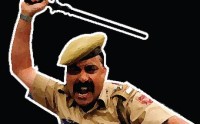 He is one of us. Yet, he is one of the most hated figures on the Indian landscape. The urban Indian does not identify with his vernacular accent, his suspicious eyes, and his swagger in uniform. He is viewed as someone who can be bought with the most meagre bribe; a corrupt, morally venal, brutal bogeyman from whose clutches no one escapes unless a huge amount of money changes hands. He is seen as an insensitive monster tormenting the poor, defending rapists and humiliating women who seek help.
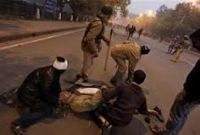 He is paid less than a taxi driver. He is poorly educated. He doesn’t get government housing for years, and has to live in the slums ruled by petty crime lords where his children grow up with the offspring of prostitutes, drug pushers and smack addicts. He has to work 14-, sometimes even 16-hour shifts. He has to stand in the freezing cold, guarding deserted roads in cities where criminals and rapists roam looking for prey. He has to behave like the lapdog of even the smallest politician who has the power to get him transferred to some inhospitable posting if he refuses to do the leader’s bidding. MLAs and MPs he is assigned to protect, slap and abuse him. He watches silently as elected representatives humiliate his officers. In popular cinema, he is a collaborator of the mafia, which is in bed with powerful political interests.
He is the Indian policeman.
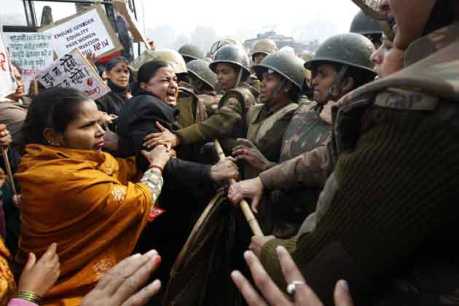
 Yet, it is his duty to protect India at home. As the country erupts in anger against a system so corrupted and sabotaged by the politician, the mass hostility over the Delhi gangrape case makes the cop the prime target. Protesters who marched spontaneously towards Sonia Gandhi’s house and gheraoed Rashtrapati Bhavan make him the target of their wrath, because he is seen as one who protects these institutions, which people believe, have been subverted by the Indian politician. He is even more hated when teargas and water cannons are directed against the objectors who are lathicharged and arrested—but he is only following orders from his superiors in khaki, who in turn bow to their superiors in khadi living in sprawling homes with well-tended gardens, and travelling in their crowned convoys. He is between a rock and a hard place.
 The total sanctioned strength of the Indian police force is approximately 14 lakh—136 cops per one lakh Indians. Delhi, in whose cold streets—where an innocent girl on an outing was raped and then violated with iron rods—has the world’s largest metropolitan police force with a sanctioned strength of 83,762. But only 30 per cent is available to protect the city’s 1.67 crore residents. 7,315 policemen guard 416 VIPs at a public cost of Rs 600 crore. The rest are deputed to assist sealing and demolition drives, or verification duties. Statistics reveal that one woman is raped every 22 minutes in India. Ironically, not a single VIP has been raped, robbed or murdered so far in Lutyens’ Delhi. On the other hand, political parties gave tickets to 20 politicos accused of rape to contest the last state elections. A study shows that of the 150 MPs in the current Lok Sabha facing criminal charges, 73 are accused of serious charges like rape, murder, extortion and kidnapping.
 Hating the policeman is easy. He provides enough reasons. But it is unlikely that even a single educated urban newspaper reader would become a beat constable. Most cops come from the dark side of rural India, where khaps rule, women are treated like chattel, denied the use of cellphones and the freedom to choose their own clothes, and where it is the feudal right of powerful landlords to rape, maim and murder. Cities like Delhi are bursting with such migrants who become vote banks for the most urbane of politicians.
India is angry. One day, the Indian policeman himself may turn against his political masters with a vengeance. That would truly be the day of reckoning. – The New Indian Express, 23 December 2012
» Ravi Shankar writes for The New Indian Express. Contact him at ravi@newindianexpress.com
Filed under: india | Tagged: civil rights, corruption, human rights, india, indian police, indian police service, indian politics, IPS, justice, law and order, money changes hands, new delhi, new delhi anti-rape protests, police, police constable, political corruption, politics, psychological warfare, rape, women's rights |








 BHARATA BHARATI
Nobody denies that police brutality is there. But there is also another side to the police story that is ignored. Police are also human beings and the lowly constable certainly suffers too.
What are khaps? A hangover from Muslim dominance in North Indian villages? Certainly those few fatwas they give out and we hear about border on the absurd!
Ravi Shankar’s views are hardly Macaulayan!
LikeLike
Ravi Shankarji provides a misguided logic to police brutality.
Khaps have not been set up and do not have an ongoing agenda to oppress women or anybody. Please go to a village, live with them for a while and then make such comments which have become a standard catch phrases of the Macaulayan media.
LikeLike
Constable Tomar’s death puts Kejriwal’s AAP under scanner – FP Staff – Dec 25, 2012
Subhash Chand Tomar, the police constable who was seriously injured during the protests at the India Gate on Sunday, succumbed to his injuries at Ram Manohar Lohia Hospital on Monday. The incident has put the Aam Aadmi Party (AAP) under the scanner.
Police say eight people who were arrested on Monday in connection with the injury of the constable were booked for rioting and attempt to murder reportedly belong to the AAP.
All the eight accused were given bail after a bail bond was submitted by AAP member Manish Sisodia. One of those who was arrested has been identified as Chaman Kumar of AAP.
Police have registered a case over Tomar’s death. They said they have a video clip of those who attacked the constable and the case will be treated as a murder case.
Joint Commissioner of Police, Central Range, Taj Hasan, said, “We had arrested 8 people in connection to injuries caused to Constable Subhash Tomar, they were booked for rioting and attempt to murder. One of them is a person called Chaman Kumar who is a member of AAP. They were all given bail by the magistrate’s court. AAP member Manish Sisodia had furnished bail bonds for all of them. We will now see what further legal action needs to be taken and may even move court for cancellation of bail.”
Subhash Tomar, posted at Karawal Nagar police station, was deployed on law and order duty, and was rushed to the hospital after being injured and was put on ventilator support. The 46-year-old constable belonged to Meerut.
Over 140 people were injured during the clashes at the protests at India gate on Sunday. Delhi Police Commissioner Neeraj Kumar had said that at least 65 Delhi Police officials were injured in the clashes with protesters.
According to police, they had to use around 250 tear gas shells and repeated baton charges to evacuate protesters from the India Gate area. “Hooligans among the protestors resorted stone pelting. Around 12 DTC buses and equal number of PCR vans were damaged in the day long incident. One vehicle of Delhi Doordarshan was also damaged by the hooligans,” said police.
LikeLike
An important expose.
LikeLike
Wah Ravi Shankarji, every word of your article is so true ! And the parting punch about the ‘Day of Reckoning’ is like icing on the cake !
That day of reckoning may be fast approaching unless our politicians totally reform their feudal mindset.
LikeLike