















 “Today, with the New Age philosophies and the spread of Eastern religions, especially Hinduism, in the Western world, a more sophisticated approach has made it possible for Hindus to provide a richly textured account of the Devatas in the Veda. And of course, the devout Hindu can continue to worship the Devas and Devatas without any further encroachments from the colonials or missionaries.” – Dr. Vijaya Rajiva
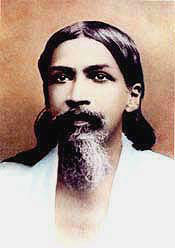
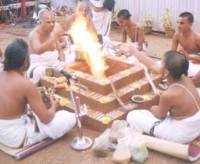
 Hindus worship the Devas and Devatas of the Rig Veda as standing outside of their consciousness as objective realities. The Rig Vedic Rishis also worshipped them in this manner, and through the homa, the sacrificial fire. They worshipped the terrestrial, atmospheric and cosmic deities. Agni was the central deity of the homa. Sayana, the great commentator of the Rig Veda focused on the ritualistic aspect of this worship and his work has been the basis of most subsequent scholarship on the topic. The great 20th century philosopher Sri Aurobindo Ghosh also based some of his work on Sayana’s commentary, but he moved away from the ritualistic aspect to the symbolic and psychological aspects of the homa.
His book The Secret of the Veda is some 600 plus pages long (in pdf), is dense and closely argued. There are many quotations from the Veda, along with English translations. Its companion work Hymns to the Mystic Fire was written a few years later and was published in 1946, with a foreword by Aurobindo himself. Approximately half of The Secret of the Veda is an introduction and commentary, the second part being translations by the author. It was written serially between 1914-1921, in a journal, Arya, started by Aurobindo. It is not an easy read and it is all too easy to miss the forest for the trees. Hence, it is important at the very outset to state briefly what his central concepts are.
 Ritam (cosmic order) and Satyam (Truth) are his central concepts. Agni, the deity of the homa, the fire god, is seen as the mediator (as did the Rishis) between humans and the Devas and Devatas (Gods and Goddesses). The latter have sent Agni in order that humans may reach Ritam and Satyam. All the Devatas are participants in the process of exalting and elevating human beings to a vision of Truth which is the cosmic order. In addition to Agni, Mitra, Indra, Varuna, the Viswadevas, Saraswati (and her companions) and even the seven rivers are interpreted by Aurobindo as having a symbolic meaning. About one-third of the commentary is on Agni with the remainder on the various Devatas and their role in the process of engaging in Truth consciousness. The study is extremely interesting and worth pondering over, even if the reader may find it somewhat (and needlessly) esoteric.
 The Gods and Goddesses (and this is the terminology that Aurobindo uses) are not merely natural phenomena. The philosopher focuses on Agni at the outset because this Devata (God) is the subject of the first hymn of Book 1 of the Rig Veda, in addition to being the messenger from the Devatas throughout the Veda and of course the Vedic sacrifice. Aurobindo uses the older English usage ‘Gods’ but in this article we shall use the term Devata which is a comprehensive term that includes Devis, Devas and Devatas, in short the celestial beings.
Aurobindo’s work explains the dual nature of the Veda. The Rishis used the sacrificial fire and the presence of various Devas and Devatas at the homa, to speak in veiled and mysterious fashion of a deeper truth that of Sat, Chit and Ananda, later openly spoken about in the Upanishads. He does not use the word Brahman, instead he uses the words Ritam and Truth. The hymns of the Rig Veda are symbolic according to him, even though they also invoke the actual presence of the Devas and Devatas. Hence the Rig Veda operates in dual fashion: the literal and the symbolic.
 Explaining the importance of Agni the philosopher says:
“Thus in these four verses of the opening hymns of the Veda we get the first indication of the principal ideas of the Vedic Rishis, – the conception of a Truth-consciousness, supra mental and divine, the invocation of the gods as powers of the Truth to raise man out of the falsehoods of the mortal mind, the attainment in and by this Truth of an immortal state of perfect good and felicity and the inner sacrifice and offering of what one has and is by the mortal to the Immortal as the means of the divine consummation. All the rest of Vedic thought in its spiritual aspects is grouped around these conceptions (emphasis ours, p.80 of 616).
The state of felicity is what he means by Bliss. Sat, Chit and Ananda are envisioned by the Rishis through drsti (vision, sight) and sruti (hearing). The Gods (the word used by Aurobindo) send Agni to humans to take them to this state. The other gods, Varuna, Indra, Mitra, Viswadevas and the goddesses Sarasvati, Ila, Bharati, Mahas, all work towards the same project.
Aurobindo says:
“In the early Vedantic teaching of the Upanishads we come across a conception of the Truth which is often expressed by formulas taken from the hymns of the Veda, such as the expression already quoted, satyam, rtam, brhat, – the truth, the right, the vast. This Truth is spoken in the Veda as a path leading to felicity, leading to immortality. In the Upanishads also it is by the path of the Truth that the sage or seer, Rishi or Kavi, passes beyond. He passes out of the falsehood, out of the mortal state into an immortal existence. We have the right therefore to assume that the same conception is in question in both Veda and Vedanta (p.77 of 616).
 He continues thus:
“This psychological conception is that of a truth which is the truth of divine essence, not truth of mortal sensation and appearance. It is satyam, truth of being; it is in its action rtam, right, – truth of divine being; it is in right activity both of mind and body; it is brhat, the universal truth proceeding direct and unformed out of the Infinite. The consciousness that corresponds to it is also infinite, brhat, large as opposed to the consciousness of the sense-mind which is founded upon limitation. The one is described as bhuma, the large, the other as alpa, the little. Another name for this supramental or truth consciousness is Mahas which also means the great, the vast. And as for the facts of sensation and appearance which are full of falsehoods, … not truth or wrong application of the satyam in mental and bodily activity, we have for instruments the senses , the sense-mind (manas) and the intellect working upon their evidence, so for the truth-consciousness there are corresponding faculties,- drsti, sruti, viveka, the direct vision of the truth, the direct hearing of its word, the direct discrimination of the right. Whosover is in possession of this truth-consciousness or open to the action of these faculties, truth, satyam and rtam, that we have to apply in this opening hymn of the Veda (p.77 of 616)”.
Agni, then, in this interpretation is described as that which “the gods have established . . . . as the immortal in mortals, the divine power in man, the energy of fulfillment through which they do their work in him. It is this work which is symbolised by the sacrifices (p.77 of 616).
“Who then, is this god Agni to whom language of so mystic a fervour is addressed, to whom functions so vast and profound are ascribed? Who is this guardian of the Truth, who is in his act its illumination, whose will in the act is the will of a seer possessed of a divine wisdom, governing his richly varied inspiration? What is the Truth that he guards? And what is this good that he creates for the giver who comes always to him in thought day and night bearing as his sacrifice submission and self-surrender? Is it gold and silver horses and cattle that he brings or is it some divine riches?” (p.76 of 616)
 Brief Critique
Sayana the great commentator of the Rig Veda emphasised the importance of the ritual of the Vedic sacrifice. He did not go beyond this mandate as it were, since he considered the sacrifice important enough for the Rishis to have established a procedure for conducting the sacrifice and as well remembering the mantras.
Aurobindo on the other hand, sees the sacrifice as symbolic. Hence, the ritual is incidental. However, he does not explain the paradox of having a ritual in order for it to be symbolic, pointing to some other world. As he puts it:
“ … It is not the sacrificial Fire that is capable of these functions (the Truth described above, note by present writer) nor can it be any material flame or principle of physical heat and light. Yet throughout the symbol of the sacrificial Fire is maintained. It is evident that we are in the presence of a mystic symbolism to which the fire, the sacrifice, the priest are only outward figures of a deeper teaching, and yet figures which it was thought necessary to maintain and to hold constantly in front (p.76, of 616).
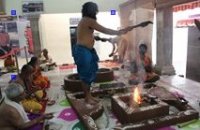 This is the paradox which a ritualist such as Sayana (or the ordinary worshipper) does not have to resolve. The worshipping Hindu merely acknowledges the presence of Agni without asking the whys and whereofs, since he / she believes that the Devata is present in the sacrificial fire and is to be worshipped. Aurobindo is unable to utilise this devotional aspect of the sacrifice. Both in the The Secret of the Veda and the brilliant translations of the Agni hymns of the Rig Veda, in his work Hymns to the Mystic Fire, he is tied up in the complexities of the supra mental Truth Consciousness of which Agni is a mere symbol during the fire ceremony.
Agni’s presence is thus reduced to a mere symbolism. In trying to read Vedanta backward into the Rig Veda his remarkable genius missed out on the very fact that he himself asks about rhetorically: why the fire, if it is merely a symbol? Why was it thought necessary to maintain it, to hold it constantly in front?[emphasis added] See the question in the above quotation.
 A possible reason for this paradoxical situation might be that Aurobindo was writing in the early 20th century when the colonial and Western approach was to look down on the Rig Veda as an uncivilised worship of natural phenomena. The two proselytising faiths, Islam and Christianity, had made up their minds that their ONE GOD was the true one as held forth by their prophets. Rig Vedic polytheism was viewed contemptuously as such, as a pagan practice (see previous articles by the present writer below).
Today, with the New Age philosophies and the spread of Eastern religions, especially Hinduism, in the Western world, a more sophisticated approach has made it possible for Hindus to provide a richly textured account of the Devatas in the Veda. And of course, the devout Hindu can continue to worship the Devas and Devatas without any further encroachments from the colonials or missionaries (or so one hopes!)
A second reason is that Aurobindo does not clarify the relationship between Devatas and Brahman in The Secret of the Veda. In his other works he does admit that the Infinite Brahman is both manifest and unmanifest. His focus in this work is on rejecting ritual, rather than seeing its significance. The Rishis saw the manifest Brahman in the ritual and saw that this was a path for humankind. The Devatas are manifest Brahman and humans can so approach them. They are not just symbols.
 The third reason is that Aurobindo used the current word ‘god’ and thus got caught in the usage of a limited concept, rather than the unlimited, infinite Brahman which could manifest in Devatas. The present writer has written about the limited nature of the word ‘god’, drawing on arguments presented by Alain Danielou in his book Hindu Polytheism, 1964.
The result of these limitations on the part of this great philosopher is that the Veda becomes restricted to his personalised vision and the Agama is totally without any significance in his world view. Hence, while the brilliance of his vision of the Devatas is moving and even imposing, it remains an incomplete account of Hinduism. – Vijayvaani, 1 Sept. 2012
» The writer is a Political Philosopher who taught at a Canadian university.
Earlier articles
- Village Agama: A contiguous tradition with Veda and Agama
- Attacks against the Vedic Agama connection
- Punya Bhumi: The Homeland of Vedic Agamic Hinduism
- The Upanishads: Happy hunting ground of the ONE god-ists
- Punya Bhumi and the bleak landscape of one god-ism
- Hindu intellectuals must protect the traditional acharyas
- The ONE true god: Some reflections
- Rig Vedic Polytheism and Punya Bhumi
- The Rig Veda and “Hindu Polytheism”
- Social engineering, social reform and protecting the Vedic heritage
- Temple priests and preserving the Vedic heritage
- Prof. Monier Williams and his mighty fortress of Brahmanism
Filed under: india | Tagged: agama, agama, agni, agnihotra, aurobindo's writings, deva, devatas, devi, god, goddess, hindu, hinduism, hindutva, hymns to the mystic fire, iconography, india, indian philosophy, monism, monotheism, mythology, one-godism, philosophy, polytheism, religion, rig veda, rishis, rituals, sadhus, sanatana dharma, sanskrit, sanskrit literature, secret of the veda, sri aurobindo, vedanta, vedas, vedas, western influence, yagna, yoga |










 BHARATA BHARATI
You do not see that all these rituals and scriptues have a hidden meaing – which needed initiation – see https://spiritwiki.de/w/Kategorie:Symbolik (also mahabharata and ramayana) and https://www.universal-path.org/Esoteric_symbolism
LikeLike
@cnm
Thankyou for the info about the village. From my article you can deduce that these neo Aurobindoites have not read his Secret of the Veda, where despite himself, A, actually extols the gods and goddesses. Ofcourse his saying that they are symbolic defeats that.
Dr. Shreevinekar’s article ‘Demystifying Shree Ganesha’ is a counter to the Aurobindo argument, so also my own articles on Veda and Agama. We Hindus have to consistently retrieve lost ground, it is part of the process, perhaps. Fortunately, except for certain pockets the majority of the aam admi continue the worship of our gods and goddesses, who as Ishwarji remarks are close to us, they are real !
LikeLike
Suggestion
I noticed that too. ‘observer’ that is his name. He seemed to have become slightly subdued. It is possible that it might be the beauty of Aurobindo’s writings, when he is talking about Agni etc. even though in the end he thinks of it all as symbolic.
We did carry on a conversation (observer and myself) on a later post, I cannot recall which, where I explained to him a bit about myself and my interests and he wished me good luck. I’ll try and see if I can locate that conversation.
I think we Hindus should proceed as if Veda Agama is a reality and that could also be helpful.
LikeLike
Ishwar Sharan ji,
Your blog is awesome.
and also the kind of articles you post.
namaste.
LikeLike
I followed the Vijayvaani link to read the comments on the article there. The first (or among the first) is one by a regular propagandist for islam who seems to frequently invade Vijayvaani.
For once though, the person sounded positive about Hindu religion and even its Gods. My question: why did no Hindu there avail themselves of the opportunity to teach that commenter more such things about Hinduism to further appreciate the religion, and thus essentially help them out of islam?
He’s shown us something: that he has a side to him – however narrow or deep within him – that is attracted to Hinduism. Need to enlarge it. If it was Vijaya Rajiva’s writing that did it — or the statements by Aurobindo that she quoted, or the Sayana stuff — whatever it was, send more of such information to that person. At some level, he’s been reached. Hindus need to study what it was, and use it to help him and others like him out of their present ideology and back to humanity or perhaps even into Hinduism (if that’s what they want).
As for the particular individual, whoever momentarily reached him (I assume this was Vijaya Rajiva) should continue to adopt him as their pet project and work on him during his interminable visits to Vijayvaani. Turn his eternal presence there into something positive: an opportunity for deconverting him, and perhaps reconverting him to Hinduism. He’s actually accidentally indicated that subconsciously he’s open to it and sort of willing to some degree.
Also, I think Hindus should try reconverting all christians/muslims who regularly invade Hindu sites. If they don’t like it, at least they will at last leave Hindu sites alone.
LikeLike
Vijaya’s comment indicates (she’s aware) she’s not writing for the Hindu masses, as the Hindu masses know two things innately, and better than they know the back of their own hand:
1. The Hindu Gods are very real. (And are as described in the sacred Hindu mantras/stotras and who are, consequently, as presented in our temples in vigraha moorti forms.)
2. The traditional Hindu rituals are of prime importance because they work, and they are meant to be carried out.
Even Hindus who may not know either first-hand today (by having seen the Gods for themselves) learn both from first-hand accounts in their own families, or from their communities, or from established tradition. Their perception/understanding of the Gods thus being correct, they remain open to seeing the Gods for themselves. In any case, their attachment keeps the Gods near to them, which is what matters.
There’s one more thing, though:
3. The Hindu devargaL are at the *centre* of the Hindus’ Vedic religion.
[And even where the Atman becomes the focus of one branch of learning, the individual’s Atman is identified — or otherwise intimately related — with that of the Hindu Gods, who are the Paramatman.]
It is this final point that protects Hindus from encroachment by other ideologies that attempt to hijack or proselytise Hindus, as well as keeping Hindus safe from the neo-Vedanta, which turns the “end” of Hindu religion into new-age pseudo-Vedanta babble by divorcing Hindus from the importance they place on their Gods.
The relationship between the Hindus and the Hindu Gods is the most important of all. That relationship is contingent on Hindus’ right perception of the Gods: knowing who the devargaL are, their nature (their reality, exactly as described in our mantras), and the consequent “attitude” of Hindus toward their Gods that follows on naturally (“piety” as the Romans called their attachment. I think we call this bhakti in the general sense, but as bhakti also appears to be defined separately as a particular “path”, I don’t want to introduce any confusion. I therefore use the word attachment/piety for the general case.) As has been said about Emperor Julian by Gibbon: “a devout and sincere attachment to the Gods of Athens and Rome… [was at the heart of the man].” That — and especially in the context in which it has been highlighted by R. Smith — is possibly the most profoundly important statement made about Julian’s identity. It is the sum total of his identity. And he reveals it of himself too, repeatedly, especially in his Hymn To Helios.
I make no apologies in saying this: it is the Gods that are the essence of Hindu religion. They are its life-source, its well-spring. And it is the knowledge and memory of the Hindu Gods that retains individuals as Hindus. Just as it is the Hindu rituals that bind the Hindus with their Gods, that bring the Gods nearer and nearer to the Hindus.
These things ought to be defended by the Hindus: (the centrality of) their Gods and their rituals.
In particular, these things need to be defended from all de-Hinduising ‘Hindus’ who regularly seek to speak on behalf of Hindus and their religion, but yet can never refrain from selling off these very things.
I therefore [decide to] conclude that Vijaya is writing to instruct the de-Hinduising Indian would-be intellectuals of the anglicised variety who tend to still want to be Hindu (at some level), but who have essentially been brainwashing themselves out of Hindu religion, in their wish to apologise for what the religion [its Gods] are, and make this acceptable to themselves and the western world in which many of the apologists live (even if not geographically, then mentally). I’ve noticed Hindu religion doesn’t compute to many such.
The thing they just can’t understand or swallow is who the devargaL of the Hindu religion are, and the place of the Gods in the religion. The Hindu Gods tend to regularly be reduced to side-shows and afterthoughts and also-rans by vocal Hindu apologists for Hinduism (I don’t want people to apologise for the reality of Gods). Yet the Hindu Gods are the aims and ends in themselves, and have always been in traditional Hindu religion.
As I see it, Julian is profoundly important perhaps only for one thing (particularly in the crossroads Hindus find themselves at present). It’s not for his most able attack on the mindvirus ideology (christianism), nor for his keen willingness to defend Hellenismos even, but for his *motivations* in doing both, which is essentially his identity: that his Gods were central to him, who *were* his religion. That, “at his heart”, he *was* the “lay” Hellene: the stubborn heathen, who really only cared about his Gods, whose aim was to obtain/attain his Gods in life and beyond. (And as a consequence, he cared for all that his Gods originated — which is, Hellenistic religion and its consequent culture — as well as for those persons who likewise cared for the Gods: other loyal Hellenes.)
It seems to me Vijaya is writing to instruct the aforementioned class of de-Hinduising, confused Hindus. Or, if I’m lucky, perhaps she’s writing to liberate Hindu religion from their misconceptions — to liberate the religion from their clutches and return it firmly into the hands of traditional Hindus where it belongs — since the de-Hinduising would-be Hindus are the most visibly vocal among Hindus who regularly seek to define Hindu religion for others and according to their seriously-confused notion of it.
I confess I have no sympathy for people who have de-Hinduised and who betray their Gods — considering them to be symbols, or pretending that the Gods are “projections/products of Hindus’ spiritual consciousness and level” [i.e. that we invented the Gods’ forms or even their manifestations or individualities, rather than these being the Gods’ own forms which is what they are], let alone speak of the apotheosis of any of ours Gods and the like (something which only people who never saw the Gods could contend). As a result, I see no point in the instruction of such people: their loss of correct perception of Gods is deliberate, as they did it to themselves. No one outside of themselves could have brought them to that pass. Essentially: they got subverted because they *were* subvertible, which is a flaw within themselves.
I do hope such articles wrest Hindu religion away from those for whom it no longer computes and return it to traditional Hindus. I’ve had enough of faux-Hindus hijacking Hindu religion and re-defining the Gods into oblivion else footnotes in the religion, and undermining the Gods’ reality and centrality by wishy-washy new age rhetoric. (Here I’m not critiquing Aurobindo, since he’s nowhere near the distortion others are.)
How I wish I would live to see the day where Hindus could once more deservingly be described by future historians as “at the heart, [this Hindu] was defined by a devout and sincere attachment to his/her Gods, just like the Hindus of old”. [Or in contemporary parlance: it lived and died a stubborn heathen.] Because that means the Hindus would finally have won: that Hindus had remained who they were meant to be and didn’t get subverted out of the proper perceptions of their religion (Gods).
LikeLike
Vijayaji, the village named Ichhapur is situated in Cuttack district of Orissa. No, they are not Christistian coverts. They are pure Hindus. In Orissa if a day happens to be Thursday and Shukla Dashami, all married women irrespective the caste they belong to observe Sudasha Vrata. This is a vrata in which Devi Laxmi is worshipped for wealth and prosperity. Before their conversion to Aurobindoism they used to observe this vrata but once they joined Aurobindoism they started heaping contempt on the rituals and devotees of this vrat. This is just one example. The list is endless.
LikeLike
IS, interesting explanation,and it sheds light on your earlier statement that Savitri was dictated to him by . . . .
LikeLike
Dr. Rajiva, it is well known in the sadhu community that a great soul can be taken over and bound by inferior beings for their own purpose. But everything has its time and its limit. We are waiting for the day of Sri Aurobindo’s release.
LikeLike
@cnm & IS,
Thank you, IS, I did not know how he wrote his Savitri. Have never read it and am less inclinded to do so now. His subsequent career and the fate of the Ashram indicate how a brilliant Hindu can sometimes take the wrong turn! Anyone who claims superiority to the Veda (as his followers do) must be critiqued.
cnm, which is the village you are talking about? No doubt in Tamil Nadu. These converts sound like Christian converts, who are probably using the Aurobindo mantle to divert attention.
LikeLike
Dr. Rajiva, I wonder if you know how Sri Aurobindo wrote his books?
On the chance that you do not, I will tell it here very briefly.
Sri Aurobindo’s magnum opus “Savitri — A Legend and a Symbol” which is treated like veda and bible and koran combined by his followers, is possessed writing. Aurobindo describes in his biography some place how when he sat to write, some other entity took over and without his own effort at thinking caused his hand to write what it wrote.
However, Aurobindo makes it very clear that all his other writings are the product of his own intellect, research and understanding. Therefore the two books you have critiqued here are a scholar’s own intellectual effort — and not something else as is the (divine but very boring) blank verse poem Savitri.
LikeLike
Never mind, cnm, nobody else understands this supramental business either – including the Ashramites who all have a different theory about what it means!
In religious-cultural terms the Integral Yoga was meant to be vastly superior to anything the Vedic rishis taught. That is what was implied in the term and openly stated by the Mother and other Ashram intellectuals. You have described very well how this adversely affected the thinking of the new converts to the “yoga” in your own village.
Aurobindo was a great freedom fighter and did express some political wisdom. He can be honoured for that. We cannot really blame him if his collaborator and followers have turned him into an Abrahamic prophet.
LikeLike
IS has reached the basic point of my article and expressed it even better than me. Together with Dr. Shreevinekar’s work and mine we should be able to project our understanding of such issues in a consistent and probably a more widespread message amongst Hindu intellectuals. The aam admi, ofcourse, practises Hinduism (always has) and we don’t have to worry about him.
LikeLike
My study of Sri Aurobindo is limited only to his political life and comments made in his pre or post sannyas days regarding the political atmosphere prevailing during those days. Beyond that I have never ventured to enter. Because frankly speaking I have never been able to understand his integral yoga, supra mental consciousness and all those things. In my village, a few families – illiterate and semi-literate – (I am using these terms not to offend them) have become devotees of Sri Maa and Sri Aurobindo and since the day they got initiated into the fold slowly but surely they have been doing away with all the Hindu customs, rituals, pujas and vratas. Not only that this group has never failed to ridicule and make fun of those who devoutly perform pujas and vratas.
LikeLike
This is a very excellent article.
As soon as a Hindu thinker starts talking about symbols, we know that he has missed the very essence of Hindu practice. He is thinking like an Abrahamist whose imaginary god sits on a pole someplace beyond the pale of this universe.
Abrahamists try to contact this imaginary god through symbols and symbolic rituals (like re-enacting the prophet’s death and eating his body and drinking his blood (Catholic Mass = symbolic ritual cannibalism)).
The Hindu’s spiritual situation is different and more positive. Hindu deities are here with us. We invoke their closer and personal presence through Agni, himself a divine person but also described as the mouth of the Devatas (thus his primary importance).
If Hindu deities are only symbols, then they are not real and stand for something else that we have missed or don’t know about.
If Hindu deities are only symbols, then we have been wasting our time all these thousands of years!
An aside: There is no burning lamp kept at the samadhi of Sri Aurobindo or in his apartment. Incense it burned and flowers are offered at the samadhi just like in a Sufi dargah. A “chedar” is hung above the double tomb which is in an open-to-the-sky courtyard. These are the Mother’s instructions. She was the disciple of the notorious French occultist Theon in Algeria where she learned magic and acquired siddhis.
Sri Aurobindo Ashram is not a Hindu ashram. It is registered as a secular educational institution. Aurobindo’s Integral Yoga is not a Hindu practice. Integral Yoga is a synthesis of all Hindu yogas according to Sri Aurobindo, but not a Hindu yoga itself!
To study the practices and functioning of a yogi’s ashram is a way to find out something about the yogi’s thinking and ideals.
Ashram inmates will not appreciate this critique of Sri Aurobindo’s work. He and the French lady have been raised to the status of avatars by some Ashram devotees and have evolved far beyond the criticism of a mere Hindu mortal.
LikeLike