










 “Hindus never needed ‘God’ from the time of the Vedas. The word ‘Deva’ was unfortunately mistranslated by some as ‘God’ and it is time to cast it out. Let Hindus stay with Brahman, Purusha, Prakriti, Prana, and their Devas and Devis. Let them not buy any God any more as they have been badly damaged by the Western and Middle Eastern concept of God that is still being widely sold to Hindus to their peril. Let the God salesmen leave Hindus alone, Hindus have no use for ‘him’.” – Achintyachintaka
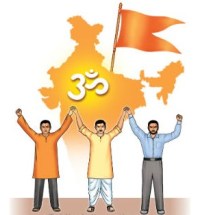 The articles by Dr. Rajiva on the topic of Hindu Polytheism are to be considered revolutionary. They are in tune with recent articles by other writers that are equally revolutionary in exposing modern Hindu and non-Hindu thinkers who erroneously equate Brahman of the Vedic tradition with the Abrahamic concept of God, either out of unconscious or conscious submissiveness, or because of deficient deeper scrutiny into the concept.
In so doing, they have unwittingly compromised the interest of ordinary Hindus who worship multitudes of Devas and Devatas daily, and whose lives revolve around such faith and belief, in addition to those who additionally or exclusively worship and/or recognize the divinity in the various vibhutis like Sai Baba of Shirdi, Satya Sai Baba, Anandamayi Ma, Ammachi, etc. Therefore, it is imperative that one questions such berating of one billion Hindus by well-meaning Hindus and non-Hindus who consider themselves more evolved or broad-minded by accepting “ONE-Godism” as the premium or most desirable of religious beliefs.
 Hindus who espoused and promoted “ONE God-ism” did so to placate foreign invaders espousing monotheistic faiths, though the philosophy of Advaita was not at all in conflict with the freedom to worship multitudes of Devas and Devatas, as is implicit and explicit in the Vedic tradition and the Vedas themselves.
Vijaya Rajiva and G.P. Srinivasan may be considered “out of the box” thinkers; this is the need of the time. The unconscious conspiracy with conquerors by the vanquished is a sad phenomenon. The very noble nature of the Hindus and the instinctive tendency to assimilate and absorb foreign thoughts and faiths into Hindu culture through a process of reconciliation and assimilation can be viewed as wonderful adaptation in comparison to the rigid aggressive religions that refuse to accept other viewpoints. However, the lack of assertiveness and being defeated to the point of making a civilization “spineless” can be attributed the “blame” for such adaptation.
On the other hand, the natural tendency of the foreign invaders to project their own cultural understanding on the culture of the newly found indigenous cultures to find similarities can also be assumed to be a factor leading to projection of their own concept of “God” (including “Allah”), “Gods” and “Goddesses” (known to them from their encounter with the Greek culture of antiquity – now extinct or decimated by the Christian empire) onto Hindus whom they encountered and assumed to be “look alikes” in their forms of religious worship.
 Of course, in a polite international society harmonious coexistence should be no problem if the principle of religious freedom is primarily translated only as “live and let live.” If this principle were adopted, there would be no reason for justifying conversions on the basis of “One God-ism.” This attitude of tolerance towards other religions and respect for their beliefs has not been found to be evolving in the followers of “One-God-ism.”
Human nature also has not evolved sufficiently to understand this principle. The “live and let live” principle is often expanded to mean freedom of practice of religion, which is misinterpreted as freedom to convert populations of other faiths to suit the aggressive and imperialistic instincts of the currently dominant proselytizing religions, mainly Christianity and Islam. This has been a problem for the human race in the last two millennia and has not been sufficiently addressed in the “worldview” because of the dominant nature of the aggressive cultures on one hand, and the peace keeping nature of those aggressed upon ideologically as well as demographically.
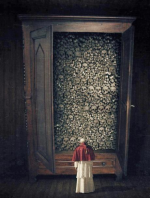
 For example, even among the followers of the same “Christian” faith there is very little outrage when Pope Benedict declared all Christians other than Catholics as “deficient” Christians. The educated populations of today will laugh at such pronouncements as there are no “soldiers of Vatican” to impose Vatican beliefs on “deficient” Christians. That is not to say that the strategies or modus operandi of Vatican has changed at all over the last two millennia and Jesuit priests will not use any other soldiers they find on the globe to accomplish their goal of expanding the Catholic empire all throughout the world.
What is not quite transparent to the brainwashed modern human race sharing the current worldview unquestioningly is that such pronouncements sow the seeds of bloodbath yet to come in future as well as that which is occurring currently in developing and undeveloped countries. In the remote past, any resistance to such pronouncements would have led to wars and even now the “Protestants” may be at risk of encountering violence in some areas of the world. “We are all the children of the same ‘One’ God” – is not a sufficient ground to co-exist peacefully, as demonstrated by history. There are more favorite children among all his children that God intends to use to impose “His” views on the rest of the world!
This author will therefore pronounce that Devas and Devatas are not Gods and Goddesses.
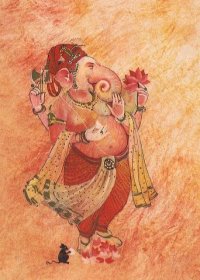 Vedic Agama and Devas & Devatas
Brahman of Vedanta and Purusha of Sankhya are described as the offshoots of many discoveries of Vedas. Both are described as basic “realities” from which all realities emerge and are accepted widely as “Sat-Chit-Ananda,” when combined into one word, “IT” is addressed as “Satchidananda.”
Sat stands for existence meaning “It Exists”. That adjective then asserts that “IT” exists and is real. It is not an imaginary entity.
(Note, ‘IT’ or ‘That’ (Tat) is not a “male” God as in the Abrahamic God)
Chit (Chid) means Consciousness. It is an assertion that Brahman is pure Consciousness and has no attributes of material world, like dimensions, (energy, mass, space, time, and other dimensions). Such consciousness, if accepted as the nature of reality outside the brains, makes IT a sentient energy when Brahman acquires the attributes of energy.
That is the primordial (sentient) energy with no mass, but only “vibrations,” “wave form,” or Om, when IT becomes the sentient energy. Mass is a magnificently concentrated energy which emerges much later in Vedic Cosmogony.
Ananda can be translated as Bliss. Those who experience this entity of Brahman describe experiencing the ultimate bliss.
 All other devas and devatas are accepted as manifestations of this Brahman. Since Brahman is consciousness as described above, all devas and devatas/devis are phenomena of consciousness. Therefore, all “Devas” and “Devatas” (including Gramadevatas) must also be “Sat” and not imaginary entities. They exist spontaneously just like Brahman and all devas and devatas, and of course, Brahman itself is “swayambhu” meaning spontaneously existing.
All devas and devatas are experienced as “bliss” when the devotee recognizes them at the experiential level in an experience known as “sakshatkaara”. “Sakshatkaar” may be remotely translated in spiritual parlance as “actualization” at the level of consciousness, as if consciousness perceives itself or an aspect of itself with full intensity in appreciating its true nature.
Human beings have to reach a stage of evolution of their consciousness to realize the presence of devas, devatas (devis), and recognize them as realities. Such recognition must not be confused with imagining their presence. If imagined and if they do not really exist they are “Asat” and no Hindu would want to worship anything that is “Asat.”
 If any God or “Gods and Goddesses” are purely figments of imagination, they have no place in Hindu polytheism. “One God-ism” based on a concept of “Imagined One God outside of Nature” “creating and controlling Nature” has no place in Vedic Agama Hinduism. That concept must be dismissed as pure imagination, though some Hindu scholars have compromised by accepting such concept of One God-ism as part of Hinduism or equivalent to Vedic concept of God. There is no GOD of that type in Vedas.
Vedas pre-exist by many millennia the concept of “God” conceived by other (non-Vedic) cultures. Such a concept of God was pronounced as dead by Nietzsche. Stephen Hawking declared such “God” was not necessary for this Universe to be “created.” The Hindu view of cosmos and cosmogony must not be obfuscated by the Western and Middle Eastern concept of an Abrahamic God that “created this world” because the Vedas pre-existed the emergence of such a primitive concept and are more realistic in comprehending the nature of the Universe or Universes. Vedas by definition are knowledge of reality, with poetic elaborations.
The Vedic sages were not just discrete but realistic, and quite wise in not anthropomorphizing Brahman, and for that matter also Purusha, its equivalent, described in Sankhya Darshana.
 All that exists, exists in Brahman, which is Consciousness. Devas and Devatas are, therefore, by their nature phenomena of Consciousness. Since there is no duality in Brahman there is no place for worship, for all consciousness flows, like rivers flowing into the ocean and merging with it, into Brahman. Likewise Purusha is present in all that exists, including individual consciousness.
This Undifferentiated Reality appears to become differentiated as soon as mass, energy, space (and “time,” the function or dimension of space) become manifest. Such differentiated manifestation is eternally and cyclically occurring and the senses perceive these as palpable reality, which is called “Maya,” as it is measurable (Maya derives from the Sanskrit root “mi”, to measure). This is also called “Prakriti“ in Sankhya.
A 180-degree turn has to occur now in the frame of reference here to, in a manner of speaking, change gears to view that the senses are themselves conduits for perception of palpable reality and reside in the realm of palpable reality which is springing from the undifferentiated Reality. Each of the (five) senses have a limited range of perception (tanmaatra) of their spectrum of reality for each species. Therefore, in order to perceive the reality beyond their reach or scope, there is a need for extension of senses (like electron microscope, or Hubble telescope, etc.) Nevertheless, with all such extensions, the human brain may not even completely perceive a fraction of reality that “exists.” The human brain may mathematically predict the presence of some aspects of reality that is beyond human perception (e.g. bosons) which may later be verified as to their existence when more acute extensions of senses become available.
Vedas are knowledge about what exists and not what can be imagined, and are not limited to only what can be perceived by the senses. Anything that is purely imagined and therefore does not exist is “Asat.” When it comes to what exists there is an assertion in the Vedas that there was no time or place when there was any “Asat” except in the imagination of human beings.
 Brahman is all that exists, ever existed, and will eternally exist. (Please do not confuse this statement with the time limited existence of this Universe or rather the Universes that can emerge and dissolve over billions and billions of years.) The thesis of no possibility of a state of “Asat” ever-present in the Universes anywhere means something that exists does not come up or spring from “Nothing.” That is the thesis of Nasadiya Sukta in the Vedas.
So far, the word “God” is not necessary to understand what is stated above. “God” was not necessary for the existence of Brahman. Brahman always existed without any God creating IT. That is where the confusion in semantics occurs when scholars equate Brahman with God. Vedas never used the word God but the word “Isha” was used as an equivalent of Brahman in Ishavasyopanishada in Vedanta. Some scholars have mistranslated the word “Isha” as “God” or “Godhead”. The sooner Hindus understand that they have nothing to do with “God” and “Gods” and “Goddesses” described in Western literature and Western and Middle Eastern Religions, the better off all Hindus will be.
 Hindus never needed “God” from the time of the Vedas. The word “Deva” was unfortunately mistranslated by some as “God” and it is time to cast it out. Let Hindus stay with Brahman, Purusha, Prakriti, Prana, and their Devas and “Devis”. Let them not buy any God any more as they have been badly damaged by the Western and Middle Eastern concept of God that is still being widely sold to Hindus to their peril. Let the God salesmen leave Hindus alone, Hindus have no use for “him”.
Study the nature of what is “God” and why “One God-ism” is a political ploy to build empires for the two dominating religions of the world, to lord over the entire population of the world and control and use all the natural resources. Hindus must stop being gullible and be proud they have the Vedic Agama as their system of spiritual advancement.
The invaders of India have done enough damage and now after the 65th Independence Day, Hindus realize they still do not have independence because the One God-ism powers owned India and contaminated it for many centuries and are still at work to own India and weaken the Hindus by infiltrating their society and corrupting them at the intellectual level (“inculturation”) leading to all religions are one/equal kind of stupidity. – Vijayvaani, 13 Sept. 2012
Editor’s Note: Wikipedia is used as a reference here because it is easily accessible. But it is not a trustworthy encyclopaedia except for basic information and meanings. Interested readers should go to proper Sanskrit references if they want correct and detailed interpretations for Hindu terms.
Filed under: india | Tagged: abrahamic religions, advaita vedanta, agama, agama, bhagavad gita, christianity, civilization, cosmology, god, goddess, gods | goddesses, hindu, hinduism, hindutva, india, islam, judaism, monism, monotheism, monotheistic faiths, mythology, om, pagan, philosophy, polytheism, proselytize, protestantism, psychological warfare, religion, rituals, sanatana dharma, sanskrit literature, theology, universalism, vedanta, vedas, vedas, vedas & upanishads, yoga |









While you are at it, stop using the word ‘Hindu’, ‘Hinduism’ and ‘India’ too! None of these words are of Vedic origin – they were all pushed on us by foreign invaders.
No Veda, Purana, Upanishad or Itihas has ever used these words.
If we’re going to quibble over semantics, then lets go the whole nine yards!
LikeLike
THERE IS A CONCERTED EFFORT TO SMUGGLE IN ONCE IMMATURELY JEALOUS FOREIGN ABRAHAMIC GOD, WHO DECLARED HE WAS “THE ONLY TRUE GOD AND ALL OTHER GODS ARE FALSE,” INTO INDIA AS HINDU GOD; HE NOW WANTS TO SAY HE IS THE SAME AS THE GODS OF PAGANS LIKE THOSE OF HINDUS, TAOISTS, CHINESE INCLUDING “KRISHNA”; HE IS AN ASTUTE POLITICIAN INDEED, MOTIVATED BY HIS IMPERIALISTIC INSTINCTS, NOW WANTING TO CLAIM ALL PAGANS ARE WORSHIPPING HIM and no one else, IF SO, WHY IS THERE A NEED TO PROSELYTIZE? THIS GOD TALKING WITH A FORKED TONGUE WILL NOT BE ABLE ANSWER ALL THESE SIMPLE QUESTIONS, BUT GULLIBLE HINDUS FEEL PRIVILEGED THAT ABRAHAMIC GOD FINALLY RECOGNIZED KRISHNA AS HIMSELF AFTER TORTURING THOUSANDS OF HINDUS AS IN THE GOAN INQUISITION (http://en.wikipedia.org/wiki/Goan_Inquisition) TO GIVE UP KRISHNA AND ACCEPT HIM AS THE GOD OF CHRISTIANS REPRESENTED BY JESUS. HINDUS REMAIN GULLIBLE, SEE FOR YOURSELF AT: onegodism.com/index.htm
LikeLike
In a fascinating interview available on-line at http://sathyavaadi.tripod.com/truthisgod/Articles/goel.htm, Sita Ram Goel says:
“I have no use for God. In fact, the very word stinks in my nostrils. This word abounds in the Bible and the Quran, and has been responsible for the greatest crimes in human history.
“On the other hand, saints who have used this word in a spiritually wholesome sense have seldom warned us against its sinister use; most of the time they have been confused by the criminal use of this word, and have confused others. I do not feel the same way about the word ‘goddess’ because the monotheist who happen to be male chauvinists, have not used this word for their purposes.
“In fact, the only thing which softens me towards Catholicism is the figure of the Virgin Mother even though theology has not permitted her to soar up to her highest heights.
“Having been a student of Hinduism, I find that our tradition knows no god or goddess as the creator and controller of the Cosmos.
“The Vedas know no god or goddess in that sense, nor the Upanishads, nor the six systems of philosophy, nor Buddhism, nor Jainism. It is the Puranas which speaks for the first time of a paramatman (Highest Self), or a purushottama (Highest Persona). But that is not the extra-cosmic and blood-thirsty tyrant of the Bible and the Quran.
“We do have in Hinduism the concept of ishtadeva, the highest symbol of a person’s spiritual aspiration.
“In that sense, I am devoted to Sri Krishna as he figures in the Mahabharata, and the Goddess Durga, as she reveals herself in the Devi-Bhagvata Purana. I feel free and shed all fear when I meditate on them.
“They promise to clean up the dross that I carry within me.
“They prepare me for battle against forces of darkness and destruction.”
LikeLike
Excellent article. It could be made a basic reference for what Hindus believe and don’t believe.
There are some wonderfully assertive statements here like “If imagined and if they do not really exist they are “Asat” [untrue/unreal/non-existant] and no Hindu would want to worship anything that is “Asat.”
Not sure we should reject the ancient Greeks completely. They were not so sophisticated for sure, but all the Old Religions were interrelated both in their concepts and etymologically.
English evolved as a christianised language carrying Christian concepts. But it readily accepts new words with new meanings. It is for Hindus to use the correct Hindu terms in their English conversation and articles, and the terms soon enough will get incorporated into English dictionaries (as has already happened in the last 40-50 years).
Many Hindus use the terms “Ishwara/Ishwari” or “Bhagawan/Bhagawati” instead of the English term God. This usage by conscious Hindus is not new and has been used for decades.
This writer would like to see the term “soul” relegated to the dustbin and term “atman” used instead. Soul and atman don’t mean the same thing. He once discussed the issue with Ram Swarup but didn’t get a very sympathetic audience. Ram Swarup, who was a Sankhya philosopher and yogi (and wrote an important book on Hindu polytheism), felt that it was useful to have very ordinary common English terms that were understood by everybody used in public discourse. Otherwise terms must always be explained and one can’t get on with the discussion.
LikeLike