






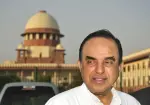


 “Peter Heehs’ opponents are led by Kittu Reddy, a nephew of former President Sanjeeva Reddy and a senior member of the ashram administration. … Reddy charged that by writing the book, Heehs has hurt the feelings and sentiments of disciples, devotees and well-wishers of Sri Aurobindo. He demanded that the ashram take all efforts to stop the publication and distribution of the book and sever all contact with Heehs.” – Gopu Mohan
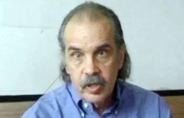 In the early 1970s, when the world was discovering Indian spirituality, a young man from Chicago set out to gather the education necessary to understand the abstract ideas of Sri Aurobindo better. Peter Heehs reached the Aurobindo Ashram in Puducherry in 1971.
Forty years on, Heehs is among the most acclaimed experts on Aurobindo. Yet he has been made to feel unwelcome for having come up with what is arguably the most thorough biography of the spiritual philosopher.
 The Lives of Sri Aurobindo is at the centre of a controversy after a section of devotees objected to some of its portions. Their opposition has made him stay away from the archives department of the ashram, which he has been part of right from the early days, and has threatened the renewal of his visa, which has been pending for the past few years.
Heehs claims the controversy was manufactured by a minority, who have culled certain portions from the book and distributed it among the devotees to create the wrong impression. “They have de-contextualised portions of the book and presented it to the devotees with the insinuation that I was purposely offending. They have taken pains to type out those portions and distributed them as a computer file, because in a photocopy there is an option to question and find out what is said before and after the particular section of text,” he said.
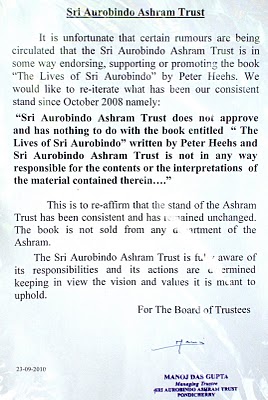
The book, published first in New York by the Columbia University Press in 2008, could not be published in India as was planned because of the outrage and a series of cases filed against the author, the charges including blasphemy.
“I am not writing for the devotees; for them there are books, magazines and souvenirs,” he said. “This is a work meant for a certain section of the people who are primarily academicians and historians, and even devotees who have such inclinations.”
 The trouble broke out within the department and then reached the trustees’ level, followed by a signature campaign. When the controversy affected its release in India, he listed out the objections raised, which were found not significant by the commissioning editor of his Indian publisher. Heehs said he still suggested a set of revisions and started working on those, which meant the publication had to be rescheduled to February 2009. Then Heehs came up with another idea: he would get a subsidiary right to reproduce the book in an abridged format that would not have the objectionable portions. This was to be meant for devotees who are interested in “knowing the details but not all the details”, to be sold only through ashrams and other such book depots.
“While collecting the works of Aurobindo, I have read numerous hagiographies that still contained tiny gems of information. This book was to be a truthful account of his life, but keeping in mind the concerns of the devotees… there were to be three versions — the original, the Indian one with minor changes, and finally the abridged one for the devotees. But perhaps I should not have taken the pains; this was not a discussion but mere screaming. Nothing was going to satisfy them because their aim is different,” he said.
The book was in fact an extension of his previous works including a brief biography of Aurobindo and some on the freedom struggle in Bengal during the late 19th and 20th centuries, a culmination of all the information he collected from the archives in Delhi, Kolkata and then England — where Aurobindo spent over a decade.
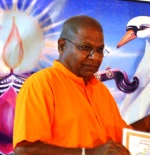
 Heehs is being accused of bringing down the dignity of the ashram. His opponents are led in part by Kittu Reddy, a nephew of former President Sanjeeva Reddy and a senior member of the administration who has been associated with the ashram for decades. Reddy, who has been a part of the ashram since 1941 when he was five years old, charged that by writing the book, Heehs has hurt the feelings and sentiments of disciples, devotees and well-wishers of Sri Aurobindo. He demanded that the ashram take all efforts to stop the publication and distribution of the book and sever all contact with Heehs.
“There is nothing objectionable academically or in terms of history. I am ready to answer any question any day on the aspects of scholarship and history,” said Heehs.
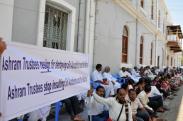
When he first came to India, Heehs had a tourist visa that was subsequently upgraded to an entry visa which is to be renewed every few years. The last time it came up for renewal was in 2009 when the controversy erupted and his opponents campaigned against it, leaving the scholar with a legal status of “ person with application pending”. Recently, the Foreigner Regional Registration Office at Puducherry informed him that his visa will not be extended beyond April 15.
A group of peers and others who are familiar with Heehs’s work have come to his aid, including Union Minister Jairam Ramesh who wrote to Home Minister P Chidambaram, Romila Thapar and Ramachandra Guha among 28 scholars and experts. They have approached the Home Minister and the Prime Minister, stating that “factional disagreements in Mr Heehs’s hometown should not receive the implicit support of the Indian state, which would happen if the Home Ministry were to deny him a visa allowing him to continue in India. It would be greatly to the detriment of our country to be seen as having driven out an internationally recognised scholar who is committed to writing biography and history of the highest calibre.”
The matter is now under the review of the Home Minister.
As the indecision continues into the third year, Heehs has been keeping away from the archives department, an “extended leave” as he downplayed it. In the break, he worked on another book that is close to getting published. “Writing it kept my sanity.”
 Objections & Heehs take
In a letter to the managing trustee of the ashram trust in 2008, Heehs argued that the controversies broke because people were misled by the duplicitous excerpts they had been given.
In the book, Heehs expressed the opinion that some of the early artistic works by the Mother (Mirra Alfassa, a Parisian who became Aurobindo’s spiritual collaborator) “show excellent technique and classical balance, if little originality”; this was considered defamatory.
Heehs paraphrased Aurobindo’s own description of his youth that he was “a most terrible liar and perhaps no greater coward on earth”. Heehs wrote, “He had few of the qualities that English schoolboys find interesting. Weak and inept on the playing field, he was also — by his own account — a coward and a liar.”
 In another portion, he considered “a question that may have occurred to some readers” whether Aurobindo’s inner experiences might, after all, be symptoms of madness. Heehs claimed in his letter to Gupta that it was not a far-fetched concern. “It is a fact that mysticism and madness have been connected in people’s minds for centuries, that at least some madmen have believed that they were mystics, and that some mystics have passed through periods when those around them wondered whether they had lost their balance,” he wrote. He justified it by adding that he concluded that Aurobindo was anything but unbalanced.
There are also allegations that the portions include, apparently, a relationship between Aurobindo and The Mother. – The Indian Express, New Delhi, 9 April 2012

-
Click here to read a complete critique of Peter Heehs’ book
Filed under: india | Tagged: art, ashrams, aurobindo ashram, biography, book ban, book banning, censorship, columbia university press, controversy, culture, deportation, freedom of expression, hagiography, hindu, hinduism, india, indology, literature, media, mirra alfassa, peter heehs, politics, psychological warfare, puducherry, religion, scholarship, spiritual philosopher, sri aurobindo, sri aurobindo ashram, sri aurobindo society, the mother, yoga |






To all…
“SHE REMAINS HERSELF AND INFINITE!!!!”
There is no point of argument in this issue. The Divine Mother of our hearts is the Divine and our human limits don’t even have the slightest imagination of it!
LikeLike
An Overview
Peter Heehs states “Absorbed in inner experience, the mystic is freed from the problems that afflict men and women who are caught in the dualities of knowledge and ignorance, pleasure and pain, life and death. A mystic thus absorbed often is lost to the human effort to achieve a more perfect life. But this is not the only possible outcome of spiritual practice. Aurobindo’s first major inner experience was a state of mystical absorption, but he was driven to return to the active life, and spent the next forty years looking for a way to bring the knowledge and power of the spirit into the world. In this lies the value of his teaching to men and women of the twenty-first century.”(PH, preface, pg xiv) His biography “Lives of Sri Aurobindo” is an attempt to bring this knowledge of Sri Aurobindo closer to these men and women so that they can expand their understanding to encompass a richer, more complex and dynamic view of man’s place in the universe and his capacity for self-exceeding.
The author has made an effort to do this by undertaking to put Sri Aurobindo’s life and teaching in an intellectual framework. He has done an admirable job in painstakingly researching and documenting the physical aspects of the Master’s life and circumstances. Unknown or little known documents have been referred to, authenticating facts surrounding Sri Aurobindo’s birth, parents, life in England and Baroda, his political career. Similarly for the arrival of the Mother and the birth and growth of the Ashram. As Sri Aurobindo has said in another context, “In intellectual knowledge there is always a mixture of falsehood or incompleteness which has to be got rid of by subjecting the truth itself to sceptical inquiry…..”(SABCL 13, pg 196). Consequently the scholarly approach has yielded excellent results in details of Sri Aurobindo’s external life but has not been satisfactory in presenting his inner life and teachings to a wider audience.
Again in the words of Sri Aurobindo, “…the Divine Consciousness must be something infinitely wider, more complex than the human mind, filled with greater powers and lights, moving in a way which mere mind cannot judge, interpret or fathom by the standard of its fallible reason and limited half-knowledge.” (SABCL 22, pg 169). In the light of the above, the author’s attempt at interpreting Sri Aurobindo’s teaching to a mental audience to satisfy the reason has, despite the best of intentions, predictably and spectacularly failed causing widespread resentment and antipathy among the Master’s disciples and devotees. The author himself intuiting such a reaction has said in his preface to the book, “A statement about a politician or poet that rubs people the wrong way will be turned into a political or legal issue, or possibly cause a riot.”(PH, preface pg x) And Peter Heehs’ book has certainly ‘rubbed people in the wrong way’ (with a vengeance one might say) though not strictly for the reasons he had foreseen. It is not the amended facts of Sri Aurobindo’s life which have offended people but the attitude he takes. A case to the point is Sri Aurobindo’s early writings where Heehs takes a patronising stance. Also his repeated use of the name Aurobindo without the honorific ‘Sri’ despite Sri Aurobindo’s and Mother’s unequivocal statements that it is an integral part of the name.And this is one of the things thatsticksin the gullet of most devotees who, while they are glad to learn more of Sri Aurobindo’s physical life, are not ready to accept such an attitude from a fellow disciple, who has been a member of the Ashram for close to four decades. What he calls hagiography is not any such thing in this case but is an honest attempt, on the part of Sri Aurobindo’s intimate disciples, to give an accurate value to the mystic experiences of Sri Aurobindo in the only words appropriate enough to convey such sublime truths and the only true (psychic) way of approaching such a divine Person. If it was some intellectual outside the Ashram circle, people would have noted, objected and moved on, but coming from one so close they are unable to take a similar attitude.
Fundamentally, there are two possible ways of approaching a spiritual figure (or his teaching) with a view to make him more accessible to a larger general group. The first, and the only worthwhile, approach is to try to build a bridge between man’s ordinary level of consciousness and the truths of the spirit embodied in his life and teachings. In Sri Aurobindo’s case the voluminous writings he and the Mother have left cover most questions that can occur to the intellect and are answered from the highest consciousness the human mind is capable of comprehending. Therefore by a judicious selection of their words one could have built this bridge without a very great effort. Such an approach would tend to connect the intellectual class of seekers, actual or potential, to the Master’s influence which would carry them as far as they are capable of being carried on the path. And from the new status of consciousness resulting from such a connection they would be able to open to a higher level of his consciousness and better appreciate the profundity of his life and teaching.
The second and practically worthless approach is to bring down the spiritual figure (and his teaching) to the level of an ordinary consciousness dominated by surface reason and intelligence. Such an approach requires the life and teaching of such a figure to be subjected to a critical surface intellectual scrutiny, trivialising his whole message to the readers and worse, putting a damper on the intensity of even those coming to him with higher aspirations. For, in such a case, it is easy for a seeker to get lost in the maze of surface impressions. Heehs, in presenting Sri Aurobindo’s biography, has chosen – perhaps out of necessity – to take the second approach. Therefore, in Heehs’ book, the power of Sri Aurobindo’s words and message, instead of acting a s a magnet to draw one higher, have been diluted and rendered almost ineffectual. But onecould have reasonably expected this from Heehs given the fact that he “might not have stayed (at the ashram) if I had not been asked to do two things I found very interesting: first, to collect material dealing with his life; second, to organize his manuscripts and prepare them for publication.” (PH, preface pg xii) Heehs certainly does not seem to have stayed primarily for the pursuit of Sri Aurobindo’s Integral Yoga. This is probably the reason he has not really been able to take a yogic and spiritual view of Sri Aurobindo’s life and teachings. Sri Aurobindo’s yoga is, essentially, for the sake of the Divine and not for the sake of humanity. A fundamental error in Heehs’ approach is to appreciate the Master’s life and teaching only in as much as it is of value to the human race in the intellectual and limited view of the object of human life. But that is to turn the whole thing on its head. As Sri Aurobindo has affirmed time and again, the perfection and upliftment of humanity cannot be the true or the only aim of spiritual endeavour but is one of the important consequences of the descent and manifestation of the Spirit in terrestrial Nature – the only way in which human life can achieve true perfection. And as long as events and people are not perceived in this vein, any presentation of Sri Aurobindo will be basically flawed and distorted. This is probably, in large part, what has caused disciples and devotees to take umbrage to a number of Heehs’ statements. For complete review visit http://resurgentindia.org/blog/2012/11/30/the-lives-of-sri-aurobindo-by-peter-heehs-a-critical-appraisal/
LikeLike
I am surprised to see a truth seeker’s followers talking like this!! Sin BAd karmas.. this language does not sound right!
LikeLike
to IS,
U have incurred great sin by accusing, slandering the Supreme Divine Manifestations Sri Aurobindo and The Mother. What r u trying to prove to others? U r all knowing is it? What about the rest of us who worship Sri Aurobindo and The Mother? Sure! u’ll come up with spicy ugly false stories about us devotees also, shame on u! if ur an Indian and if not hope christ redeems u from this horrid sin which u have brought upon urself by uttering such blasphemous statements.
LikeLike
To ‘ is’,
mind your words language before u could even think of throwing allegations on divine mother and sri aurobindo. u seem to know nothing about them, else u want end up posting such derogatory comments about their relationship. Beware! Both of them are divine avatars and to slander or throw dirt on them without knowing the truth could land u in a net of horrid bad karma. Think 100 times before u start slandering the divine u fool!
LikeLike
Are you saying it took Mother and the ashram management forty plus years to discover Heehs was a fraud? If true it doesn’t reflect very well on Mother!
Are you saying it took the GOI forty plus years to discover Heehs lied on his visa application? Not believable! The CID carefully checks out all foreign residents in India. Heehs would not get an extension without the ashram management’s recommendation.
All this hounding of an author will backfire on the ashram. He will not land in NYC to drive taxis; he will get an agent and join the lecture circuit and talk about the spiteful internal politics that the ashram is becoming notorious for. He will make millions exposing all of you by name!
And he will sell tens of thousands of copies of his book. Publicly harassing an author and banning his book are the best publicity he could hope for! More editions are already in the pipeline. He may even add an appendix about how he was hounded out of India by a bunch of CPI(ML) rowdies.
It is in the ashram’s interest to keep him as an inmate. At least he must consider the feelings of other inmates if he himself is one of them (and he has indicated his willingness to consider the feelings of others by offering to publish a censored version of the book for India).
It is no black mark on Sri Aurobindo that he ALLEGEDLY had a relationship with Mother (an ALLEGED incident that is known to all ashram insiders–and outsiders too (we learned about it in Kolkata years ago)). Sri was a great yogi and the various incidents in his sadhana do not diminish him. Vishwamitra was not a lesser rishi because of Menaka. It is you puritans, with your internalised Victorian mentality and morality, who create a scandal by imagining a scandal in your little brain.
We hold no brief for Peter Heehs. We never knew his name until a week ago. Our point is that it is wrong to have got his book banned in an Odisha court (we will definitely find a copy now and read it) and to campaign to have his visa withdrawn. These are the activities of self-righteous, bigoted jihadis, not sadhaks who claim to be Sri Aurobindo’s devotees engaged in practising his Integral Yoga.
LikeLike
Heehs is a fraudster who lied to get a visa. He stayed in the Ashram allegedly as Sri Aurobindo’s “disciple”, and was supposed to follow his guru’s directions.
After a few defamatory biographies of him had been published, Sri Aurovindo decided to write a book “On Himself”. Now the American taxi driver Peter Heehs can go back to New York, read this book and continue his work driving taxis. The only work for which he is qualified.
LikeLike
Controverial books should be critiqued not banned. India has a habit of banning books to please small groups of influential people. This has got to stop.
Campaigning to have an author’s visa revoked because his writings are controversial is outrageous and unacceptable in an open democratic society.
We don’t know whether the Mother would approve of the book or not, but we do believe she would not approve of this bullying and harassment of a scholar and old ashram inmate.
LikeLike